
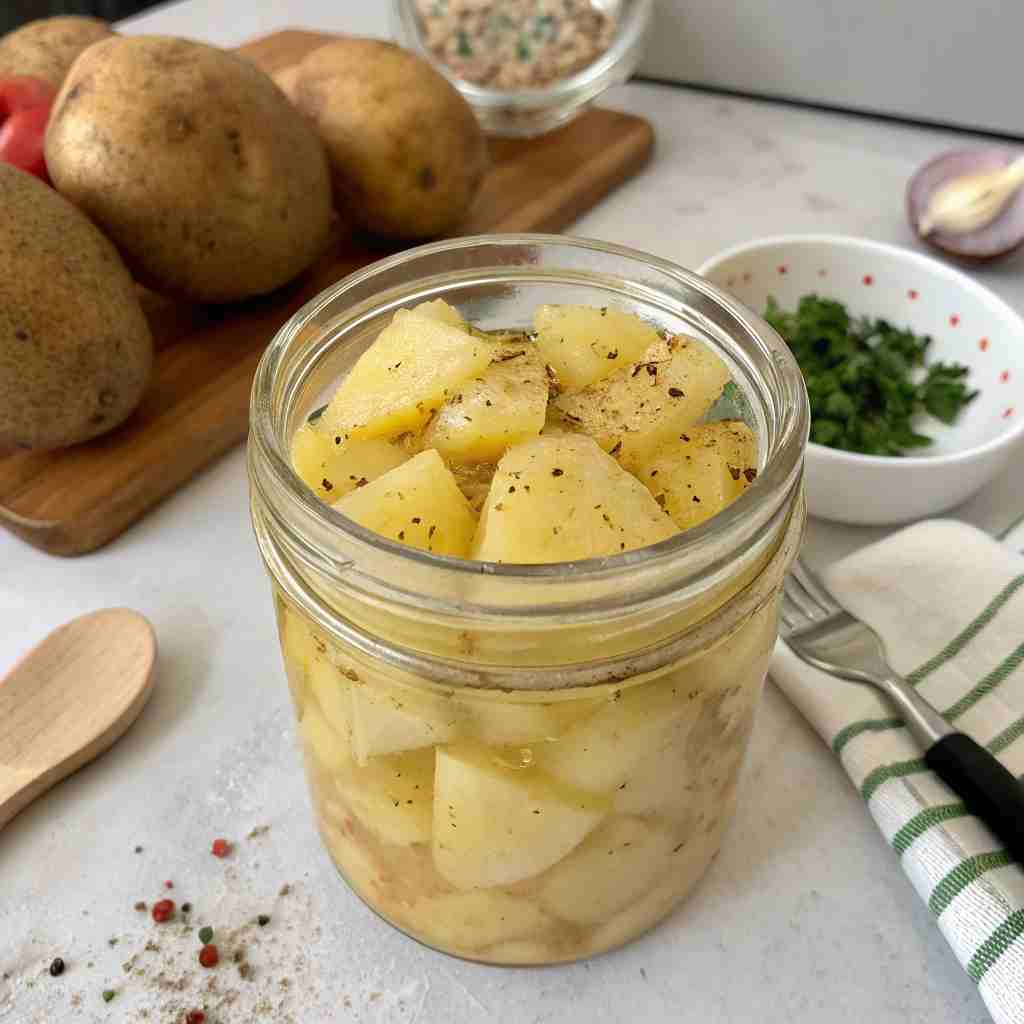
Are you looking for a way to preserve your potato harvest and have them ready to go whenever you need them? Pressure canning potatoes is the answer! This guide provides a safe and detailed process for canning potatoes at home, ensuring a shelf-stable and delicious pantry staple. Forget relying solely on store-bought options; home-canned potatoes are convenient, cost-effective, and allow you to control the ingredients.
Jump To :
What is Pressure Canning Potatoes?
Pressure canning potatoes is a method of preserving raw or cubed potatoes in jars using a pressure canner. Because potatoes are a low-acid vegetable, they require the high temperatures achieved in a pressure canner to eliminate the risk of botulism, a serious foodborne illness. This process involves packing prepared potatoes into sterilized jars, adding boiling water, sealing the jars, and then processing them in a pressure canner for a specific amount of time, based on the jar size.
The high heat and pressure ensure the food is safe and shelf-stable for long-term storage. Home-canned potatoes are incredibly versatile. Use them in stews, soups, casseroles, or simply heat and serve as a side dish. Ready to take control of your food preservation and enjoy the convenience of home-canned potatoes? Give this guide a try!
Key Ingredients for Pressure Canning Potatoes:
- Potatoes: Use firm, mature potatoes. About 4-5 pounds of potatoes depending on how many quarts you’re canning. Russet, Yukon Gold, or red potatoes work well. Wash, peel (optional but recommended), and cube into uniform 1-inch pieces to ensure even heat penetration during processing.
- Water: Use boiling water to cover the potatoes in the jars. Ensure the water is from a safe and potable source.
- Canning Salt: Add 1/2 teaspoon of canning salt per pint jar or 1 teaspoon per quart jar. Salt is a flavor enhancer and helps maintain the texture of the potatoes. Do not use iodized salt, as it can cause discoloration
- Optional Herbs: Add dried herbs to each jar for more flavor.
How to Make Pressure Canning Potatoes:
Pressure canning potatoes is a simple way to preserve your harvest and have a convenient side dish ready whenever you need it. It combines easy preparation with the satisfaction of providing shelf-stable food for your family.
With a total preparation time of approximately 1-2 hours, this recipe saves you time and money while ensuring a steady supply of potatoes.
Step-by-Step Instructions:
1. Gather Your Equipment:
- Pressure canner with rack
- Canning jars with lids and bands
- Jar lifter
- Lid lifter (magnetic or non-magnetic)
- Large pot for boiling water
- Large bowl for potatoes
- Cutting board
- Knife
- Measuring spoon
2. Prepare the Jars:
- Wash jars, lids, and bands in hot, soapy water. Rinse thoroughly.
- Keep jars hot until ready to use. You can sterilize them by placing them in a boiling water bath for 10 minutes, in a preheated oven at 200°F (93°C) for 10 minutes, or running them through a dishwasher cycle.
- Place lids in a small saucepan and heat to a simmer (180°F/82°C) but do not boil. Keep lids hot until ready to use.
3. Prepare the Potatoes:
- Wash potatoes thoroughly. Peel them if desired (leaving the skin on can affect the color of the potatoes).
- Cut the potatoes into uniform 1-inch cubes so that they cook evenly in the pressure canner. Smaller cubes can become mushy.
- Place the cubed potatoes in a large bowl of cold water to prevent browning. Drain just before packing into jars.
4. Pack the Jars:
- Drain the potatoes from the cold water and pack them into the hot, sterilized jars
- Leave 1 inch of headspace (the space between the top of the food and the lid.)
- Add ½ teaspoon of canning salt to each pint jar or 1 teaspoon to each quart jar.
- Pour boiling water over the potatoes, maintaining 1-inch headspace.
5. Remove Air Bubbles:
- Use a non-metallic spatula or bubble remover to gently release any trapped air bubbles by running it along the inside of the jar.
6. Wipe Jar Rims:
- Wipe the rims of the jars with a clean, damp cloth to ensure a proper seal. Any food particles or residue can prevent the lid from sealing correctly.
7. Place Lids and Bands:
- Place a hot lid on each jar, centering it on the rim.
- Screw on the band fingertip tight. Do not overtighten, as this can prevent air from escaping during processing. Screw the band tight enough so it doesnt come off but not too tight to keep air from escaping.
8. Load the Pressure Canner:
- Pour 2-3 inches of water into the pressure canner, according to the manufacturer’s instructions. Ensure the water level is below the rack.
- Carefully load the jars into the canner using a jar lifter. Avoid tilting the jars to maintain the headspace.
- Lock the canner lid securely, following the manufacturer’s instructions.
9. Vent the Pressure Canner:
- Turn the heat to high and vent the canner for 10 minutes, allowing steam to escape from the vent pipe. This step is crucial to remove air from the canner, ensuring the correct pressure and temperature are reached inside.
10. Pressurize the Canner:
- After venting for 10 minutes, close the vent pipe or place the weight on the vent, following the manufacturer’s instructions.
- Monitor the pressure gauge and allow the pressure to build to the specified level for your altitude and type of canner.
11. Processing Times:
- Process pint jars at 11 pounds of pressure for 75 minutes.
- Process quart jars at 11 pounds of pressure for 90 minutes.
- Adjust pressure according to your altitude. Different altitudes dictate different pressure levels during canning. A higher altitude means lower air pressure, making it necessary to increase the pressure in the canner to reach the required temperature for safe preservation. Use a guide specific to your canner and altitude.
12. Cool the Canner:
- Once the processing time is complete, turn off the heat and allow the canner to cool naturally. Do not force-cool the canner.
- Wait until the pressure returns to zero and the canner is completely depressurized before carefully removing the lid.
13. Remove the Jars:
- Use a jar lifter to carefully remove the jars from the canner. Place them on a towel-lined surface, leaving space between the jars to allow air to circulate.
14. Check the Seals:
- Let the jars cool for 12-24 hours. After cooling, check the seals by pressing down on the center of each lid. If the lid does not flex or make a popping sound, it is properly sealed.
15. Storage:
- Remove the bands after confirming the seals. Wash and dry the jars, label them with the date and contents, and store them in a cool, dark place. Properly canned potatoes can be stored for up to a year or longer.
Why You’ll Love This Pressure Canning Potatoes:
Pressure canning potatoes is a game-changer for home cooks. The main highlight is the convenience. Imagine having perfectly preserved potatoes ready to use in any recipe, any time. It saves you a significant amount of time on meal prep. Making this recipe at home offers substantial cost savings compared to buying canned potatoes from the store. Those store-bought cans add up! Plus, you skip all the preservatives and additives often found in commercial options. Flavor-wise, you can add things like garlic, rosemary, or thyme to each jar before canning, infusing the potatoes with delicious herbs. Adding garlic is a plus.
Similar to pickling cucumbers, pressure canning allows you to preserve garden-fresh produce at its peak, so it’s so yummy later. Why not give canning a try and experience the convenience and taste of homemade preserved food?
What to Serve With Pressure Canning Potatoes:
Canned potatoes are incredibly versatile and can be used in various dishes. They are wonderful additions to hearty stews and soups. For a comfort food meal, serve them as a creamy mashed potato side dish with a dollop of butter.
As a delicious side dish, try them roasted with garlic and herbs. They also pair beautifully with grilled meats, especially steak or chicken.
Top Tips for Perfecting Pressure Canning Potatoes:
- Use Mature Potatoes: Choose firm, mature potatoes rather than new potatoes, which tend to become mushy during canning.
- Uniform Cubes: Cut the potatoes into uniform 1-inch cubes to ensure even heat penetration and consistent texture throughout the jar.
- Don’t Overpack: Leave the recommended 1-inch headspace to allow for proper expansion during processing. Overpacking can cause the jars to buckle or fail to seal.
- Adjust for Altitude: Always adjust the pressure according to your altitude to ensure proper processing and food safety.
- Cool Completely Before Checking Seals: Allow the jars to cool completely before checking the seals. Check seals after 15 hours for accurate seal determination.
5 Facts About Pressure Canning Potatoes:
- Botulism Prevention: Pressure canning is essential for low-acid foods like potatoes to eliminate the risk of botulism, a dangerous foodborne illness.
- Shelf-Stable: Properly canned potatoes can be stored on the shelf for up to a year or longer, making them a convenient pantry staple.
- Nutrient Retention: Pressure canning helps retain many of the nutrients in potatoes, although some water-soluble vitamins may be lost during processing.
- Customizable: You can add your choice of herbs and spices to enhance the flavor of your canned potatoes.
- Cost-Effective: Canning your own potatoes can save money compared to buying commercially canned options.
Storing and Reheating Tips:
- Storage: Store sealed jars of canned potatoes in a cool, dark, and dry place, away from direct sunlight and temperature fluctuations. Once opened, refrigerate any unused portion immediately in an airtight container.
- Refrigeration: Once opened, canned potatoes should be refrigerated and used within 5-7 days for optimal quality and safety.
- Freezing: Freezing canned potatoes is not recommended, as the texture will likely become mushy and unappetizing.
- Reheating: To reheat canned potatoes, drain the liquid, and heat gently in a saucepan over medium heat until warmed through. Or, microwave until warm. Avoid overheating, as this can make them mushy. For roasted potatoes, toss with oil and seasoning and roast in a hot oven until heated through.
Final Thoughts:
Pressure canning potatoes is a satisfying and practical way to preserve your harvest or stock up on a versatile pantry staple. You can confidently create delicious and safe home-canned potatoes by following this detailed guide. So grab your pressure canner, prepare your potatoes, and enjoy the convenience and flavor of home-canned potatoes.
Read More also:
- Canning Green Beans
- Canning Whole Potatoes
- Canning Red Potatoes
- Canning Yukon Gold Potatoes
- Our Pinterest
Pressure Canning Potatoes FAQs:
Q: Can I use any type of potato for canning?
A: It’s best to use mature potatoes such as Russet, Yukon Gold, or red potatoes. Avoid new potatoes, as they become mushy during the canning process.
Q: Do I have to peel the potatoes before canning?
A: Peeling is optional but recommended. Potato skins can darken during canning and alter the texture, but they are still safe to can with the skin on. Also, potatoes with skin on can change the PH levels.
Q: What if I don’t have canning salt?
A: Canning salt is preferred as it doesn’t contain iodine or anti-caking agents that can affect the color and texture of the potatoes. If you must substitute, use kosher salt and reduce the amount slightly. But, canning salt is highly recommended.
Q: Can I add other vegetables or herbs to the jar with the potatoes?
A: Adding other vegetables is not recommended, as it can affect the density and processing time, potentially compromising safety. You can add dried herbs to flavor the potatoes, but stick to approved, safe canning recipes.
Q: How do I know if a jar didn’t seal correctly?
A: If the lid flexes when pressed down in the center, it didn’t seal properly. If this happens, you have two options: reprocess the potatoes in a clean jar with a new lid within 24 hours, or refrigerate them and use them within a few days.
Q: The potatoes at the top of the jar are discolored. Is that okay?
A: Some discoloration is normal, especially at the top of the jar where the potatoes may be exposed to more air. As long as the jar is properly sealed and there are no signs of spoilage, the potatoes are safe to eat.