
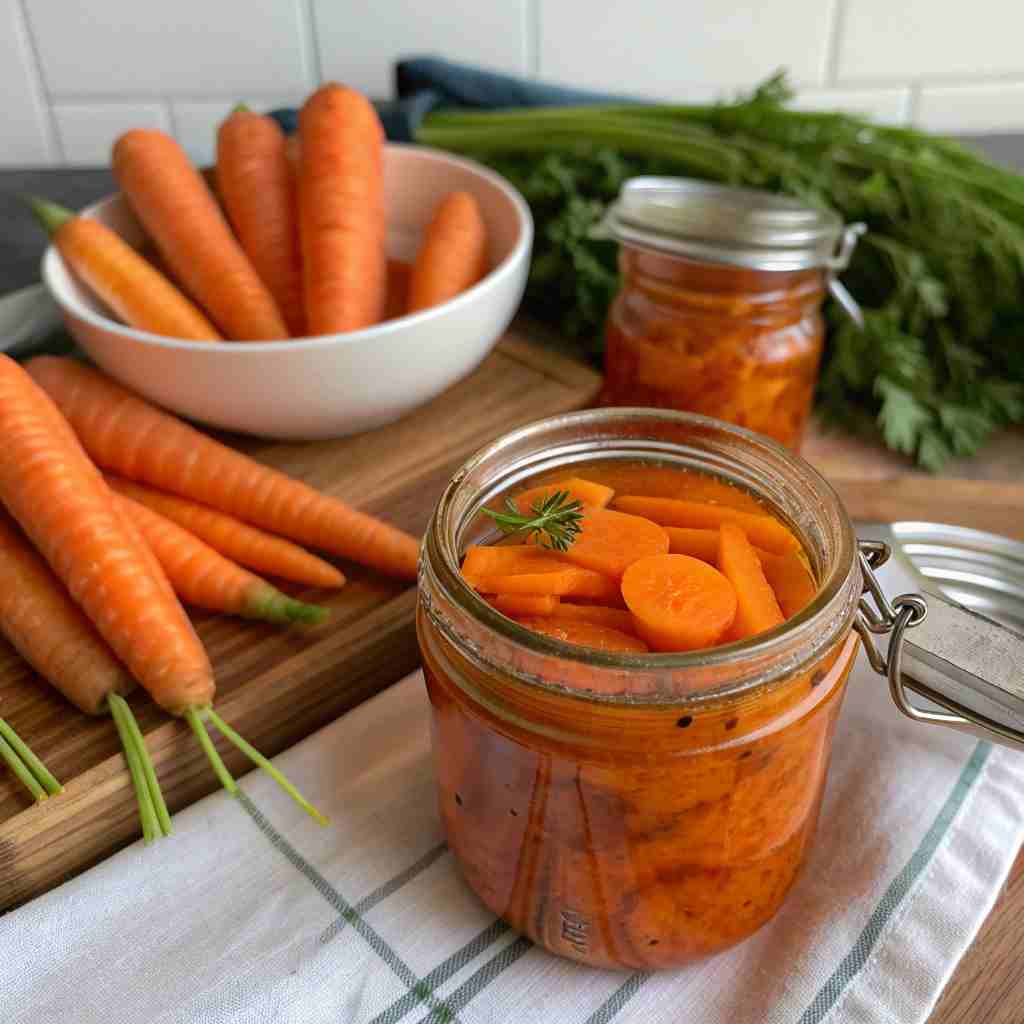
Are you looking for a way to preserve the garden’s bounty or stock up on nutritious vegetables for the winter? This Canning Carrots Hot Pack method, which involves pre-cooking the carrots, yields a wonderfully tender and appealing texture, far superior to raw-packed canned carrots. This method, ensures proper sterilization and optimal quality for long-term storage. Let’s dive into how you can easily and safely can your own delicious carrots!
Ready to enjoy the taste of homegrown (or locally sourced) carrots all year round? Give this Canning Carrots Hot Pack recipe a try!
Jump To :
Key Ingredients for Canning Carrots Hot Pack:
- Carrots: 2 1/2 pounds per quart jar, peeled and sliced or diced. Select firm, brightly colored carrots.
- Water: Enough to cover the carrots during blanching and for the canning liquid.
- Canning Salt (Optional): 1/2 teaspoon per pint jar, 1 teaspoon per quart jar. This is for flavor, not preservation.
- Bottled Lemon Juice or 5% Acidity Vinegar (Optional): 1 tablespoon per pint jar, 2 tablespoons per quart jar. Added to canner to help prevent jar clouding. Make sure that it is 5% acidity
How to Make Canning Carrots Hot Pack:
This recipe is surprisingly simple, and the results are well worth the effort. Pre-cooking the carrots ensures a consistently great texture that’s perfect for any dish. In just a few hours, you can have a pantry full of homegrown goodness, ready to enjoy whenever you want.
Let’s begin the canning process and taste the difference in your home storage of fresh carrots. Expect only a few steps and preparation time of 2-3 hrs.
Step-by-Step Instructions:
- Prepare the Carrots: Wash, peel, and trim the carrots. Slice them into rounds, dice them, or leave them whole (if using baby carrots). Consistency in size will ensure even cooking and packing.
- Blanch the Carrots: Place the prepared carrots in a large pot and cover them with water. Bring the water to a boil and boil for 5 minutes. This pre-cooks the carrots and helps remove air from the tissues.
- Prepare the Jars and Lids: While the carrots are blanching, wash your canning jars in hot, soapy water, rinse them thoroughly, and keep them hot until ready to use. This can be done by placing them in a simmering pot of water, or sterilizing in a dishwasher. Heat the canning lids in a small saucepan of hot (not boiling) water. Keep the rings nearby.
- Pack the Jars: Using a slotted spoon or a canning scoop, transfer the hot carrots into the hot jars, leaving 1-inch headspace (the space between the top of the carrots and the rim of the jar).
- Add Salt (Optional): If using canning salt, add 1/2 teaspoon to each pint jar or 1 teaspoon to each quart jar.
- Add Hot Canning Liquid: Pour the hot blanching water (or fresh boiling water if desired) over the carrots in the jars, maintaining the 1-inch headspace. Adjust the amount of canning liquid so that proper head space is achieved.
- Remove Air Bubbles: Use a non-metallic utensil (like a wooden spoon or a bubble popper) to gently press down on the carrots, releasing any trapped air bubbles. Add more liquid if necessary to maintain the 1-inch headspace.
- Wipe Jar Rims: Using a clean, damp cloth, wipe the rims of the jars to ensure a clean sealing surface.
- Place Lids and Rings: Center a lid on each jar and screw the ring on finger-tight (not too tight, just until you feel resistance).
- Load the Pressure Canner: Place the jars into the pressure canner, ensuring they do not touch each other. Add the amount of water specified in your canner’s instructions (usually about 2-3 inches).
- Process the Jars: Secure the canner lid and follow your canner’s specific instructions for venting, sealing, and pressurizing. For dial-gauge pressure canners, process pint jars for 25 minutes and quart jars for 30 minutes at 11 pounds of pressure. For weighted-gauge pressure canners, process pint jars for 25 minutes and quart jars for 30 minutes at 10 pounds of pressure. Adjust processing time for altitude according to your canner’s instructions and local regulations for safe food canning.
- Cool the Canner: Once the processing time is complete, turn off the heat and let the canner cool naturally until the pressure returns to zero. Do not force-cool the canner.
- Remove Jars: Carefully remove the cooled jars from the canner, using a jar lifter. Place them on a towel-lined surface, leaving space between each jar.
- Check for Seal: Let the jars cool completely (12-24 hours). As they cool, you should hear popping sounds as the lids seal. After cooling, check the seals by pressing down on the center of each lid. If the lid doesn’t flex or move, it’s sealed. If it flexes, the jar hasn’t sealed and needs to be reprocessed with a new lid or stored in the refrigerator and used within a week.
- Label and Store: Label each jar with the date and contents. Store the sealed jars in a cool, dark, and dry place.
Why You’ll Love This Canning Carrots Hot Pack:
This method yields perfectly tender carrots every time, avoiding the mushiness that can sometimes occur with other canning methods. By pre-cooking them, we ensure a more uniform texture and better flavor retention. Additionally, canning your own carrots can save you a significant amount of money compared to buying commercially canned carrots.
You’re also in control of the ingredients, avoiding any unwanted additives or preservatives. The best part is having a pantry stocked with jars of vibrant, flavorful carrots ready to add to your favorite recipes, from hearty stews to comforting soups. Imagine adding a jar of your home-canned carrots to a pot roast – the difference in taste is incredible!
If you enjoy canning other vegetables, you might also like to try canning green beans. It’s another great way to preserve your garden’s bounty and enjoy fresh flavors all year round. Make sure you explore that recipe next!
What to Serve Canning Carrots Hot Pack With:
Canned carrots are incredibly versatile. Here are a few ideas:
- Stews and Soups: Add them to beef stew, chicken noodle soup, or vegetable soup for a boost of flavor and nutrition.
- Side Dishes: Serve them as a simple side dish, buttered and seasoned with herbs.
- Pot Roasts: Include them in a pot roast for a comforting and classic meal.
- Salads: Dice them and add them to salads for a touch of sweetness and color.
- Casseroles: Use them in your favorite casseroles for added nutrients and flavor.
Top Tips for Perfecting Canning Carrots Hot Pack:
- Use Fresh, High-Quality Carrots: The better the quality of the carrots, the better the final product will be.
- Consistent Sizing: Ensure the carrots are cut into consistent sizes for even cooking and packing.
- Don’t Overpack the Jars: Leaving the recommended headspace is crucial for proper sealing.
- Remove Air Bubbles Thoroughly: Trapped air bubbles can interfere with the sealing process and affect the quality of the canned carrots.
- Follow Pressure Canning Instructions Carefully: Pressure canning is essential for safely canning low-acid vegetables like carrots. Always follow your canner’s instructions and adjust processing times for altitude.
- Don’t Skip the Blanching Step: Blanching is crucial for pre-cooking the carrots and removing air from the tissues.
- Check Seals Carefully: Ensure all jars have properly sealed before storing.
5 Facts about Canning Carrots Hot Pack:
- Historically Preserved: Carrot canning dates back centuries as a way to extend the life of harvest.
- Nutritional Value: Canning retains much of the carrots’ vitamin A and fiber content.
- Cost-Effective: Canning your own carrots is significantly cheaper than buying canned.
- Customizable: You can adjust the size and shape of the carrots to suit your preferences.
- Convenient: Ready-to-eat carrots are just a jar away for quick meals.
Storing and Reheating Tips:
Storing:
Store sealed jars of canned carrots in a cool, dark, and dry place. Properly canned carrots have a shelf life of at least 1 year, but they can often last longer if stored correctly. Avoid storing jars in areas with extreme temperature fluctuations or direct sunlight.
Reheating:
To reheat canned carrots, simply drain the liquid and heat them gently in a saucepan over medium heat until warmed through. You can also microwave them for a quick and easy reheat. Season with butter, salt, pepper, and your favorite herbs to taste. For use in recipes, they can be added directly from the jar.
Final Thoughts:
Canning Carrots Hot Pack is a rewarding way to preserve the deliciousness of fresh carrots for year-round enjoyment. The hot pack method ensures a better texture, and by following these simple steps, you can safely and confidently create a pantry full of homemade goodness. So gather your carrots, get your canning equipment ready, and experience the satisfaction of preserving your own food!
Read More also:
- Canning Green Beans
- Canning Whole Potatoes
- Canning Red Potatoes
- Canning Yukon Gold Potatoes
- Our Pinterest
Canning Carrots FAQs:
Q: Can I use baby carrots for canning?
A: Yes, you can use baby carrots. Follow the same blanching and processing times as for sliced or diced carrots.
Q: Can I add other vegetables or seasonings to the jars?
A: It’s not recommended to add other vegetables or seasonings. Adding other ingredients can change the ph balance and compromise the safety of the canned carrots. If you want flavored carrots, it’s best to add these ingredients after opening the jar.
Q: What do I do if a jar doesn’t seal properly?
A: If a jar doesn’t seal within 24 hours, you have two options: either reprocess the jar with a new lid, following the same canning instructions, or store the carrots in the refrigerator and use them within a week.
Q: Can I use a water bath canner instead of a pressure canner for carrots?
A: No, you must use a pressure canner for canning carrots and other low-acid vegetables. A water bath canner does not reach a high enough temperature to safely preserve these foods and prevent botulism.
Q: How long do canned carrots last?
A: Properly canned carrots have a shelf life of at least 1 year, but if stored in a cool, dark, and dry place, they can often last longer. Always check for signs of spoilage before consumption.
Q: Can I reduce the amount of salt used?
A: Yes, since salt is only needed for flavor and not preservation of your end canned goods it can be reduced to your liking. Or left our all together.