
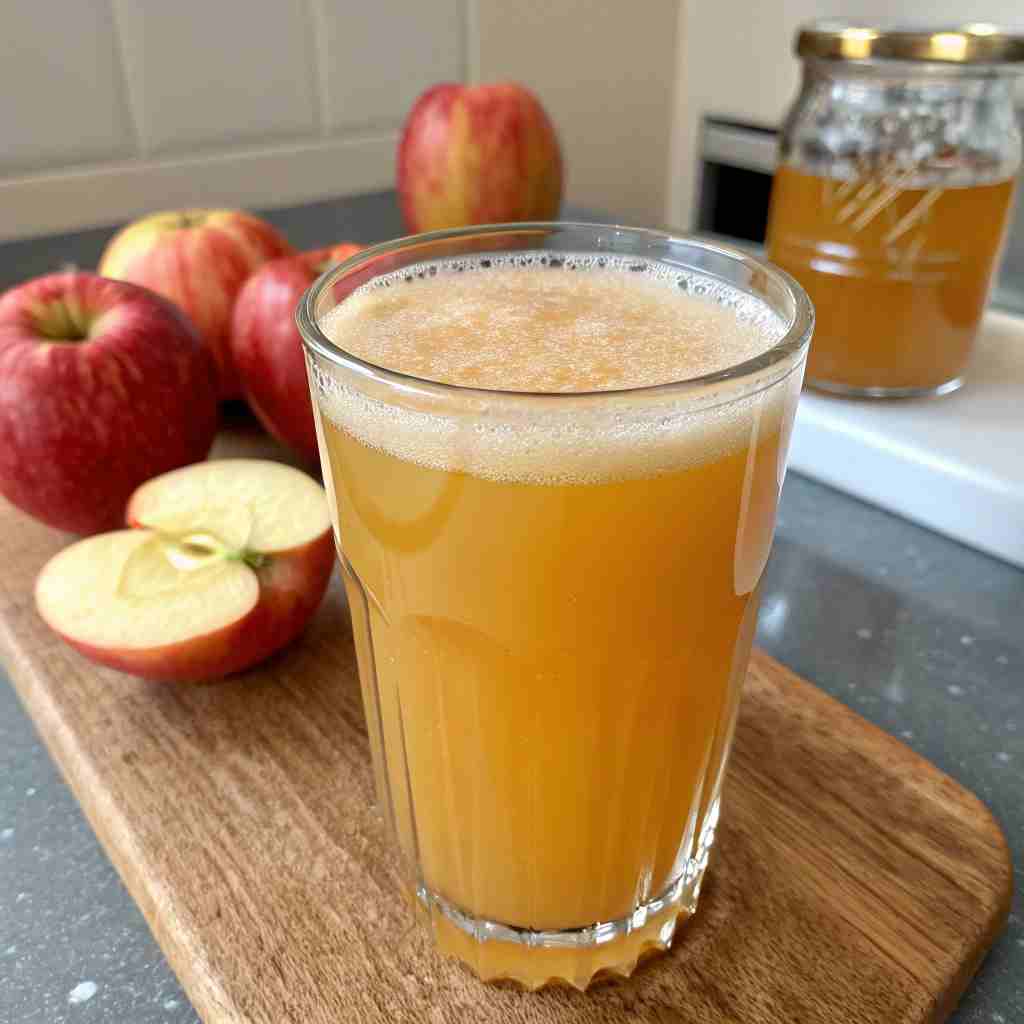
Looking for a way to capture the pure, crisp taste of autumn? This Homemade Apple Juice Canning Recipe lets you preserve the vibrant flavor of fresh apples for year-round enjoyment. Perfect for sipping on a cold winter day or adding a fruity twist to your favorite cocktails, this simple guide will walk you through each step to create a delicious and shelf-stable apple juice that’s far superior to anything you’ll find in the store. A truly delightful way to enjoy your harvest!
Jump To :
Key Ingredients for Homemade Apple Juice:
- Apples: 10-12 pounds of a variety of apples (Gala, Fuji, Honeycrisp, or a mix for added flavor complexity) that are ripe, unbruised, and blemish-free. Avoid overripe or mealy apples.
- Water: Approximately 4 cups, used as needed during the juicing process to prevent scorching and to help extract the juice more efficiently. Use filtered water for best results and flavour.
- Lemon Juice (Optional): 2 tablespoons per batch. Acts as a natural preservative and helps to prevent browning (oxidation).
Note: Sugar is not needed for preserving or flavoring the juice. The sweetness comes directly from the apples themselves
How to Make Apple Juice:
This recipe is straightforward and satisfying, offering a taste of pure, unfiltered apple flavor. It requires minimal ingredients and equipment, making it ideal for both beginner and experienced canners. The final result is a deliciously refreshing juice that captures the essence of fall.
Preparation time is approximately 20 minutes, and cooking/canning time is roughly 1-1.5 hours, depending on your canning method.
Step-by-Step Instructions:
Prepare the Apples: Wash the apples thoroughly under cold running water. Remove any stems and blossom ends. Cut the apples into quarters, removing the core and any seeds. Do not peel the apples, as the skin adds flavour and colour to the juice.
Juice the Apples: Transfer the apple quarters into a large pot or stockpot. Add enough water (about 4 cups) to almost cover the apples. The water helps to prevent scorching and aids in juice extraction.
Cook the Apples: Bring the mixture to a simmer over medium heat. Reduce the heat to low, cover the pot, and let the apples cook until they are soft and pulpy, about 20-30 minutes. Stir occasionally to prevent sticking.
Extract the Juice: Line a large colander or strainer with several layers of cheesecloth or a clean jelly bag. Place the colander over a large bowl or pot. Carefully pour the cooked apple mixture into the cheesecloth-lined colander.
Strain the Juice: Let the apple pulp drain naturally for several hours, or overnight in the refrigerator. Avoid pressing the pulp, as this can result in a cloudy juice. If you want to speed up the process gently sqeeze the cheesecloth but dont force it.
Clarify the Juice (Optional): If you prefer a clearer juice, you can strain it again through a clean cheesecloth. This step further removes any remaining sediment.
Prepare the Canning Jars: Wash canning jars, lids, and bands in hot, soapy water. Rinse well. Sterilize the jars by boiling them in a large pot of water for 10 minutes. Keep the jars hot until you are ready to fill them. You can sterilize lids and bands by simmering them in water.
Heat the Apple Juice: Pour the strained apple juice into a clean pot. Add lemon juice, if desired. Heat the juice over medium heat until it reaches 190°F (88°C). Do not boil the juice.
Fill the Jars: Using a jar lifter, carefully remove the hot sterilized jars from the boiling water. Place them on a clean towel. Ladle the hot apple juice into the jars, leaving 1/4-inch headspace at the top of each jar.
Remove Air Bubbles: Gently tap the jars on the countertop to release any trapped air bubbles. If necessary, use a non-metallic utensil (such as a spatula) to run along the inside of the jar to release the bubbles.
Wipe Jar Rims: Wipe the rims of the jars with a clean, damp cloth to remove any spills or residue.
Apply Lids and Bands: Place a sterilized lid on top of each jar, making sure the sealing compound is facing down. Screw on the bands until fingertip tight. Do not overtighten.
Process in a Water Bath Canner: Place the filled jars into a hot water bath canner. Ensure that the jars are completely covered with at least 1 inch of water. Bring the water to a rolling boil, cover the canner, and process the jars for the recommended time based on your altitude (see chart below).
- Altitude 0-1,000 feet: Process for 20 minutes
- Altitude 1,001-6,000 feet: Process for 25 minutes
- Altitude Above 6,000 feet: Process for 30 minutes
Cool and Check Seals: After processing, turn off the heat and carefully remove the jars from the canner using a jar lifter. Place them on a towel-lined surface, allowing at least 1 inch of space between the jars. Let the jars cool completely, undisturbed, for 12-24 hours.
Check for Seals: After the jars have cooled, check the seals by pressing down on the center of each lid. If the lid does not flex or make a popping sound, the jar is properly sealed. If a jar did not seal, refrigerate the juice and use it within 1-2 weeks, or reprocess it with a new lid, following the canning procedure again
Label and Store: Label the sealed jars with the date and contents. Store the jars in a cool, dark, and dry place. Properly canned apple juice can last for up to 1-2 years.
Why You’ll Love This Homemade Apple Juice
Firstly, the taste is incomparable! This homemade apple juice bursts with the pure, natural flavor of fresh apples, a world away from the diluted taste of store-bought varieties. You control the apple blend, crafting a juice that perfectly suits your palate. Secondly, making your own apple juice saves you money, especially if you have access to apple trees or can buy apples in bulk during harvest season. You’re essentially creating a premium product at a fraction of the cost. Finally, you control the ingredients. No high-fructose corn syrup, artificial flavors, or preservatives—just pure, wholesome apple goodness.
Compared to making apple cider (which often involves spices and fermentation), this unfermented juice highlights the true taste of the apples. If you love this recipe, consider trying a simple apple cider recipe next! Go ahead, indulge in the goodness. Try making it today!
What to Serve Homemade Apple Juice With:
Homemade apple juice is a versatile drink that complements a wide range of foods. Here are some serving suggestions:
- Breakfast: Enjoy a glass of chilled apple juice with pancakes, waffles, or oatmeal.
- Lunch: Pair apple juice with a grilled cheese sandwich, a salad, or a turkey wrap.
- Snack: Serve apple juice with cheese and crackers, apple slices with peanut butter, or a homemade muffin.
- Dinner: Complement roasted chicken or pork with a refreshing glass of apple juice.
- Cocktails: Use apple juice as a base for cocktails like Apple Cider Mimosas or Apple Pie Martinis.
Top Tips for Perfecting Homemade Apple Juice:
- Apple Variety Matters: Experiment with different apple varieties to find your favorite blend. A mix of sweet and tart apples can create a more complex flavor profile.
- Don’t Overcook the Apples: Cooking the apples just until they are soft prevents a cloudy juice. Overcooked apples can release too much starch, resulting in a thicker, less clear juice.
- Gentle Straining is Key: Avoid pressing the pulp during straining, as this can make the juice cloudy. Let gravity do the work for a cleaner juice.
- Proper Headspace is Essential: Leaving the correct amount of headspace (1/4 inch) allows for proper sealing during the canning process.
- Altitude Adjustments are Necessary: Adjust processing times according to your altitude to ensure safe and effective canning.
- Consider adding spices: If desired you can simmer cinnamon sticks, cloves to add a depth of flavour. Remember less is more
5 Facts about Homemade Apple Juice
- Nutrient-Rich: Apple juice is a good source of vitamins, minerals, and antioxidants, including vitamin C, potassium, and polyphenols.
- Hydrating: Apple juice is a refreshing and hydrating beverage, perfect for quenching thirst on a hot day.
- Digestive Aid: The natural sugars and enzymes in apple juice can aid in digestion.
- Versatile Recipe: You can adjust the flavor of homemade apple juice by using different apple varieties or adding spices like cinnamon or nutmeg.
- Prevents Dehydration: Apple juice has electrolytes which is great after workout or playing in sports
Storing and Reheating Tips:
Storing:
- Canned Apple Juice: Properly canned apple juice can be stored in a cool, dark, and dry place for up to 1-2 years.
- Refrigerated Apple Juice (Uncanned): Homemade fresh juice typically contains pulp. Fresh apple juice can last for up to a week in the refrigerator.
- Freezing Apple Juice: Store apple juice in the freezer to extend their longevity.
Reheating:
Apple juice does not typically need to be reheated. However, if you prefer to serve it warm, you can gently heat it on the stovetop over low heat, being careful not to boil it. Do not microwave canned apple juice.
Final Thoughts:
This Homemade Apple Juice Canning Recipe is your ticket to enjoying the pure, unadulterated taste of apples year-round. It’s a delightful project that allows you to connect with the harvest season and create a wholesome, preservative-free beverage for yourself and your loved ones. So gather your apples, sterilize your jars, and embark on this rewarding canning journey. The taste of orchard-fresh apple juice awaits!
Read More also:
- Pressure Canning Chicken Broth
- Canning Lemonade Concentrate
- Homemade Apple Sauce Recipe
- Easy Sweet Peach Syrup
- Our Pinterest
Homemade Apple Juice FAQs
Q: What types of apples are best for making apple juice?
A: A mix of sweet and tart apples, such as Gala, Fuji, Honeycrisp, and Granny Smith, is ideal for creating a balanced flavor.
Q: Do I need to peel the apples before juicing them?
A: No, you do not need to peel the apples. The skin adds flavor and color to the juice.
Q: Can I use bruised apples?
A: It’s best to use apples that are in good condition, as bruised or overripe apples can affect the flavor and quality of the juice.
Q: How long does canned apple juice last?
A: Properly canned apple juice can last for up to 1-2 years when stored in a cool, dark, and dry place.
Q: Can I freeze canned apple juice?
A: No, it is not recommended to freeze canned apple juice once opened frozen the texture will change.
Q: My apple juice turned brown after canning. Is it still safe to drink?
A: Yes, it is still safe to drink. The browning is caused by oxidation. Adding lemon juice can reduce this.
Q: What if a jar doesn’t seal properly?
A: If a jar doesn’t seal, refrigerate the juice and use it within 1-2 weeks, or reprocess it with a new lid, following the canning procedure again.