
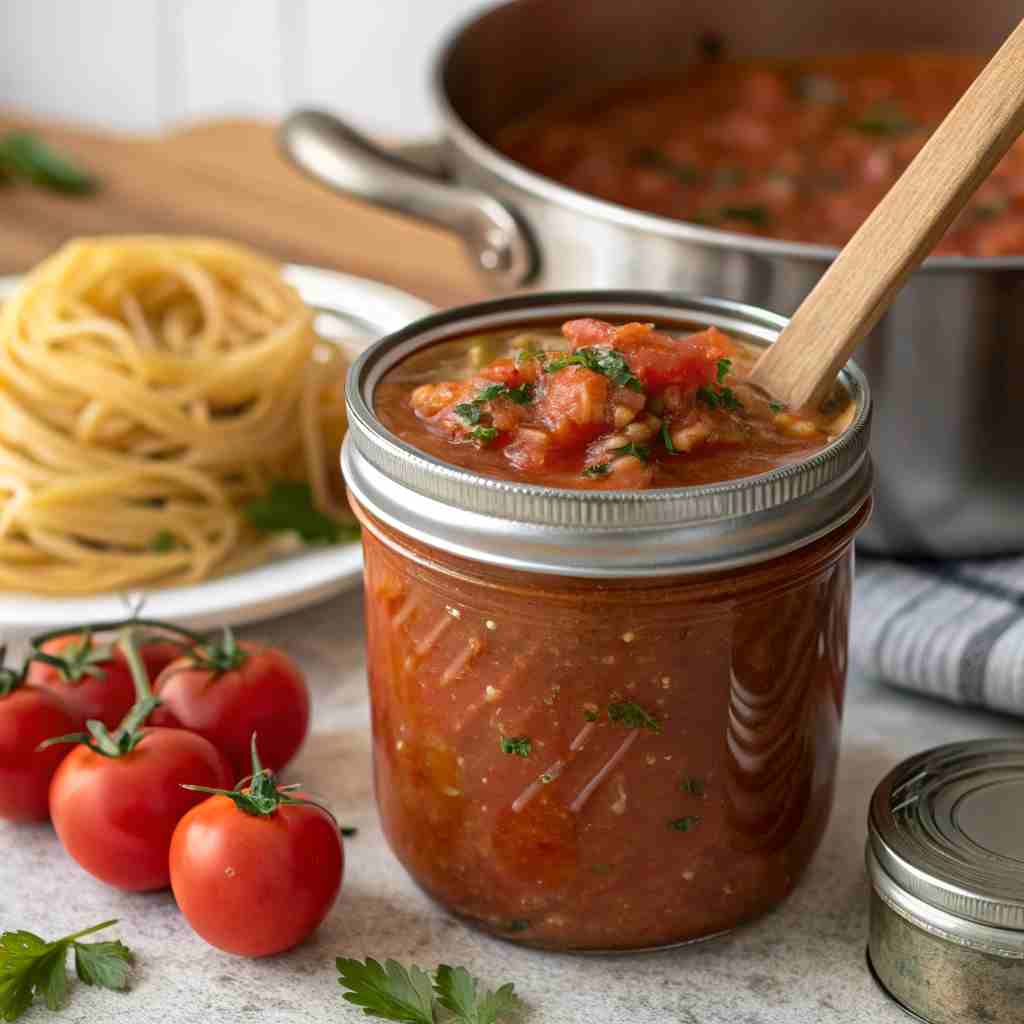
Looking for the most delicious and rewarding way to use your garden tomatoes? This Canning Spaghetti Sauce recipe transforms fresh, seasonal ingredients into a pantry staple that’s ready to elevate any pasta night.
This homemade Italian recipe is perfect for preserving the taste of summer and enjoying it year-round. Forget those bland store-bought sauces – unlock the authentic flavors of Italy with this easy-to-follow guide.
Jump To :
What is Canning Spaghetti Sauce?
Canning Spaghetti Sauce is the art of preserving a beloved Italian staple, allowing you to enjoy the vibrant taste of homemade sauce long after tomato season ends. This recipe involves cooking down ripe tomatoes with aromatic vegetables, herbs, and spices to create a rich and flavorful sauce, then safely sealing it in sterilized jars using a water bath canner.
Unlike store-bought varieties laden with preservatives and often lacking in authentic flavor, homemade canned spaghetti sauce lets you control the ingredients, ensuring a fresh, healthy, and delicious final product. It’s a time-honored tradition that empowers you to stock your pantry with a taste of home, ready to transform any meal into a comforting Italian feast.
Ready to ditch the jarred stuff and taste the difference? Let’s get canning!
Key Ingredients for Canning Spaghetti Sauce:
- Tomatoes (25 lbs): Roma or San Marzano tomatoes are ideal due to their meaty texture and low water content. Wash, core, and roughly chop them.
- Olive Oil (½ cup): Extra virgin olive oil adds richness and flavor to the sauce.
- Onions (2 large): Yellow or white onions, finely chopped.
- Garlic (6 cloves): Minced for a pungent aroma and flavor.
- Green Bell Pepper (2 large): Diced finely.
- Carrots (2 medium): Finely diced.
- Celery (2 stalks): Finely diced.
- Dried Oregano (2 tablespoons): Provides classic Italian flavor.
- Dried Basil (2 tablespoons): Adds a sweet and aromatic note.
- Dried Thyme (1 tablespoon): Enhances the savory depth of the sauce.
- Bay Leaves (2-3): Infuse a subtle herbal aroma; remove before canning.
- Sugar (¼ cup): Balances the acidity of the tomatoes. Adjust to taste.
- Salt (2 tablespoons): Enhances the flavors and acts as a preservative.
- Black Pepper (1 teaspoon): Freshly ground, for a hint of spice.
- Bottled Lemon Juice (1 cup): Essential for safe canning, as it increases the acidity of the sauce. Do not skip! Replace with citric acid if desired (1/4 tsp per pint jar).
How to Make Canning Spaghetti Sauce:
This Canning Spaghetti Sauce recipe is easier than you think! Simmering the tomatoes with vegetables and herbs creates a wonderfully intense flavor, while the canning process ensures you can enjoy it all year round. The active preparation time is about 1-2 hours, with a simmering time of 3-4 hours to develop its rich depth of flavor, plus canning time.
Step-by-Step Instructions:
- Prepare the Tomatoes: Wash, core, and roughly chop the tomatoes. You can peel them if desired (blanching them in boiling water for a minute makes peeling easier), but it’s not necessary.
- Sauté the Aromatics: In a large, heavy-bottomed pot or Dutch oven, heat the olive oil over medium heat. Add the onions, garlic, green bell pepper, carrots, and celery. Sauté until softened, about 10-15 minutes. Stir frequently to prevent burning.
- Add the Tomatoes and Seasonings: Add the chopped tomatoes, oregano, basil, thyme, bay leaves, sugar, salt, and pepper to the pot. Stir well to combine.
- Simmer the Sauce: Bring the sauce to a simmer, then reduce the heat to low. Cover the pot and simmer for 3-4 hours, stirring occasionally to prevent sticking. The sauce should thicken and deepen in flavor.
- Remove Bay Leaves: After simmering, remove the bay leaves and discard them.
- Adjust Consistency (Optional): If you prefer a smoother sauce, use an immersion blender to blend the sauce to your desired consistency. Be careful when blending hot liquids! Alternatively, you can use a food mill or a regular blender in batches. Be extremely cautious of steam release.
- Prepare Canning Jars: Wash canning jars (pint or quart size) and lids in hot, soapy water. Rinse well. Sterilize the jars by boiling them in a water bath canner for 10 minutes. Keep the jars hot until ready to use. You can also sterilize them in the oven according to manufacturer’s instructions.
- Prepare Lids and Rings: Heat the canning lids in a small saucepan of simmering water. Do not boil. Keep them hot until ready to use. The rings do not need to be heated.
- Add Lemon Juice: Stir in the bottled lemon juice (1 tablespoon per pint or 2 tablespoons per quart) into the bottom of each sterilized jar. This is crucial for ensuring the proper acidity for safe canning.
- Fill the Jars: Ladle the hot spaghetti sauce into the hot sterilized jars, leaving ½ inch of headspace at the top.
- Remove Air bubbles: Use a non-metallic utensil (like a spatula or wooden skewer) to gently press down on the sauce and release any trapped air bubbles.
- Wipe Jar Rims: Wipe the rims of the jars clean with a damp cloth. This ensures a proper seal.
- Place Lids and Rings: Place a hot lid on each jar, then screw on a ring until fingertip tight (not too tight).
- Process in Water Bath Canner: Carefully lower the filled jars into a boiling water bath canner. The water should cover the jars by at least 1 inch. Bring the water to a rolling boil, then process the jars for the recommended time, based on your altitude. Find processing times based on your altitude at the National Center for Home Food Preservation website. For most areas under 1,000 feet:
- Pints: 35 minutes
- Quarts: 40 minutes
- Remove Jars and Cool: Turn off the heat and carefully remove the jars from the canner using jar lifters. Place them on a towel-lined surface, leaving space between them.
- Check for Seals: Let the jars cool completely, undisturbed, for 12-24 hours. After cooling, check the seals by pressing down on the center of each lid. If the lid doesn’t flex up and down, the jar is sealed.
- Label and Store: Label the jars with the date and contents. Store them in a cool, dark place for up to 18 months.
- Unsealed Jars: If any jars didn’t seal, refrigerate the sauce immediately and use it within a week, or reprocess with new lids and follow proper canning procedure.
Why You’ll Love This Canning Spaghetti Sauce:
This Canning Spaghetti Sauce recipe is a game-changer for home cooks! The highlight is undoubtedly the incredibly rich and authentic Italian flavor, far superior to anything you can buy in a store. Imagine transforming the bounty of your garden into a pantry staple! Beyond taste, making your own sauce is a huge cost saver. Store-bought sauces can be surprisingly expensive, especially the good quality ones.
Making a big batch of canned spaghetti sauce is much more economical, especially when using homegrown tomatoes. Finally, the beauty of homemade lies in its versatility. You can customize it with your favorite toppings and ingredients, like mushrooms, sausage, or different herbs, for a truly personalized flavor.
If you love this, why not try a simple marinara sauce? While it doesn’t include the added vegetables of a spaghetti sauce, it’s still a great way to use up tomatoes!
What to Serve Canning Spaghetti Sauce With:
This homemade Canning Spaghetti Sauce is incredibly versatile! Of course, it’s fantastic with any type of pasta – spaghetti, penne, linguine – the possibilities are endless. For a complete Italian feast, serve it alongside meatballs, Italian sausage, or grilled chicken. A simple garlic bread and a fresh green salad make perfect accompaniments.
If you’re looking for a heartier meal, try layering it in lasagna or using it as a base for chicken parmesan. Don’t forget a glass of Chianti or your favorite Italian wine to complete the experience!
Top Tips for Perfecting Canning Spaghetti Sauce:
- Use the Best Tomatoes: The quality of your tomatoes will directly impact the flavor of your sauce. Roma or San Marzano tomatoes are best for canning due to their low water content and meaty texture.
- Don’t Skip the Lemon Juice: Bottled lemon juice (or citric acid) is crucial for ensuring the proper acidity for safe canning. Never skip this step!
- Simmer Low and Slow: Simmering the sauce for a long time allows the flavors to meld and the sauce to thicken. Don’t rush the process!
- Adjust Seasonings to Taste: Taste the sauce throughout the simmering process and adjust the seasonings (salt, sugar, herbs) to your liking.
- Remove Air Bubbles: Removing air bubbles from the jars before processing is essential for ensuring a good seal.
- Check Seals Carefully: After processing, check the seals by pressing down on the center of each lid. If the lid flexes up and down, the jar is not properly sealed and should be refrigerated.
- If You Don’t Have a Canner: Although a water bath canner is ideal, large stock pot with a rack on the bottom can be used. Ensure the jars are fully submerged in water.
5 Facts about Canning Spaghetti Sauce:
- Historical Roots: Canning dates back to the early 19th century, developed as a way to preserve food for Napoleon’s army.
- Acid Matters: The acidity level (pH) of food determines how it must be processed for safe canning. Tomatoes are borderline, which is why adding lemon juice or citric acid is critical.
- Nutrient Retention: Canning helps preserve many of the nutrients in tomatoes, including lycopene, a powerful antioxidant.
- Homemade is Healthier: Homemade canned spaghetti sauce allows you to control the ingredients, avoiding artificial preservatives, excessive sodium, and added sugars found in many commercial brands.
- Batch Size: You can easily scale this recipe up or down depending on the amount of tomatoes you have. Just be sure to adjust the quantities of all other ingredients accordingly.
Storing and Reheating Tips:
- Storing: Properly sealed jars of Canning Spaghetti Sauce can be stored in a cool, dark, and dry place for up to 18 months. Avoid storing them in areas with fluctuating temperatures or direct sunlight.
- Refrigerating: Once opened, refrigerate leftover sauce in an airtight container and use it within 5-7 days.
- Freezing: If you have extra sauce that you won’t use within a week, you can freeze it in freezer-safe containers or bags. It will keep in the freezer for up to 3 months.
- Reheating: To reheat, simply warm the sauce in a saucepan over medium heat, stirring occasionally, until heated through. You can also reheat it in the microwave in a microwave-safe dish.
Final Thoughts:
This Canning Spaghetti Sauce recipe is more than just a set of instructions; it’s a gateway to delicious, homemade meals and a connection to a preserving tradition. By following these steps, you can create a pantry stocked with flavorful sauce that will bring the taste of summer to your table year-round. Happy canning!
Read More also:
- Canning Pickled Jalapeños
- Canning Pickled Asparagus
- Canning Pickled Carrots
- Canning Hot Pepper Jelly
- Canning Mushroom Soup
- Canning Apricot Jam Recipe
- Canning Fig Jam Recipe
- Canning Plum Jam
- Our Pinterest
Canning Spaghetti Sauce FAQs:
- Can I use different types of tomatoes?
While Roma and San Marzano tomatoes are recommended due to their lower water content, you can use other types of tomatoes. However, you may need to simmer the sauce for a longer period to achieve the desired thickness. - Can I add meat to the sauce before canning?
It is not recommended to add meat to the sauce before canning, as it can affect the processing time and safety. It is best to add cooked meat to the sauce when you are ready to serve it. - What if I don’t have bottled lemon juice?
You can substitute with citric acid (1/4 teaspoon per pint jar). Do not skip the acid!
Going to try this as my first canning project. How many pints does this make? Need to make sure I have the right amount jars