
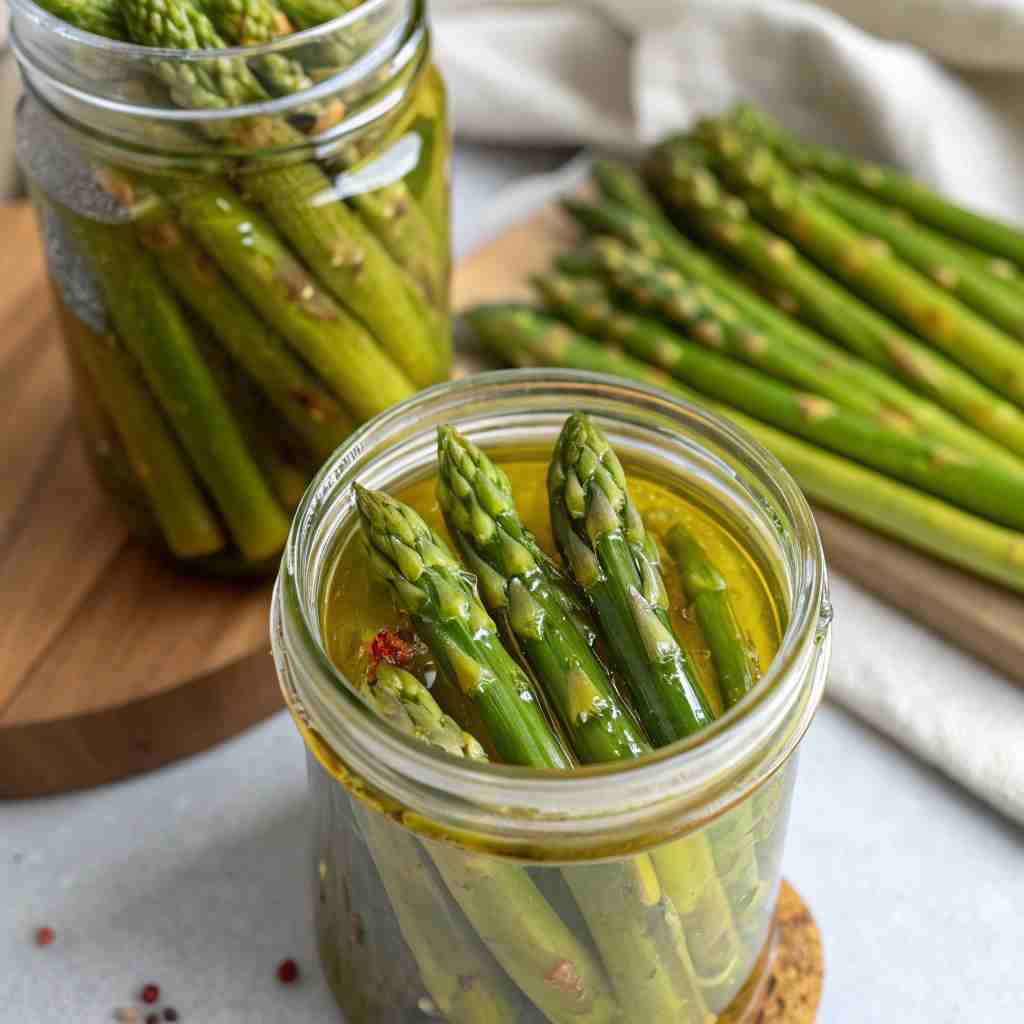
Are you searching for a way to enjoy fresh asparagus long after the growing season is over? Look no further than Canning Pickled Asparagus! This recipe transforms tender spears into a tangy, crisp, and delicious preserve, perfect as a gourmet side dish, appetizer, or addition to your favorite charcuterie board.
Pickled asparagus isn’t just about preserving; it’s about enhancing the natural flavor of the asparagus with a delightful vinegar brine and aromatic spices, creating a truly irresistible treat. This guide will walk you through every step, ensuring you create a safe, delicious, and shelf-stable product.
Jump To :
What is Canning Pickled Asparagus?
Canning Pickled Asparagus is a process of preserving fresh asparagus spears in a vinegar-based brine, combined with spices and herbs, and then sealing them in jars using a water bath canning method. This centuries-old technique allows you to enjoy the vibrant taste and texture of springtime asparagus throughout the year.
The pickling process not only extends the shelf life of the asparagus but also infuses it with a tangy, zesty flavor that complements its natural earthiness. It’s a delightful way to add a gourmet touch to your pantry and impress your friends and family with your culinary skills. Imagine pulling out a jar of beautifully preserved asparagus in the middle of winter – a taste of spring whenever you desire! Are you ready to try this rewarding and delicious canning project? Start your culinary adventure today!
Key Ingredients for Canning Pickled Asparagus:
- Fresh Asparagus: 2 pounds, choose young, tender spears about 4-6 inches long. Wash thoroughly and trim the tough ends.
- White Vinegar: 4 cups (5% acidity) essential for the pickling process, providing the necessary acidity for safe preservation.
- Water: 2 cups, used to dilute the vinegar and create the brine.
- Pickling Salt: 4 tablespoons, essential for preserving and enhancing flavor. Avoid using iodized salt as it can darken the pickles.
- Sugar: 2 tablespoons, balances the acidity and adds a subtle sweetness.
- Garlic Cloves: 4 cloves, peeled and crushed, for a pungent aromatic flavor.
- Dill Seed: 2 tablespoons, provides a classic pickling flavor. Can be substituted with fresh dill sprigs (about 4 sprigs).
- Mustard Seeds: 2 teaspoons, adds a subtle peppery bite and complexity.
- Black Peppercorns: 1 teaspoon, adds a warm, spicy note.
- Red Pepper Flakes: 1/2 teaspoon (optional), for a touch of heat.
- Bay Leaves: 4 leaves, adds a subtle depth of flavor to the brine.
- Canning Jars: 4-pint jars with lids and bands, sterilized according to USDA guidelines.
How to Make Canning Pickled Asparagus:
This recipe is surprisingly easy and rewarding. It transforms garden-fresh asparagus into a delightful, tangy treat that you can enjoy year-round. The crisp texture and zesty flavor make it a standout addition to any meal.
Expect a preparation time of about 30 minutes, followed by processing in a hot water bath canner for 10 minutes. The result is a delicious and satisfying preserve that showcases the best of seasonal flavors.
Step-by-Step Instructions:
Step 1: Prepare the Asparagus:
- Wash the asparagus thoroughly under cold running water.
- Trim the tough, woody ends of the asparagus spears, usually about 1-2 inches from the bottom.
- Cut the asparagus spears to fit your canning jars, leaving about 1/2 inch of headspace at the top of the jar. Typically, you’ll cut them into lengths of around 4-5 inches.
- Blanch the asparagus in boiling water for 2 minutes to help preserve their color and texture. Immediately transfer them to an ice bath to stop the cooking process. Drain well.
Step 2: Prepare the Brine:
- In a large, non-reactive saucepan (stainless steel or enamel-coated), combine the white vinegar, water, pickling salt, and sugar.
- Bring the mixture to a boil over medium-high heat, stirring until the salt and sugar are completely dissolved.
- Once boiling, reduce the heat to low and keep the brine warm.
Step 3: Prepare the Jars:
- Ensure your canning jars, lids, and bands are sterilized. You can do this by boiling them in a water bath canner for 10 minutes, or by running them through a sterilizing cycle in your dishwasher.
- Keep the jars hot until ready to fill.
Step 4: Pack the Jars:
- Place 1 clove of crushed garlic, 1/2 teaspoon of dill seed, 1/2 teaspoon of mustard seeds, a pinch of red pepper flakes (if using), 2-3 black peppercorns, and 1 bay leaf into each hot, sterilized pint jar.
- Tightly pack the blanched asparagus spears vertically into the jars, leaving about 1/2 inch of headspace at the top.
Step 5: Fill with Brine:
- Carefully pour the hot brine over the asparagus spears, ensuring that they are completely submerged. Again, maintain the 1/2 inch headspace.
- Use a non-metallic utensil (like a plastic spatula) to gently press the asparagus down and release any trapped air bubbles.
- Wipe the rim of each jar with a clean, damp cloth to remove any spills.
Step 6: Seal the Jars:
- Place the sterilized lids on top of the jars.
- Screw the bands on fingertip-tight – not too loose, not too tight. Just enough to secure the lid.
Step 7: Process in a Water Bath Canner:
- Place the filled jars into a boiling water bath canner. Make sure the jars are completely submerged in the water, with at least 1-2 inches of water covering the tops of the jars.
- Bring the water to a rolling boil and process the jars for 10 minutes. Adjust processing time for altitude if needed, adding 5 minutes for every 1000 feet above sea level.
Step 8: Cool and Check Seals:
- Turn off the heat and carefully remove the jars from the canner using a jar lifter. Place them on a towel-lined surface to cool undisturbed for 12-24 hours.
- As the jars cool, you should hear a “pop” sound as the lids seal. After 24 hours, check the seals by pressing down on the center of each lid. If the lid doesn’t flex or pop back up, it’s properly sealed. If a lid doesn’t seal, refrigerate that jar and consume its contents within a week.
Step 9: Label and Store:
- Label each jar with the date and contents.
- Store the canned pickled asparagus in a cool, dark, and dry place for at least 2-3 weeks to allow the flavors to fully develop. Properly sealed jars can be stored for up to a year.
Why You’ll Love This Canning Pickled Asparagus
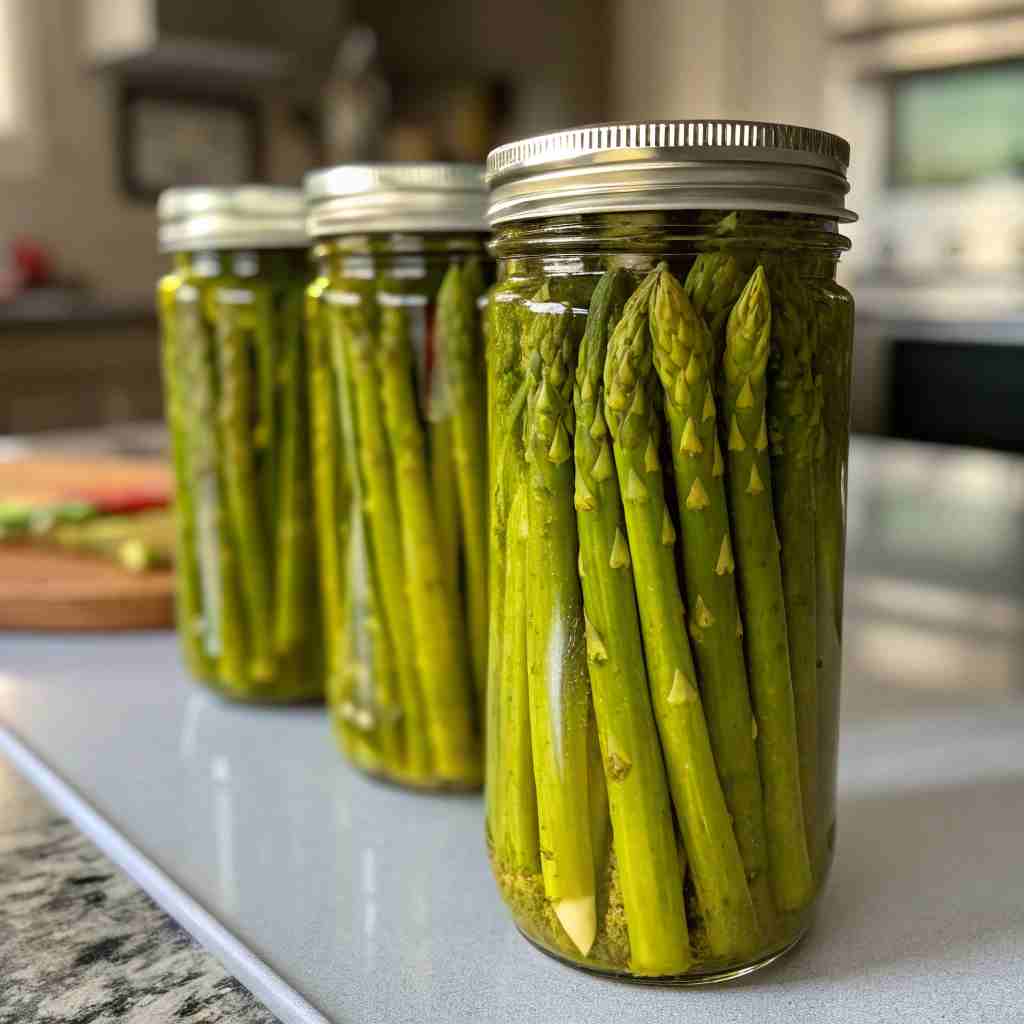
The main highlight of this recipe is its gourmet flavor profile. The tangy brine, aromatic spices, and crisp texture transform plain asparagus into a delightful treat. Making pickled asparagus at home is also incredibly cost-effective. Purchasing commercially canned pickled asparagus can be quite expensive, but by canning it yourself, you can save a significant amount of money while controlling the quality of the ingredients.
The flavorful blend of garlic, dill, mustard seeds, and peppercorns makes this pickled asparagus truly special, adding depth and complexity to every bite. If you enjoy pickling, you might also like trying pickled green beans, which offer a similar crunchy texture and tangy flavor. Why not give canning pickled asparagus a try and add a touch of homemade goodness to your meals?
What to Serve Canning Pickled Asparagus With:
Canned pickled asparagus is a versatile addition to many dishes. It pairs perfectly with a charcuterie board, offering a crisp and tangy counterpoint to rich cheeses and cured meats. It’s also a fantastic accompaniment to grilled meats, adding a refreshing and flavorful element to your plate. Consider serving it alongside smoked salmon or as a vibrant addition to a salad.
For a simple snack, enjoy it straight from the jar as a healthy and satisfying treat. The bright, acidic flavor of the pickled asparagus also complements heartier dishes like roasted chicken or pork.
Top Tips for Perfecting Canning Pickled Asparagus:
- Use Fresh, Tender Asparagus: The quality of your asparagus will directly impact the final product. Choose young, firm spears for the best results.
- Don’t Overcook the Asparagus: Blanching the asparagus is important, but overcooking it will result in mushy pickles. Two minutes is usually sufficient.
- Use Pickling Salt: Avoid iodized salt as it can darken the pickles and alter the flavor. Pickling salt ensures clear, crisp results.
- Ensure Correct Acidity: Using the correct amount of vinegar is crucial for safe canning. Stick to a 5% acidity level to prevent spoilage.
- Proper Headspace is Key: Leaving the recommended 1/2 inch headspace ensures a proper seal.
- Adjust Processing Time for Altitude: If you live at a higher altitude, adjust the processing time according to USDA guidelines to ensure proper sterilization.
- Experiment with Flavors: Feel free to customize the brine with your favorite spices and herbs. Options include coriander seeds, dried chili peppers, or fresh herbs like tarragon.
- Patience is a Virtue: Allow the pickles to sit for at least 2-3 weeks before opening. This allows the flavors to fully develop and blend together.
5 Facts about Canning Pickled Asparagus:
- Ancient Preservation Method: Pickling has been used for thousands of years to preserve food, dating back to ancient Mesopotamia.
- Vitamin Rich: Pickled asparagus retains many of the vitamins and minerals found in fresh asparagus, including vitamins K, A, and C, as well as folate and fiber.
- Global Delicacy: Pickled vegetables are a staple in many cultures around the world, with variations depending on the region and local ingredients.
- Versatile Ingredient: Pickled asparagus can be used in a variety of dishes, from appetizers and salads to main courses.
- Probiotic Potential: Due to the fermentation process, pickled vegetables can contain beneficial probiotics that support gut health.
Storing and Reheating Tips:
Storing:
- Once cooled and properly sealed, store your canned pickled asparagus in a cool, dark, and dry place, such as a pantry or basement.
- Properly sealed jars can be stored for up to one year.
- Refrigerate any jars that don’t seal properly. These should be consumed within a week.
Reheating (Not Applicable):
- Pickled asparagus is typically served cold or at room temperature, so reheating is not necessary.
Final Thoughts:
Canning Pickled Asparagus is a rewarding way to preserve the taste of spring and create a gourmet treat to enjoy year-round. With its tangy flavor and crisp texture, it’s a delightful addition to any meal. Follow this guide carefully, and you’ll be able to create a safe, delicious, and shelf-stable product that you can proudly share with friends and family. Happy canning!
Read More also:
- Canning Apple Jelly
- Canning Pear Jelly
- Canning Mint Jelly
- Canning Hot Pepper Jelly
- Canning Mushroom Soup
- Canning Apricot Jam Recipe
- Canning Fig Jam Recipe
- Canning Plum Jam
- Our Pinterest
Canning Pickled Asparagus FAQs:
Q: Is it safe to can pickled asparagus at home?
A: Yes, as long as you follow a tested recipe and proper canning procedures, such as those outlined in this guide. Ensuring the correct acidity level and processing time is crucial for safe preservation.
Q: Can I use different types of vinegar?
A: While white vinegar is most commonly used, you can experiment with other types of vinegar like apple cider vinegar or white wine vinegar. However, make sure the vinegar has a 5% acidity level for safe canning.
Q: Can I use different spices?
A: Absolutely! Feel free to customize the brine with your favorite spices and herbs. Options include coriander seeds, dried chili peppers, or fresh herbs like tarragon and Thyme.
Q: How long will the pickled asparagus last?
A: Properly sealed jars of pickled asparagus can be stored for up to one year in a cool, dark, and dry place.
Q: My asparagus turned out soft. What did I do wrong?
A: Overcooking the asparagus during blanching can result in a soft texture. Make sure to blanch for only 2 minutes and immediately transfer to an ice bath to stop the cooking process.
Q: Some of my jars didn’t seal properly. What should I do?
A: Refrigerate any jars that didn’t seal and consume their contents within a week.
Q: Can I reuse canning lids?
A: No, canning lids are designed for single-use only. Once they have been used for processing, they cannot be reused for canning. However, you can reuse the canning bands/rings.