
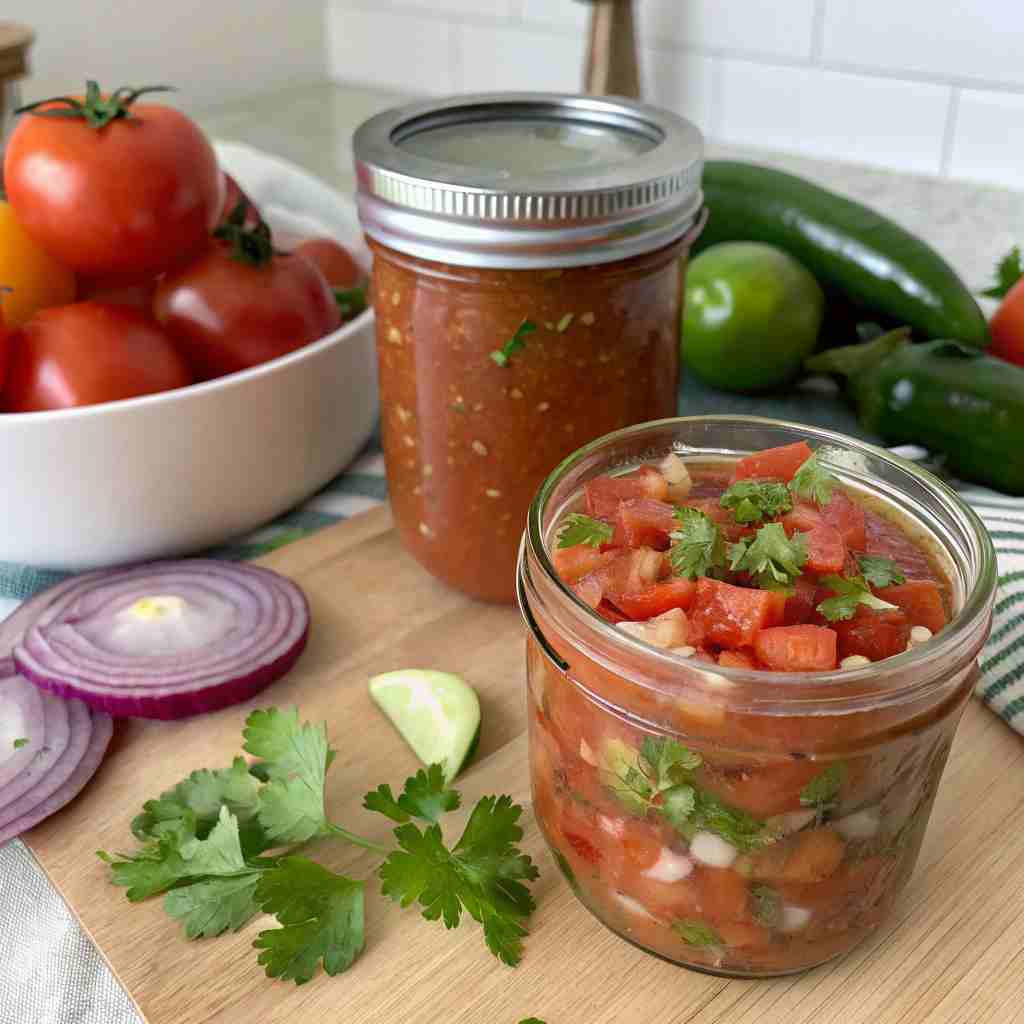
Want to enjoy garden-fresh salsa all year round? This Canning Salsa recipe is your answer! It’s a tried-and-true, safely tested recipe that’s perfect for beginners. You’ll learn how to preserve that delicious homemade salsa flavor so you can enjoy it long after tomato season is over. This recipe walks you through the canning process step-by-step, ensuring a safe and flavorful result.
Jump To :
What is Canning Salsa?
Canning Salsa is a way to preserve the fresh flavors of homemade salsa through a process that creates a vacuum seal in jars, preventing spoilage and allowing it to be stored at room temperature for extended periods. Unlike store-bought salsas that often contain preservatives, canning allows you to control the ingredients and enjoy a fresh, homemade taste.
Using fresh tomatoes, onions, peppers, and spices, canning salsa transforms seasonal ingredients into a pantry staple you can enjoy throughout the year. It’s a fulfilling project that brings the taste of summer to your table even in the coldest months. Gather your ingredients and let’s get started on making your own delicious canned salsa!
Key Ingredients for Canning Salsa:
- 8 cups (about 5 pounds) ripe tomatoes, peeled, cored, and chopped: Roma or paste tomatoes are ideal for their meatier flesh and lower water content.
- 4 cups chopped onions: Yellow or white onions both work well.
- 1 cup chopped green bell pepper: You can substitute with red or yellow bell peppers for a sweeter flavor.
- 1/2 cup chopped jalapeño peppers: Adjust the amount to your preferred spice level. Be sure to wear gloves when handling jalapeños! Remove the seeds and membranes for a milder salsa.
- 4 cloves garlic, minced: Fresh garlic adds a robust flavor.
- 1 cup cider vinegar (5% acidity): Essential for safe canning; do not substitute. The acidity helps prevent botulism. It’s crucial to use vinegar with 5% acidity.
- 2 teaspoons salt: Enhances the flavors of the vegetables.
- 1 teaspoon ground cumin: Adds a warm, earthy note.
- 1 teaspoon dried oregano: Contributes a classic Mexican flavor.
- 1/2 teaspoon black pepper: Adds a touch of spice.
- 1/4 cup chopped cilantro (optional): Adds a fresh, bright flavor. Add after canning is complete.
How to Make Canning Salsa:
This Canning Salsa recipe delivers a vibrant, delicious salsa perfect for dipping, topping, or using in your favorite Mexican-inspired dishes. It’s surprisingly easy to make, even for canning beginners, and yields a pantry full of flavorful goodness.
Using fresh, simple ingredients, the canning process locks in that garden-fresh taste. With just a little bit of time commitment approximately 1 hour, you’ll have jars of homemade salsa to enjoy any time!
Step-by-Step Instructions:
Prepare the Tomatoes: Wash the tomatoes thoroughly. To easily peel them, bring a large pot of water to a boil. Cut a small “X” on the bottom of each tomato. Place the tomatoes in the boiling water for 30-60 seconds, or until the skin starts to split. Remove the tomatoes with a slotted spoon and immediately transfer them to a bowl of ice water to stop the cooking process. The skins should now easily peel off. Core the tomatoes and chop them coarsely.
Prepare the Vegetables: Chop the onions, green bell pepper, and jalapeño peppers. Mince the garlic. Remember to wear gloves when handling jalapeños to avoid skin irritation.
Combine Ingredients: In a large, non-reactive pot (such as stainless steel or enamel), combine the chopped tomatoes, onions, green bell pepper, jalapeño peppers, garlic, cider vinegar, salt, cumin, and oregano.
Simmer the Salsa: Bring the mixture to a boil over medium-high heat, stirring occasionally. Reduce the heat to low and simmer for 30 minutes, stirring frequently to prevent sticking or burning. The salsa should thicken slightly.
Prepare Canning Equipment: While the salsa is simmering, prepare your canning equipment. Wash canning jars, lids, and bands in hot, soapy water. Rinse well. Place the jars on a rack in a large stockpot. Add enough water to cover the jars by at least 1 inch. Bring the water to a simmer and keep the jars hot. Place the lids in a separate small saucepan and simmer them gently (do not boil) until ready to use.
Fill the Jars: Remove one hot jar from the simmering water at a time, using jar lifters. Carefully ladle the hot salsa into the jar, leaving 1/2-inch headspace (the space between the top of the salsa and the rim of the jar).
Remove Air Bubbles: Use a non-metallic utensil (like a plastic spatula or chopstick) to gently run along the inside of the jar to release any trapped air bubbles. Adjust the headspace if necessary by adding or removing salsa.
Wipe Jar Rims: Wipe the rim of each jar with a clean, damp cloth to remove any salsa residue. This ensures a proper seal.
Place Lids and Bands: Center a hot lid on each jar. Screw on a band until it is fingertip tight (snug, but not overly tight).
Process in a Boiling Water Bath: Carefully lower the filled jars into the boiling water bath, using jar lifters. Ensure the jars are fully submerged, with at least 1 inch of water covering the tops of the jars. Bring the water back to a rolling boil.
Process for Correct Time: Process the jars for the following times, adjusting for altitude:
- 0-1,000 feet: 15 minutes for half-pint (8 oz) or pint (16 oz) jars.
- 1,001-3,000 feet: 20 minutes for half-pint (8 oz) or pint (16 oz) jars.
- 3,001-6,000 feet: 25 minutes for half-pint (8 oz) or pint (16 oz) jars.
- Above 6,000 feet: 30 minutes for half-pint (8 oz) or pint (16 oz) jars.
Cool and Check Seals: Turn off the heat and carefully remove the jars from the boiling water bath using jar lifters. Place the jars on a towel-lined counter or rack, leaving at least 1 inch of space between them. Let the jars cool undisturbed for 12-24 hours. As the jars cool, you may hear a “popping” sound as the lids seal. After the cooling period, check the seals. The lids should be concave (curved downward) and not flex when pressed in the center. If a lid has not sealed, you can reprocess the jar with a new lid within 24 hours, or refrigerate the salsa and use it within a week.
Label and Store: Label the jars with the date and contents. Store in a cool, dark place. Properly canned salsa can be stored for up to 1 year.
Why You’ll Love This Canning Salsa:
This homemade Canning Salsa shines because of its bursting-with-fresh-flavor taste, achieved through carefully controlling the ingredient quality and simmering them to perfection. Making your own canned salsa is also a great way to save money, especially when tomatoes and peppers are in season and available at lower prices. It’s far more economical than buying commercially produced salsa, many of which lacks the vibrant, fresh taste, but come with a premium price. Customization is part of the allure! Choose your heat level by using different peppers, or add other herbs like cilantro (after canning for best flavor preservation).
Compared to something like a basic tomato sauce, Canning Salsa offers a more complex and flavorful profile due to its combination of fresh vegetables, spices, and the crucial addition of vinegar for food safety. Ready to try it out? Whip up a batch of goodness in your own kitchen!
What to Serve Canning Salsa With:
Canning Salsa is incredibly versatile! Serve it with tortilla chips for a classic snack. It’s a fantastic topping for tacos, nachos, quesadillas, and grilled meats. You can also use it as a flavorful ingredient in enchiladas or as a base for spicier soups.
For a refreshing meal, pair it with grilled chicken or fish alongside a side of Mexican rice and black beans. A cool and creamy guacamole complements the salsa perfectly. Add a pitcher of margaritas or iced tea to complete your meal.
Top Tips for Perfecting Canning Salsa:
- Use Fresh, High-Quality Ingredients: The best salsa starts with the best ingredients. Choose ripe, unblemished tomatoes, fresh onions and peppers, and fragrant garlic and spices.
- Don’t Reduce Vinegar: The vinegar is crucial for the safety of the canned salsa. Do not reduce the amount of vinegar, as it affects the acidity level and prevents botulism. Use cider vinegar with 5% acidity.
- Adjust Headspace: Maintaining the proper headspace (1/2 inch) is essential for a good seal. Too much headspace can cause the jar to not seal properly, while too little headspace can cause the salsa to boil over during processing.
- Don’t Overfill Jars: Overfilling causes the salsa to seep out during processing, which can interfere with the seal. Always leave 1/2-inch headspace.
- Process for the Correct Time: Processing times vary based on altitude. Follow the recommended processing times carefully to ensure the salsa is safely preserved. Adjust for your specific altitude to prevent spoilage.
- Cool Jars Gradually: Place the jars on a towel-lined surface and allow them to cool undisturbed. Avoid moving them around or placing them in a drafty area, as this can interfere with the sealing process.
- Spice Level: If you are sensitive to spice, remove the seeds and membranes from the jalapeños. For a milder flavor, you can substitute the jalapeños with a milder pepper like Anaheim or Poblano.
- Tomato Variations: While Roma or paste tomatoes are preferred, you can use other types of tomatoes if needed. Just be aware that the salsa may be more watery, so you may need to simmer it longer to achieve the correct consistency.
5 Facts about Canning Salsa:
- Salsa originated in Central and South America, dating back to the Inca civilization.
- The word “salsa” simply means “sauce” in Spanish.
- Canning is a time-honored method of preserving food that dates back to the Napoleonic era.
- Acidity is a crucial factor in safely canning tomatoes and salsa. Adding vinegar or lemon juice helps to lower the pH and prevent the growth of harmful bacteria.
- Commercially processed canned foods contain stabilizers to maintain the PH level for up to 2 years. For best results, store home canned goods up to 1 year.
Storing and Reheating Tips:
Storing Canned Salsa: Store your canned salsa in a cool, dark, and dry place. Properly canned salsa can be stored for up to 1 year. Once opened, refrigerate any remaining salsa in an airtight container and use it within a week to ensure its freshness and safety. Discard any opened jars that show signs of spoilage, such as mold, a bulging lid, or an off odor.
Reheating (Once Opened): Canning Salsa is primarily used cold or fresh from the jar. To warm it for dips, place the desired amount in a saucepan over low heat, stirring occasionally, until heated through. Microwaving is also an option, but be sure to use a microwave-safe container and heat in short intervals to prevent splattering.
Final Thoughts:
Canning Salsa is a rewarding project that allows you to enjoy the taste of fresh, homemade salsa year-round. With this tested and safe recipe for beginners, you can confidently create a delicious pantry staple that brings the flavors of the garden to your table any time of year. Enjoy the process, savor the flavors, and share the bounty with friends and family.
Read More also:
- Canning Pickled Jalapeños
- Canning Pickled Asparagus
- Canning Pickled Carrots
- Canning Hot Pepper Jelly
- Canning Mushroom Soup
- Canning Apricot Jam Recipe
- Canning Fig Jam Recipe
- Canning Plum Jam
- Our Pinterest
Canning Salsa FAQs:
Q: Can I use other types of vinegar besides cider vinegar?
A: No, it’s critical to use cider vinegar with 5% acidity for safe canning. Other types of vinegar may not have the proper acidity level.
Q: Can I use store-bought tomatoes for this recipe?
A: While fresh garden tomatoes are ideal, you can use store-bought tomatoes. Roma or paste tomatoes are still recommended for their lower water content..
Q: Can I add other vegetables or spices to this salsa?
A: Yes, you can customize the salsa to your liking! However, it’s important to follow tested recipes to ensure food safety. Minor adjustments like adding cilantro after canning, or adjusting the amount of jalapeño are generally safe. However, adding low acid vegetables like corn or beans will require adding other preseritives. Adjustments to the recipe are at your own risk.
Q: How can I tell if a jar has not sealed properly?
A: After the cooling period, check the seals. The lid should be concave (curved downward) and not flex when pressed in the center. If the lid flexes or feels loose, the jar has not sealed properly.
Q: What should I do if a jar hasn’t sealed properly?
A: If a jar hasn’t sealed, you have two options: you can reprocess the jar with a new lid within 24 hours, or refrigerate the salsa and use it within a week.