
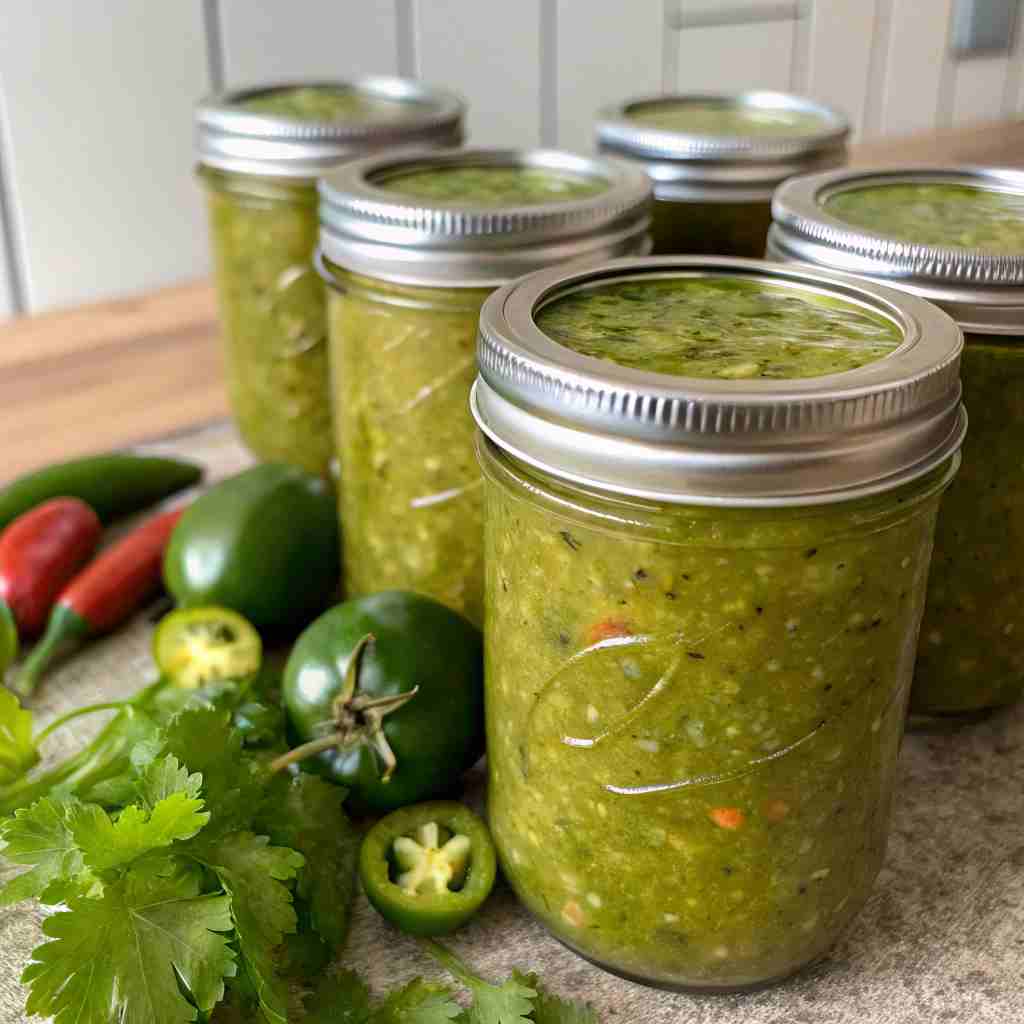
Looking for a vibrant and flavorful salsa to brighten up your meals? Our Canning Salsa Verde – Tangy Tomatillo Recipe delivers a zesty kick of fresh tomatillos, peppers, and herbs, all perfectly preserved for year-round enjoyment. This recipe is not only delicious but also provides a safe and reliable method for canning, ensuring you have a pantry full of homemade goodness. From tacos to omelets, this salsa verde will become your new go-to condiment!
Jump To :
What is Canning Salsa Verde?
Canning Salsa Verde is a method of preserving a fresh, tangy salsa made primarily from tomatillos. Tomatillos, also known as Mexican husk tomatoes, lend a unique citrusy flavor to this vibrant sauce. Unlike traditional tomato-based salsas, Salsa Verde gets its zing from the tomatillos, combined with onions, garlic, peppers (like jalapeños or serranos), cilantro, and lime juice.
The canning process ensures that this delicious salsa remains fresh and safe to eat for extended periods, making it perfect for stocking your pantry. This recipe provides a safe and easy-to-follow guide to home canning, ensuring that you can enjoy this taste of summer all year long. So, why not give it a try and experience the burst of flavor for yourself?
Key Ingredients for Canning Salsa Verde:
- Tomatillos (4 pounds, husked and washed): The heart of the salsa verde, providing the signature tangy flavor.
- Onion (1 large, chopped): Adds a foundational savory note.
- Jalapeño Peppers (2-4, seeded and minced): Contributes heat; adjust the quantity to your preference.
- Garlic (4 cloves, minced): Provides aromatic depth.
- Cilantro (1 bunch, roughly chopped): Lends freshness and a vibrant green color.
- Lime Juice (1/2 cup, freshly squeezed): Enhances the tanginess and acts as a natural preservative.
- Cumin (1 teaspoon, ground): Adds a warm, earthy undertone.
- Salt (2 tablespoons, or to taste): Balances the flavors and acts as a preservative.
- Sugar (1 teaspoon): Balances the acidity.
- Water (amount varies based on desired consistency): Used to adjust the thickness of the salsa during cooking.
- White Vinegar (1/4 cup, 5% acidity): Essential for safe canning, as it increases the acidity.
How to Make Canning Salsa Verde:
This Canning Salsa Verde recipe is surprisingly easy to make. You will begin by roasting the tomatillos, jalapeños, and onions to enhance their flavors and add a touch of smokiness. These roasted vegetables are then blended with garlic, cilantro, lime juice, and spices.
The mixture is simmered to meld the flavors, and then, most importantly, canned using proper canning techniques. This ensures a safe and shelf-stable product. The preparation time is approximately 30 minutes, and the canning process takes about 1 hour, resulting in a delicious and tangy salsa verde you can enjoy all year round.
Step-by-Step Instructions:
Step 1: Prepare the Vegetables:
- Preheat your broiler. Remove the husks from the tomatillos and wash them thoroughly. Cut the onion into quarters. Seed the jalapeño peppers if desired (leaving some seeds will increase the heat).
- Place the tomatillos, onions, and jalapeños on a baking sheet lined with parchment paper.
Step 2: Roast the Vegetables:
- Broil the vegetables for about 5-7 minutes, turning them halfway through, until the tomatillos are slightly charred and softened. Keep a close eye on them to prevent burning.
- Remove the baking sheet from the oven and let the roasted vegetables cool slightly.
Step 3: Blend the Salsa:
- Transfer the roasted tomatillos, onions, and jalapeños to a blender or food processor.
- Add the minced garlic, chopped cilantro, lime juice, cumin, salt, sugar, and white vinegar to the blender.
- Pulse the mixture until it reaches your desired consistency. For smooth salsa, blend longer. If you prefer a chunkier texture, pulse briefly. Add small amounts of water if needed to achieve the right consistency.
Step 4: Simmer the Salsa:
- Pour the blended salsa into a large stainless steel saucepan.
- Bring the salsa to a simmer over medium heat, stirring frequently to prevent sticking.
- Reduce the heat to low and simmer for 15 minutes, allowing the flavors to meld together.
Step 5: Prepare the Canning Equipment:
- While the salsa is simmering, prepare your canning equipment. Wash your canning jars, lids, and bands in hot, soapy water and rinse thoroughly.
- Place the jars in a large pot with a canning rack. Fill the pot with water, ensuring the jars are fully submerged. Bring the water to a boil and boil for 10 minutes to sterilize the jars.
- In a separate small saucepan, heat the canning lids in simmering water. (Do not boil.) This softens the sealing compound on the lids.
Step 6: Fill the Jars:
- Using a jar lifter, carefully remove a sterilized jar from the boiling water, emptying any excess water back into the pot.
- Place the jar on a heat-resistant surface.
- Ladle the hot salsa into the jar, leaving 1/2 inch of headspace (the space between the top of the salsa and the rim of the jar).
- Use a non-metallic utensil (like a plastic knife or a thin spatula) to remove any air bubbles trapped in the salsa. Run it along the inside of the jar.
- Wipe the rim of the jar with a clean, damp cloth to ensure a good seal.
Step 7: Seal the Jars:
- Carefully place a heated lid on top of the jar, centering it.
- Screw on a canning band until it is fingertip tight (not too tight, but securely fastened).
Step 8: Process the Jars:
- Using the jar lifter, carefully place the filled and sealed jar back into the boiling water canner. Ensure the jars are fully submerged under about an inch or two of water. Repeat with the remaining jars.
- Bring the water back to a rolling boil, cover the pot, and process the jars for the recommended time based on your altitude. For elevations of 0-1000 feet, process pint jars for 15 minutes and quart jars for 20 minutes. Adjust processing time for higher altitudes (add 5 minutes for 1001-3000 feet, 10 minutes for 3001-6000 feet, and 15 minutes for 6001-8000 feet).
Step 9: Cool and Check the Seals:
- After processing, turn off the heat and carefully remove the pot lid. Let the jars sit in the hot water for 5 minutes before removing them. This prevents sudden temperature changes that can break the jars.
- Using the jar lifter, carefully remove the jars from the water and place them on a towel-lined surface, leaving at least an inch of space between jars.
- Let the jars cool completely for 12-24 hours. Do not disturb or tighten the bands during this time.
- After the jars have cooled, check the seals. The lids should be concave and not flex when pressed in the center. If a lid flexes or pops, it is not properly sealed, and the salsa should be refrigerated and used within a few weeks, or reprocessed with a new lid.
- Remove the bands, wash the jars and label them with the date and contents. (Removing the bands prevents moisture from becoming trapped and causing rust.)
- Store the sealed jars in a cool, dark, and dry place. Properly canned salsa verde can be stored for up to 12-18 months.
Why You’ll Love This Canning Salsa Verde:
This Canning Salsa Verde recipe is a standout because of its vibrant, tangy flavor that perfectly balances the slight heat from the jalapeños with the freshness of cilantro and lime. The canning process allows you to preserve that fresh taste of summer, ensuring you have a delicious condiment ready to enjoy year-round. Making your own salsa verde at home is also significantly more cost-effective than buying it from the store.
The cost savings are substantial when you consider the amount you use, especially since you can customize the ingredients to your liking! Plus, you get to control the ingredients, avoiding preservatives and additives often found in commercial products. Compared to a traditional tomato salsa, this salsa verde offers a unique flavour profile, a refreshing alternative to the more common tomato-based options. The tomatillos provide a tangy, slightly acidic base that pairs incredibly well with everything from eggs to tacos. You should also check out our recipe for Spicy Homemade Salsa for a different flavour profile . Ready to dive in and make a big batch of your very own?
What to Serve Canning Salsa Verde With:
Canning Salsa Verde is incredibly versatile and can be served with a variety of dishes. Try it with:
- Tacos: Drizzle it over your favorite taco fillings, such as carne asada, carnitas, or grilled vegetables.
- Eggs: Add a spoonful to scrambled eggs, omelets, or huevos rancheros for a flavorful breakfast.
- Enchiladas: Use it as a sauce for enchiladas, either on its own or combined with other ingredients.
- Grilled Meats and Fish: Serve it as a condiment for grilled chicken, steak, or fish.
- Chips and Dips: Warm it up and serve it with tortilla chips as a vibrant appetizer.
- Burrito Bowls: Spoon a dollop onto burrito bowls for added zest and flavor.
Top Tips for Perfecting Canning Salsa Verde:
- Roast the Tomatillos Enough: Make sure the tomatillos are slightly charred when roasting. This step enhances their flavor and adds a touch of smokiness.
- Adjust the Heat: If you’re sensitive to spice, remove the seeds from all the jalapeños. For more heat, leave some or all of the seeds in.
- Use Fresh Lime Juice: Bottled lime juice often lacks the bright, fresh flavor of freshly squeezed lime juice. For the best results, use fresh limes.
- Don’t Over-Process: Be careful not to over-blend the salsa. Over-processing can result in a thin, watery salsa. Pulse until you reach your desired consistency.
- Vinegar is Vital: Do not reduce or omit white vinegar. It ensures acidity for safe canning.
- Sterilize Everything Properly: Thoroughly sterilize all your canning equipment, including jars, lids, and bands. This helps prevent spoilage and ensures a good seal.
5 Facts about Canning Salsa Verde:
- Tomatillos are Key: The tomatillo is the star ingredient, providing the unique tangy flavor that defines Salsa Verde.
- Mexican Origins: Salsa Verde is a staple in Mexican cuisine, traditionally used as a condiment, cooking sauce, and dipping sauce.
- Color Variation: The color of Salsa Verde can vary depending on the ripeness of the tomatillos, ranging from bright green to yellowish-green.
- Nutrient-Rich: Tomatillos are low in calories and rich in vitamins C and K, as well as antioxidants.
- Versatile Ingredient: Beyond salsa, tomatillos can be used in soups, stews, and other dishes to add a tangy flavor.
Storing and Reheating Tips:
Storing: Properly canned salsa verde can be stored in a cool, dark, and dry place for up to 12-18 months. Once opened, store the salsa in the refrigerator in an airtight container. It will stay fresh for about 1-2 weeks.
Reheating: To reheat, simply warm the salsa in a saucepan over low heat, stirring occasionally, until heated through. You can also microwave it in a microwave-safe bowl in 30-second intervals, stirring between each interval, until warm. Freezing is not recommended as it can affect the texture of the tomatillos.
Read More also:
- Canning Pickled Jalapeños
- Canning Pickled Asparagus
- Canning Pickled Carrots
- Canning Hot Pepper Jelly
- Canning Mushroom Soup
- Canning Apricot Jam Recipe
- Canning Fig Jam Recipe
- Canning Plum Jam
- Our Pinterest
Canning Salsa Verde FAQs:
Q: Is it safe to can salsa at home?
A: Yes, it is safe as long as you follow the proper canning procedures. Use a tested recipe with the correct amount of acid (like vinegar or lemon juice) and follow the recommended processing times for your altitude.
Q: Can I use different types of peppers?
A: Yes, you can adjust the type and quantity of peppers to your taste. Serranos, poblano or even habaneros can be used. However, be mindful of the heat level and adjust accordingly.
Q: Can I use dried cilantro instead of fresh?
A: Fresh cilantro is recommended for the best flavor. Dried cilantro can be used in a pinch, but use about 1/3 of the amount called for in the recipe.
Q: How do I know if my jars are sealed properly?
A: After the jars have cooled for 12-24 hours, check the seals. The lids should be concave and not flex when pressed in the center. If a lid flexes or pops, the jar is not properly sealed and should be refrigerated and used within a few weeks, or reprocessed.
Q: What if my salsa is too watery?
A: If your salsa is too watery after blending, you can simmer it for a longer period to allow some of the excess moisture to evaporate. Keep stirring to prevent sticking.