
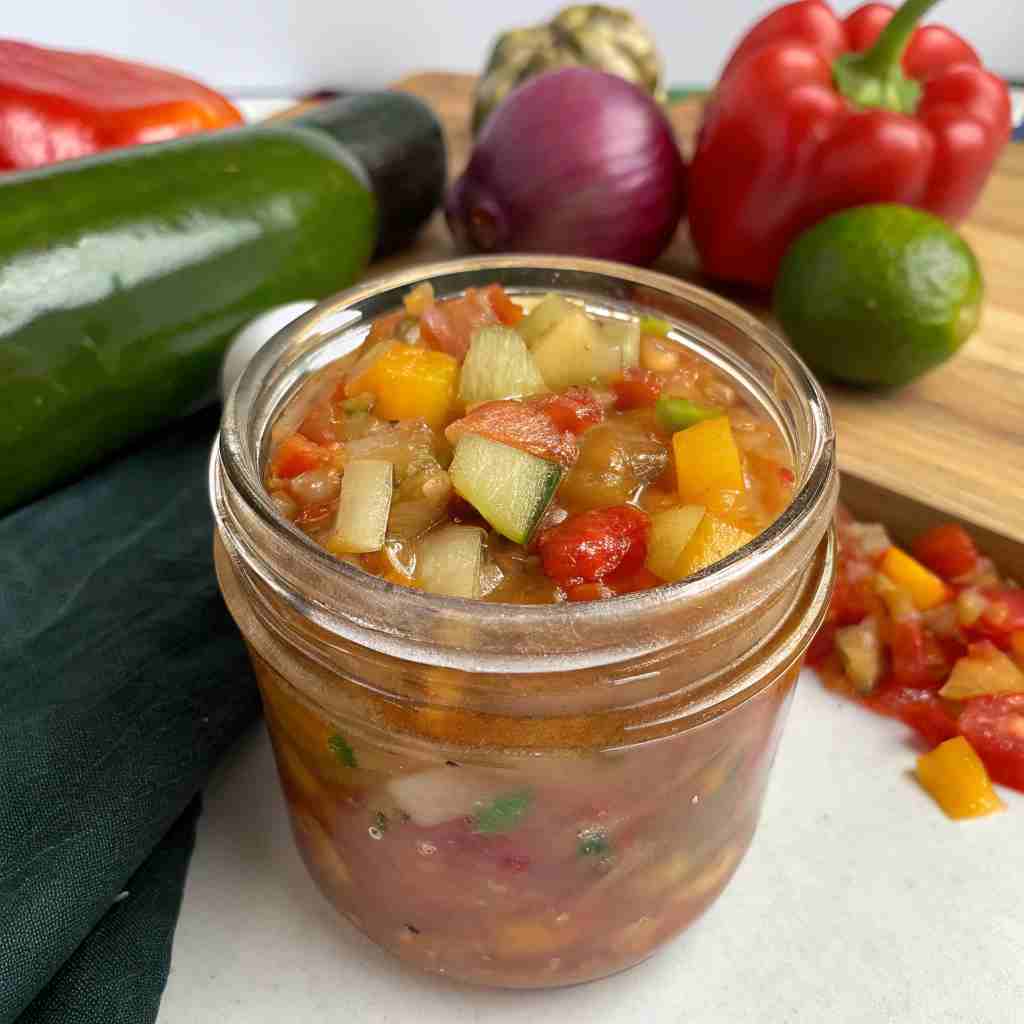
Looking for a way to preserve the bounty of your garden and add a flavorful kick to your meals? This Canning Relish Recipe – Sweet and Tangy Garden Medley is the perfect solution! With its vibrant blend of vegetables and a delightful sweet-and-tangy taste, this relish is ideal for enjoying all year long, making it a top-notch recipe for canning enthusiasts.
Jump To :
What is Canning Relish?
Canning relish is a delicious and versatile condiment made by preserving finely chopped fruits and vegetables in a vinegar-based brine, often with sugar and spices. It’s a delightful way to capture the flavors of fresh produce at its peak, ensuring you can enjoy them long after the growing season has ended.
This sweet and tangy garden medley is a perfect example, combining the crispness of vegetables with a vibrant blend of sweet, sour, and savory notes. Think of it as a pickled salsa, a chunky chutney, and a vinegary salad all rolled into one! With this relish, you can elevate everything from grilled meats to simple sandwiches, adding a burst of flavor and texture that transforms everyday meals into something special. It’s a fantastic way to use up surplus vegetables and create a homemade treat that’s far superior to store-bought versions. Ready to try your hand at canning this delightful garden relish? Let’s get started!
Key Ingredients for Canning Relish:
Here’s what you’ll need to create this vibrant and flavorful canned relish:
- 8 cups finely chopped mixed vegetables: This is where you get creative! A combination of green bell peppers, red bell peppers, onions, cucumbers, and zucchini works beautifully. The key is to chop everything into uniformly small pieces for even cooking and a pleasing texture.
- 2 cups cider vinegar (5% acidity): The vinegar is crucial for preservation and provides the tangy element in the relish. Make sure to use cider vinegar with at least 5% acidity to ensure proper food safety.
- 1 ½ cups granulated sugar: Sugar balances the acidity of the vinegar and adds a touch of sweetness. You can adjust the amount slightly to your preference, but be mindful of the preservation aspect as it will affect the acidity.
- 2 tablespoons canning salt: Canning salt, also known as pickling salt, is pure sodium chloride without any additives like iodine or anti-caking agents, which can darken the relish or interfere with the canning process.
- 1 tablespoon mustard seeds: Mustard seeds add a subtle warmth and depth of flavor.
- 1 teaspoon celery seeds: Celery seeds contribute a savory, herbaceous note.
- ½ teaspoon turmeric powder: Turmeric adds a warm, earthy flavor and a beautiful golden color.
How to Make Canning Relish:
This recipe is surprisingly easy, even for canning beginners! It’s a delicious, satisfying way to enjoy your garden bounty all year round. This relish offers a symphony of flavors and textures, from the crisp, fresh vegetables to the tangy, sweet, and subtly spiced brine. It takes about 1 hour and 30 minutes total, with 30 minutes for prep, 30 minutes for cooking, and 30 minutes for canning. Let’s dive in!
Step-by-Step Instructions:
- Prepare the Vegetables: Thoroughly wash all the vegetables. Finely chop them into uniform pieces, approximately ¼-inch in size. You can use a food processor for this, but be careful not to over-process them into a puree. It’s best to do it in short bursts.
- Combine and Simmer: In a large, non-reactive pot (stainless steel or enameled cast iron), combine the chopped vegetables, cider vinegar, sugar, canning salt, mustard seeds, celery seeds, and turmeric powder. Stir well to ensure all ingredients are evenly distributed.
- Bring to a Boil: Place the pot over medium-high heat and bring the mixture to a rolling boil, stirring occasionally to prevent sticking.
- Reduce Heat and Simmer: Once boiling, reduce the heat to medium-low and simmer gently for 30 minutes, or until the vegetables are tender-crisp and the liquid has slightly thickened. Stir occasionally to prevent scorching. The relish should start to look glossy and the liquid should be reduced.
- Prepare Canning Equipment: While the relish is simmering, prepare your canning equipment. Wash canning jars, lids, and bands in hot, soapy water. Rinse thoroughly.
- Sterilize Jars: Sterilize the jars by placing them in a large pot, covering them with water, and bringing to a boil for 10 minutes. Keep the jars hot until ready to fill. Alternatively, you can sterilize them in a dishwasher with a sterilizing cycle.
- Heat Lids: Place the lids in a separate small saucepan and cover them with water. Bring to a simmer (do not boil) and keep hot until ready to use.
- Fill Jars: Using a jar lifter, carefully remove a hot jar from the boiling water. Place it on a towel-lined surface. Using a ladle, carefully fill the jar with the hot relish, leaving ½-inch headspace (the space between the top of the relish and the rim of the jar).
- Remove Air Bubbles: Use a non-metallic utensil (like a chopstick or bubble freer) to gently press down on the relish to release any trapped air bubbles. Add more relish if necessary to maintain the ½-inch headspace.
- Wipe Jar Rim: Wipe the rim of the jar with a clean, damp cloth to remove any food residue. This ensures a good seal.
- Place Lid and Band: Place a hot lid on the jar, centering it. Screw the band on firmly but not too tightly. The band should be fingertip tight, meaning it’s snug but you can still easily unscrew it.
- Process in a Water Bath Canner: Carefully lower the filled jars into a boiling water bath canner using a jar lifter. Ensure the jars are completely covered with water; there should be at least 1 inch of water above the tops of the jars.
- Boil for Processing Time: Bring the water in the canner back to a rolling boil. Process the filled jars for 15 minutes. Adjust processing time for altitude, as needed (consult a reputable canning guide).
- Cool Jars: Turn off the heat and carefully remove the jars from the canner using a jar lifter. Place them on a towel-lined surface, leaving space between each jar.
- Listen for Seals: Let the jars cool undisturbed for 12-24 hours. As the jars cool, you should hear a “popping” sound as the lids seal.
- Check Seals: After 24 hours, check the seals. The lids should be concave (curved downwards) and should not flex when pressed in the center. If a lid hasn’t sealed, refrigerate the relish and use it within a few weeks, or reprocess it with a new lid.
- Store Jars: Remove the bands from the sealed jars (they can rust if left on). Wash the jars with a damp cloth to remove any residue. Label the jars with the date and contents, and store them in a cool, dark, and dry place for up to one year.
Why You’ll Love This Canning Relish:
This Canning Relish recipe is a surefire winner for several reasons. Firstly, the vibrant blend of sweet and tangy flavors makes it incredibly versatile. It’s not just relish; it’s a flavor explosion that enhances everything it touches! Secondly, making this relish at home is significantly cheaper than buying commercially prepared versions. You can use garden-fresh produce and pantry staples, saving money and ensuring high-quality ingredients. Finally, beyond the basic recipe, the customization options are endless – add jalapeños for a spicy kick, use different herbs for unique flavor profiles, or swap out vegetables based on what’s in season.
Compared to traditional pickle recipes, this relish offers a brighter, fresher taste with a delightful crunch. While pickles are often intensely tangy with a predominant vinegar flavor, this relish balances that with sweetness and a variety of vegetable textures. If you love the idea of preserving seasonal produce but want something a little different, give this relish a try! You might also enjoy trying a classic bread and butter pickle recipe for a simpler canning project. But I encourage you to start here with the garden medley first!
What to Serve Canning Relish With:
This sweet and tangy relish is incredibly versatile and pairs well with a wide range of dishes. Here are a few ideas:
- Grilled meats: Serve it alongside grilled chicken, pork chops, or sausages for a burst of flavor.
- Sandwiches and wraps: Add a spoonful to sandwiches, burgers, or wraps for a tangy kick. It’s especially delicious on egg salad sandwiches or in grilled cheese.
- Charcuterie boards: Include it as part of a charcuterie board alongside cheeses, crackers, and cured meats.
- Hot dogs and Hamburgers: Elevate your grilling game!
- As an appetizer: Serve with cream cheese and crackers.
Top Tips for Perfecting Canning Relish:
Here are some tips to make sure your canning relish turns out perfectly every time:
- Use fresh, high-quality vegetables: The better the vegetables, the better the relish. Choose produce that is firm, ripe, and free from blemishes.
- Chop the vegetables evenly: Uniformly chopped vegetables ensure even cooking and a consistent texture in the final product.
- Don’t overcook the relish: Simmer the relish until the vegetables are tender-crisp but still retain some bite. Overcooked vegetables will become mushy.
- Use the correct vinegar: Cider vinegar with 5% acidity is essential for safe canning. Do not substitute with a lower-acidity vinegar.
- Adjust sugar to taste, but don’t go too low: While you can adjust the sugar to your preference, remember that sugar acts as a preservative. Reducing it significantly can affect the shelf life and safety of the relish.
- Ensure proper headspace: Leaving ½-inch headspace in each jar is crucial for creating a proper seal.
- Fingertip tight is key: The bands on the jars should be fingertip tight, meaning they are snug but you can still easily unscrew them. Overly tight bands can prevent the jars from venting properly, leading to breakage or seal failure.
- Adjust processing time for altitude: If you live at a high altitude, you will need to increase the processing time to ensure proper preservation. Consult a reputable canning guide for specific instructions based on your altitude.
5 Facts about Canning Relish:
- Relish dates back to the 17th century, originating as a way to preserve garden vegetables.
- The acidity of the vinegar in relish is critical to inhibiting the growth of dangerous bacteria.
- Different regions have signature relishes. For example, chow-chow is a popular Southern relish made with green tomatoes.
- Home-canned relish can be stored for at least one year in a cool, dark place.
- You can experiment with different types of vegetables and spices to create your own unique relish variations.
Storing and Reheating Tips:
- Storing: Properly canned and sealed relish can be stored in a cool, dark, and dry place for up to one year. Once opened, refrigerate the relish and use it within a few weeks. Opened and unrefrigerated contents should be discarded.
- Reheating: No reheating is necessary! This Canning Relish is designed to be served cold or at room temperature. It’s perfect straight from the jar.
- Freezing: Canning relish is not suitable for freezing after it has been canned. The freezing process can alter the texture of the vegetables and affect the quality of the relish. It’s best to enjoy it as a shelf-stable product.
Final Thoughts:
This Canning Relish Recipe – Sweet and Tangy Garden Medley is a wonderful way to preserve the flavors of your garden and add a zesty touch to your meals. With its combination of fresh vegetables, tangy vinegar, and a hint of sweetness, it’s a delicious and versatile condiment that you’ll love having on hand. So gather your ingredients, follow the steps carefully, and enjoy the satisfaction of creating your own homemade relish that you’ll can relish all year round. Happy canning!
Read More also:
- Canning Pickled Jalapeños
- Canning Pickled Asparagus
- Canning Pickled Carrots
- Canning Hot Pepper Jelly
- Canning Mushroom Soup
- Canning Apricot Jam Recipe
- Canning Fig Jam Recipe
- Canning Plum Jam
- Our Pinterest
Canning Relish FAQs:
Can I use different vegetables?Yes, feel free to experiment with other vegetables like cauliflower, cabbage, or carrots. Just be sure to chop them finely and adjust the cooking time as needed.
Can I reduce the amount of sugar?You can slightly reduce the amount of sugar, but keep in mind that sugar acts as a preservative. Reducing it too much may affect the shelf life of the relish if you are canning.
Do I need to sterilize the jars?Yes, sterilizing the jars is important to kill any bacteria or mold that could contaminate the relish.
How do I know if the jars are sealed properly?The lids should be concave (curved downwards) and should not flex when pressed in the center. If a lid hasn’t sealed, refrigerate the relish and use it within a few weeks. If there is ever any doubt, always err on the side of caution and discard it after a couple weeks.