
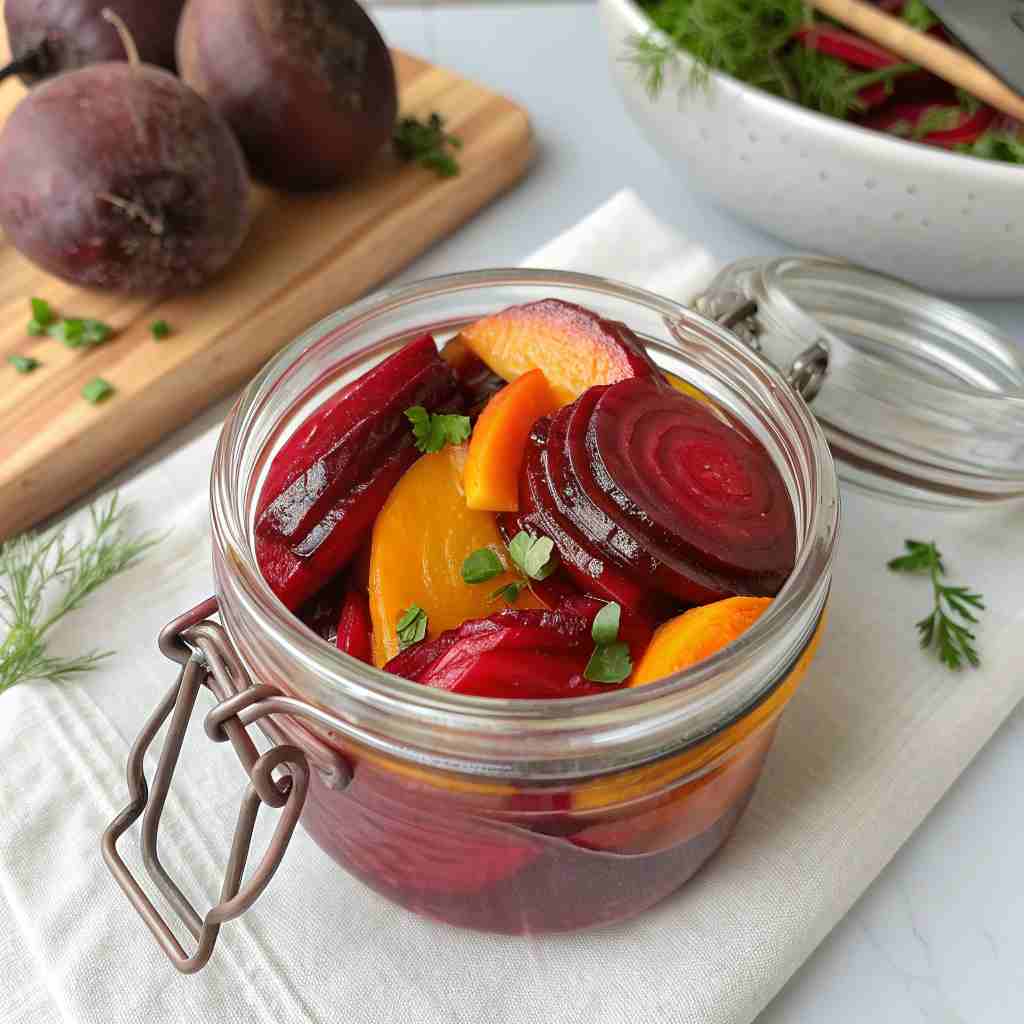
Are you looking for a delicious and rewarding way to preserve the bounty of your garden or local farmer’s market? Look no further! This Canning Pickled Beets recipe delivers a sweet and tangy flavor profile that makes these beets a versatile and flavorful addition to your pantry.
Perfect for salads, sandwiches, or simply enjoying straight from the jar, this recipe provides clear, easy-to-follow instructions for safely preserving your pickled beets so you can enjoy them year-round.
Jump To :
What is Canning Pickled Beets?
Canning Pickled Beets is a method of preserving beets through pickling and then safely sealing them in jars for long-term storage. The pickling process involves submerging cooked beets in a brine made from vinegar, sugar, water, and spices. This brine not only imparts a delightful sweet and tangy flavor but also inhibits the growth of harmful bacteria that can cause spoilage. The canning process then creates a vacuum seal, ensuring the beets remain safe and delicious for months, even years, to come when stored properly.
This recipe is a fantastic way to enjoy fresh, seasonal beets at any time of the year. The combination of sweet and tangy flavors makes them incredibly versatile, complementing a wide range of dishes. Pickled beets are not only delicious but also packed with nutrients and antioxidants. So, why not give it a try? Gather your ingredients and let’s embark on this rewarding canning adventure!
Key Ingredients for Canning Pickled Beets:
- Beets (4-5 lbs): Choose fresh, firm beets of similar size for even cooking. Wash them thoroughly, leaving about an inch of the stem intact and the root end as is to prevent color bleeding during cooking.
- White Vinegar (5 cups, 5% acidity): The vinegar is crucial for preserving the beets and provides the characteristic tangy flavor. Ensure it is white vinegar with 5% acidity for safe canning.
- Water (2 cups): Used to dilute the vinegar and create a balanced brine.
- Granulated Sugar (2 cups): Adds sweetness to balance the acidity of the vinegar. Adjust the amount to your taste.
- Pickling Salt (2 tablespoons): Essential for preserving the beets and maintaining their firmness. Don’t substitute with table salt, as it contains iodine, which can darken the beets and affect the flavor.
- Spices (Optional): You can customize the flavor with spices like:
- Cinnamon Sticks (2): Adds a warm, subtle spice.
- Whole Cloves (1 teaspoon): Provides a pungent, aromatic flavor.
- Allspice Berries (1 teaspoon): Adds a complex, slightly peppery flavor.
- Mustard Seeds (1 teaspoon): Offers a mild, tangy flavor.
- Bay Leaves (2): Contributes a subtle, herbal aroma.
How to Make Canning Pickled Beets:
This Canning Pickled Beets recipe is surprisingly easy and incredibly satisfying. With a total preparation and canning time of about 2 hours, you’ll be yielding several jars of delicious pickled beets, ready to brighten up any meal. The rich, earthy flavor of the beets combined with the tangy and sweet brine makes them addictive.
Step-by-Step Instructions:
Prepare the Beets: Wash beets thoroughly, leaving about 1 inch of stems and root ends intact. This prevents color bleeding during cooking. Place beets in a large pot and cover with water. Bring to a boil, then reduce heat and simmer until tender when pierced with a fork, usually about 30-45 minutes depending on size.
Cool and Peel the Beets: Once the beets are cooked, drain the hot water and run cold water over them until they are cool enough to handle. Trim the stems and root ends, and slip off the skins using your fingers or a paring knife. The skins should come off easily.
Slice or Cube the Beets: Cut the peeled beets into approximately 1/4-inch thick slices or cubes. The size and shape you choose will depend on your personal preference and how you plan to use the pickled beets.
Prepare the Brine: In a large stainless steel saucepan, combine the white vinegar, water, granulated sugar, and pickling salt. Add any desired spices (cinnamon sticks, whole cloves, allspice berries, mustard seeds, bay leaves). Bring the mixture to a boil over medium-high heat, stirring until the sugar and salt are completely dissolved.
Pack the Jars: While the brine is heating, prepare your canning jars. Wash the jars, lids, and bands in hot, soapy water. Rinse well and sterilize the jars by placing them in a boiling water canner filled with enough water to cover the jars by at least 1 inch. Bring to a boil and boil for 10 minutes. Keep the jars hot until ready to fill, using canning tongs to remove. Place new lids in a saucepan, cover with water, and bring to a simmer (do not boil). Keep warm until ready to use.
Fill the Jars: Pack the hot sliced or cubed beets into the hot, sterilized jars, leaving 1/2-inch headspace (the space between the top of the beets and the rim of the jar). Pour the hot brine over the beets, maintaining the 1/2-inch headspace. Use a nonmetallic spatula or bubble remover to gently release any trapped air bubbles by running it along the inside of the jar. Check the headspace again and adjust if necessary by adding more brine.
Wipe the Rims and Apply Lids: Wipe the rims of the jars with a clean, damp cloth to remove any food particles or brine. Center a sterilized lid on each jar, ensuring the sealing compound makes full contact with the rim. Apply a band to each jar and tighten fingertip tight (not too tight).
Process in a Boiling Water Canner: Carefully lower the filled jars into the boiling water canner using a jar lifter. Ensure the jars are covered by at least 1 inch of water. Bring the water to a rolling boil and process for the time specified below according to your altitude.
- 0-1,000 feet: Process for 30 minutes
- 1,001-6,000 feet: Process for 35 minutes
- Above 6,000 feet: Process for 40 minutes.
Cool and Check Seals: Once the processing time is complete, turn off the heat and carefully remove the canner lid. Let the jars sit in the canner for 5 minutes before carefully removing them with a jar lifter and placing them on a towel-lined countertop, spaced at least 1 inch apart. Allow the jars to cool completely, undisturbed, for 12-24 hours.
Check the Seals: After 12-24 hours, check the seals by pressing down on the center of each lid. If the lid doesn’t flex or make a popping sound, the jar is properly sealed. If a lid flexes or pops, it is not sealed and should be reprocessed following the same procedure with a new lid, or refrigerated for immediate use.
Store Properly: Label the sealed jars with the date and contents and store them in a cool, dark, and dry place. Properly canned pickled beets can be stored for up to 1 year.
Why You’ll Love This Canning Pickled Beets:
The main highlight of this recipe is its incredible flavor. These beets are the perfect balance of sweet and tangy, making them a delicious and versatile addition to any meal. The brine infuses the beets with a vibrant flavor that’s far superior to store-bought versions.
Making pickled beets at home offers significant cost savings compared to purchasing them at the grocery store. Especially if you grow your own beets, the ingredients are relatively inexpensive, making this a budget-friendly way to stock your pantry. Plus, you control the quality of the ingredients and can customize the flavor to your liking.
The spices you add to the brine, like cinnamon sticks and cloves, add a layer of complexity and warmth that makes these pickled beets truly special. They’re not just pickled, they’re infused with aromatic flavors that enhance the natural earthiness of the beets.
If you enjoy the ease of canning, perhaps you would like to try your hand at making pickled green beans, they are another great and simple pickling project for beginner canners. Why not grab your beet harvest and get creating.
What to Serve Canning Pickled Beets With:
- Salads: Add sliced or cubed pickled beets to green salads for a pop of color and a burst of flavor. They pair well with creamy cheeses like goat cheese or feta, as well as crunchy nuts like walnuts or pecans.
- Sandwiches: Layer pickled beets on sandwiches with grilled cheese, turkey, or ham for a tangy twist.
- Charcuterie Boards: Include pickled beets on charcuterie boards alongside cheeses, meats, and crackers for a sophisticated and flavorful addition.
- Roasted Meats: Serve pickled beets as a side dish with roasted chicken, pork, or beef. The acidity of the beets cuts through the richness of the meat.
- Eggs: Top deviled eggs with diced pickled beets for a colorful and flavorful garnish.
Top Tips for Perfecting Canning Pickled Beets:
- Select Fresh, Firm Beets: Choose beets that are firm to the touch and free from blemishes. Beets of similar size will cook evenly.
- Don’t Substitute Pickling Salt: Avoid using table salt, as it contains iodine, which can darken the beets and affect the flavor of the brine. Pickling salt is specifically designed for canning and won’t affect the color or flavor.
- Adjust Sugar to Taste: The amount of sugar in the brine can be adjusted to your personal preference. If you prefer a tangier pickle, reduce the amount of sugar slightly. If you like a sweeter pickle, increase the amount of sugar.
- Pack Jars Tightly: When packing the beets into the jars, pack them firmly but leave enough headspace. This will ensure that the beets are fully submerged in the brine and prevent spoilage.
- Ensure Proper Headspace: Maintaining the correct headspace (1/2 inch) is crucial for proper sealing. Too little headspace can cause the jars to buckle during processing, while too much headspace can prevent a proper seal.
- Process Correctly: Ensuring you are following safe canning process is important. Use the current USDA guidelines or an approved canning recipe.
5 Facts about Canning Pickled Beets:
- Canning Pickled Beets allows you to enjoy the flavor of fresh beets year-round, even when they are out of season.
- Pickled beets are a good source of vitamins and minerals, including folate, potassium, and vitamin C.
- The pickling process preserves the beets by increasing their acidity, which inhibits the growth of spoilage-causing microorganisms.
- Adding spices like cinnamon and cloves to the brine enhances the flavor of the pickled beets and provides additional health benefits.
- Home-canned pickled beets make a thoughtful and appreciated homemade gift.
Storing and Reheating Tips:
Storing: Properly sealed jars of canned pickled beets should be stored in a cool, dark, and dry place. Ideal storage locations include a pantry, cellar, or basement. Avoid storing jars in direct sunlight or near heat sources, as this can compromise the seal and affect the quality of the beets. Canned pickled beets can be stored for up to one year.
Reheating/Serving: Pickled beets are generally served cold straight from the jar. They do not require reheating. If you prefer a slightly warmer temperature, you can simply allow them to sit at room temperature for a few minutes before serving. Discard any jars which discolour or smell when opened.
Final Thoughts:
Canning Pickled Beets is a fantastic way to preserve the vibrant flavor and nutritional value of beets while creating a delicious and versatile pantry staple. With this easy-to-follow recipe and a few simple steps, you can enjoy these sweet and tangy delights all year round. So gather your beets, grab your canning supplies, and get ready to embark on a rewarding culinary adventure!
Read More also:
- Canning Pickled Jalapeños
- Canning Pickled Asparagus
- Canning Pickled Carrots
- Canning Hot Pepper Jelly
- Canning Mushroom Soup
- Canning Apricot Jam Recipe
- Canning Fig Jam Recipe
- Canning Plum Jam
- Our Pinterest
Canning Pickled Beets FAQs:
Q: Can I use different types of vinegar?
A: While white vinegar is recommended for its clear color and neutral flavor, you can experiment with other types of vinegar like apple cider vinegar. Just be sure the vinegar has at least 5% acidity for safe canning.
Q: Can I reduce the amount of sugar?
A: Yes, you can adjust the amount of sugar to suit your taste preferences. However, remember that sugar contributes to the preservation process, so don’t reduce it too much.
Q: Do I have to use pickling salt?
A: Yes, pickling salt is recommended because it doesn’t contain iodine, which can darken the beets and affect the flavor. Table salt is not a suitable substitute.
Q: How do I know if my jars are properly sealed?
A: After the jars have cooled completely, check the seals by pressing down on the center of each lid. If the lid doesn’t flex or make a popping sound, the jar is properly sealed.
Q: What if a jar doesn’t seal?
A: If a jar doesn’t seal, you can either reprocess it with a new lid within 24 hours or store it in the refrigerator and use the pickled beets within a few weeks. Don’t store unsealed jars at room temperature.