
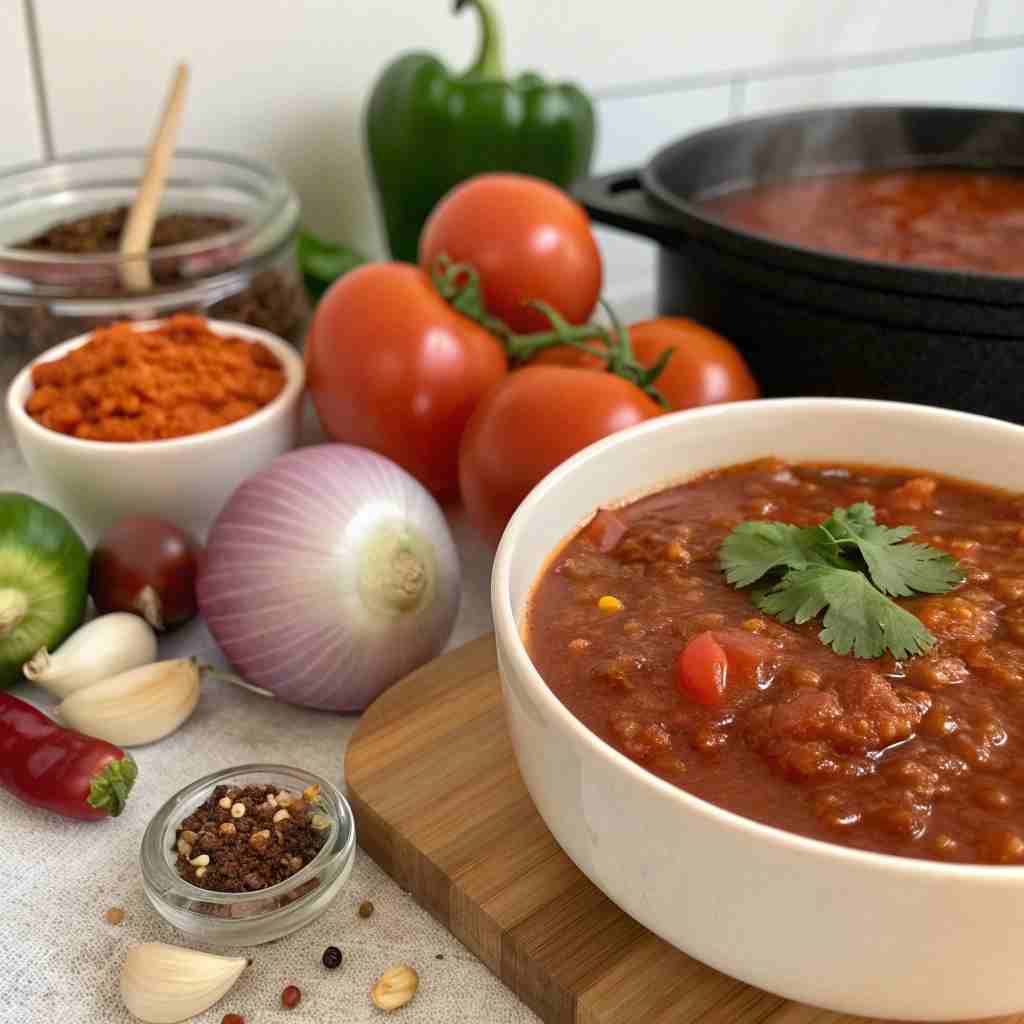
Looking for a way to preserve your late summer tomato harvest and add a fiery kick to your favorite meals? Look no further! This Canning Chili Sauce – Spicy Tomato Condiment Recipe delivers a homemade, shelf-stable chili sauce that’s perfect for everything from eggs and tacos to grilled meats and stir-fries. This recipe will guide you through the process of safely canning your chili sauce, ensuring a flavorful and long-lasting addition to your pantry. Get ready to transform fresh tomatoes into a vibrant, spicy condiment you’ll reach for again and again!
Jump To :
What is Canning Chili Sauce?
Canning Chili Sauce isn’t just another tomato sauce; it’s a concentrated burst of flavor designed to add zest to any meal. It’s a cooked blend of tomatoes, peppers, vinegar, sugar, and spices, carefully calibrated for both taste and safe preservation. Unlike ketchup, chili sauce boasts a bolder, spicier profile, making it an excellent alternative for those who crave a bit more heat.
The canning process ensures it’s shelf-stable, allowing you to enjoy your summer harvest throughout the year. The beauty of homemade chili sauce is that you can customize the spice level and sweetness to your preferences. Whether you prefer a mild tang or a scorching heat, you have complete control.
Ready to roll up your sleeves and create your own batch of delicious, homemade chili sauce? Let’s get started!
Key Ingredients for Canning Chili Sauce:
- 6 lbs Ripe Tomatoes: Use Roma, San Marzano, or other meaty tomatoes for the best flavor and texture. Cored, peeled, and chopped or crushed.
- 2 cups Chopped Onions: Yellow or white onions will work – diced finely and evenly.
- 1 cup Chopped Bell Peppers: A mix of red and green bell peppers provides color and a subtle sweetness. Remove stems, cores, and seeds before chopping.
- 1/2 cup Chopped Hot Peppers: Use jalapenos, serranos, or your favorite hot peppers for the desired spice level. (Wear gloves!) Remove seeds and membranes for milder heat; leave them in for a fiery sauce. Handle carefully, and wash your hands thoroughly afterward.
- 1 cup Apple Cider Vinegar: Essential for acidity and preservation. Use 5% acidity apple cider vinegar.
- 1 cup Granulated Sugar: Balances the acidity and adds sweetness. Can be adjusted to taste.
- 1/4 cup Canning Salt: Use canning or pickling salt, as it doesn’t contain iodine or anti-caking agents, which can darken the sauce and create sediment.
- 4 cloves Garlic, minced: Adds a savory depth of flavor.
- 1 tablespoon Ground Cumin: Adds a warm, earthy note.
- 1 tablespoon Chili Powder: For an extra boost of chili flavor and a touch of color.
- 1 teaspoon Ground Allspice: Adds a subtle warmth.
- 1/2 teaspoon Ground Cinnamon: A surprising addition that enhances the other spices.
- 1/4 teaspoon Ground Cloves: Use sparingly; cloves are potent and can easily overpower the other flavors.
How to Make Canning Chili Sauce:
This Canning Chili Sauce recipe is surprisingly simple, yielding a savory, tangy, and slightly spicy condiment that will become a staple in your pantry. It involves combining fresh tomatoes, peppers, spices and vinegar, then cooking it down to thicken, achieving a rich and flavorful consistency. And the canning process ensures a long shelf-life so you can enjoy it any time of year.
You’ll need about 2 hours for the entire process including preparation and canning. Let’s dive into the step-by-step instructions to make this delicious canning chili sauce.
Step-by-Step Instructions:
- Prepare the Tomatoes: Wash, core, and peel the tomatoes. The easiest way to peel tomatoes is to blanch them for 30-60 seconds in boiling water, then shock them in ice water. The skins should slip right off. Chop or crush the peeled tomatoes.
- Prepare the Peppers: Wearing gloves, remove the stems and seeds from the bell peppers and hot peppers. Chop them finely.
- Combine Ingredients: In a large, heavy-bottomed stainless steel pot, combine the chopped tomatoes, onions, bell peppers, hot peppers, apple cider vinegar, sugar, canning salt, minced garlic, cumin, chili powder, allspice, cinnamon, and cloves.
- Simmer the Sauce: Bring the mixture to a boil over medium-high heat, stirring frequently to prevent scorching. Once boiling, reduce the heat to low and simmer uncovered for 1 to 1.5 hours, or until the sauce has thickened to your desired consistency. Stir occasionally at first, then more frequently as the sauce thickens to prevent sticking.
- Prepare Canning Equipment: While the sauce is simmering, prepare your canning equipment. Wash canning jars, lids, and bands in hot, soapy water. Rinse well. Sanitize the jars by placing them in a boiling water canner filled with enough water to cover them by at least 1 inch. Bring the water to a boil and boil the jars for 10 minutes. Keep the jars hot until ready to use. Heat the lids in a separate saucepan of simmering water (do not boil) to soften the sealing compound.
- Fill the Jars: Remove the hot jars from the canner, one at a time, using a jar lifter. Ladle the hot chili sauce into the hot jars, leaving 1/2 inch headspace (the space between the top of the sauce and the rim of the jar).
- Remove Air Bubbles: Run a non-metallic utensil (like a chopstick or plastic spatula) around the inside of the jar to release any trapped air bubbles.
- Wipe Jar Rims: Use a clean, damp cloth to wipe the rims of the jars to ensure a good seal.
- Place Lids and Bands: Center a hot lid on each jar, and then screw on a band until fingertip tight (not too tight).
- Process in Boiling Water Canner: Carefully lower the filled jars into the boiling water canner using a jar lifter. Make sure the jars are covered by at least 1 inch of water. Bring the water back to a boil and process for 15 minutes for pint jars (adjust processing time based on your altitude – see notes below).
- Cool and Check Seals: Turn off the heat and let the jars sit in the canner for 5 minutes before removing them (this helps prevent siphoning). Remove the jars from the canner and place them on a towel-lined surface to cool completely, for at least 12-24 hours. As the jars cool, you should hear a “pop” sound as the lids seal.
- Check Seals: After the jars have cooled completely, check the seals by pressing down on the center of each lid. If the lid flexes up and down, it is not sealed and should be refrigerated and used within a few weeks, or reprocessed with a new lid.
- Store: Label the sealed jars with the date and store them in a cool, dark place for up to a year.
Why You’ll Love This Canning Chili Sauce:
This homemade Chili sauce is a taste sensation that’s packed with flavor, allowing a vibrant addition to various dishes. By making it at home, you’re able to fine tuning the amount of ingredients, controlling the heat level to customizing the sweetness. This recipe transforms your fresh tomatoes to a spicy, complex condiment that’s far superior to store-bought versions. Think of it as a spicier, more robust cousin to ketchup, with a훨 훨씬 더 깊은 맛맛.
The cost savings when making your own chili sauce are significant. Purchasing similar quality in the store is generally so much higher, and you can keep the cost low by using fresh ingredients when they’re in season. Home made chili sauce is simply the best.
This chili sauce is enhanced with the flavors of cumin, allspice, and cinnamon that gives it a unique complexity. These subtle spices complement the tomatoes, peppers, and vinegar perfectly.
Ready to ditch the store-bought stuff and make your own amazing Chili Sauce? Let’s get cooking!
What to Serve Canning Chili Sauce With:
This versatile chili sauce is a flavorful accompaniment to many dishes. Here are a few ideas:
- Eggs: Drizzle it over scrambled, fried, or poached eggs for a spicy breakfast.
- Tacos and Burritos: Add a spoonful to your favorite tacos or burritos for an extra kick.
- Grilled Meats: Use it as a glaze for grilled chicken, pork, or steak.
- Nachos: Top your nachos with chili sauce, cheese, and your favorite fixings.
- Stir-fries: Add a spoonful to your stir-fries for a flavor boost.
- Burgers and Sandwiches: Use it as a condiment on burgers, sandwiches, and wraps.
- Meatloaf: Mix a cup of the chili sauce into the meatloaf before baking, for extra flavor and a tangy, delightful glaze.
Top Tips for Perfecting Canning Chili Sauce:
- Spice It Up (or Down): Adjust the amount of hot peppers to control the heat level. Experiment with different types of hot peppers for unique flavor profiles. Remember that the heat will mellow slightly during the canning process.
- Tomato Variety Matters: Use meaty tomatoes like Roma or San Marzano for the best texture and flavor. Avoid watery tomatoes, as they will result in a thinner sauce.
- Simmer with Patience: Allowing the sauce to simmer slowly and thicken properly is crucial for proper canning, so use your time wisely. Keep the burner on low.
- Adjust Sweetness to Taste: Taste the sauce towards the end of the simmering time and adjust the sugar as needed to balance the acidity. Remember that the flavors will meld and intensify as the sauce cools.
- Salt is key Do not reduce the salt in this recipe by more than 1/4 amount due to salt being used for preservation.
- Altitude Adjustments: If you live at a high altitude, you’ll need to increase the processing time to ensure safe canning. Consult a reliable canning guide for specific adjustments based on your altitude. Usually 5 minutes extra per 1,000 feet of elevation.
5 Facts about Canning Chili Sauce:
- It’s a great way to use up a large tomato harvest.
- Homemade chili sauce typically has less sugar and sodium than store-bought versions.
- It can be easily customized to your preferred spice level.
- The canning process makes it shelf-stable for up to a year.
- Chili sauce originated as a way to preserve tomatoes before refrigeration was widespread.
Storing and Reheating Tips:
- Storing: Properly sealed jars of chili sauce can be stored in a cool, dark, and dry place for up to one year. Once opened, refrigerate and use within 2-3 weeks.
- Reheating: Chili sauce can be reheated on the stovetop or in the microwave. If reheating on the stovetop, simmer gently over low heat, stirring occasionally. If microwaving, heat in short intervals, stirring in between, until heated through. Ensure it is heated thoroughly before consumption!
- Freezing: While canning is the preferred method for long-term storage, you can freeze leftover chili sauce in airtight containers or freezer bags. Thaw overnight in the refrigerator before using. Freezing may slightly alter the texture of the sauce, but it will still taste delicious. Can be stored in the freezer up to 6 months.
Final Thoughts:
This Canning Chili Sauce recipe is a fantastic way to preserve the flavors of summer and add a spicy kick to your meals year-round. With its simple ingredients and easy-to-follow instructions, you’ll be amazed at how much better homemade tastes compared to store-bought. So, gather your tomatoes, spices, and canning supplies, and get ready to create a batch of this delicious condiment!
Read More also:
- Canning Pickled Jalapeños
- Canning Pickled Asparagus
- Canning Pickled Carrots
- Canning Hot Pepper Jelly
- Canning Mushroom Soup
- Canning Apricot Jam Recipe
- Canning Fig Jam Recipe
- Canning Plum Jam
- Our Pinterest
Canning Chili Sauce FAQs:
Q: Can I use bottled lemon juice instead of apple cider vinegar?
A: No, it’s crucial to use apple cider vinegar with a reliable acidity level (5%) for safe canning. Lemon juice acidity can be variable.
Q: Can I freeze chili Sauce instead of water bath canning?
A: Yes, but make sure to pack it in freezer-safe containers leaving space so it does not break when it expands. It is also a very good option if you do not have all of the supplies for canning.
Q:Can i use other peppers in this recipe if I don’t have the ingredient peppers?
A: Absolutely! Habaneros or Scotch Bonnets are great ways to add heat and flavor to the dish. Just be sure to experiment.
Q: How do I know if my jars are sealed properly?
A: After cooling, the lids should be concave (curved inwards) and not flex when pressed down. If a lid flexes, it didn’t seal properly and should be refrigerated and used immediately or reprocessed with a new lid.
Q: Can I reduce the sugar in the chili sauce?
A: You can slightly reduce the sugar, but remember that sugar helps to balance the acidity and contribute to the flavor. Reducing it too much may affect the taste and texture.
Q: Is it necessary to remove the tomato skins?
A: Removing the skins creates a smoother sauce, but it’s not strictly necessary. If you prefer, you can leave them on, but the texture will be slightly different.