
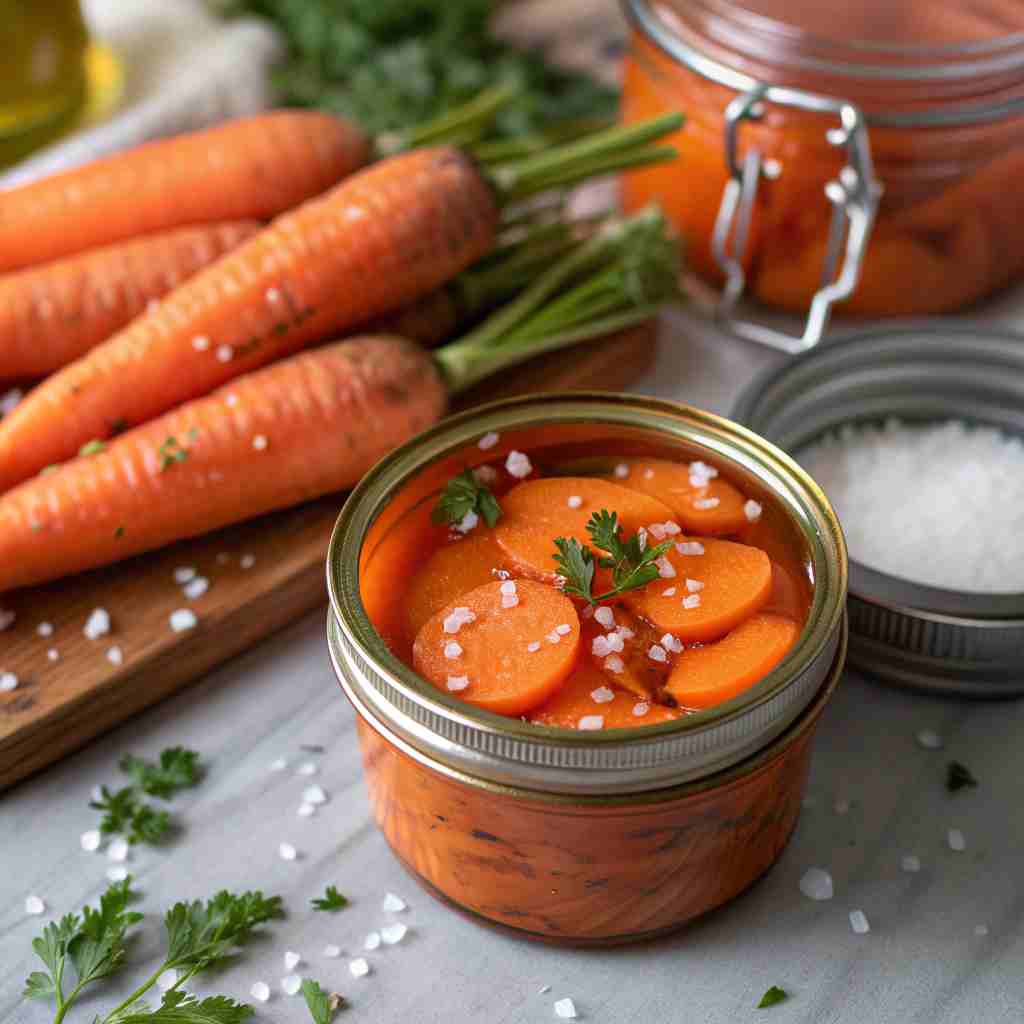
Preserving the bounty of your garden or a great farmer’s market haul has never been more rewarding! Canning Carrots with Salt offers a simple yet incredibly effective way to ensure delicious, vibrant carrots are available year-round. This method not only preserves the carrots but also enhances their natural sweetness with the perfect touch of salt, resulting in a delightful and nourishing addition to any meal.
Jump To :
Key Ingredients for Canning Carrots with Salt:
- Fresh Carrots: 5 pounds, peeled, washed, and cut into ½-inch slices or diced. Choose firm, brightly colored carrots for the best results.
- Canning Salt (Pickling Salt): 2 ½ tablespoons. Do not use iodized table salt, as it can cause discoloration and cloudiness in the jars.
- Water: Enough to cover the carrots in the jars (approximately 6-8 cups), preferably filtered for best clarity.
How to Make Canning Carrots with Salt:
Canning Carrots with Salt is a straightforward process that guarantees fresh flavors all year round. With a preparation time of just, you can use those garden surplus or market gems even in winter. The process enhances carrots’ natural sweetness, perfect as a stand-alone snack, side dish, or recipe ingredient!
- Preparation Time: 30 minutes
- Processing Time: Varies depending on the canning method (see instructions below)
Step-by-Step Instructions:
Prepare Jars and Lids: Wash canning jars, lids, and bands in hot, soapy water. Rinse well. Sterilize the jars by boiling them in a large pot of water for 10 minutes. Keep the jars hot until ready to use. Place the lids in a small saucepan with water and simmer (do not boil) to soften the sealing compound.
Prepare Carrots: Wash, peel, and trim the carrots. Cut them into evenly sized ½-inch slices or dice them for a more uniform appearance.
Blanch Carrots (Optional but Recommended): Place the carrots in a large pot of boiling water and blanch for 4 minutes. This helps to set their color and reduce the amount of air inside the carrots which helps prevent floating during canning. Drain thoroughly.
Pack Jars: Pack the hot carrots into the hot, sterilized jars, leaving 1-inch headspace. It is important to ensure you adhere to the space as this can affect the canning process.
Add Salt: Add ½ teaspoon of canning salt to each pint jar or 1 teaspoon to each quart jar. Avoid using other variations like table salt, as iodides can ruin the flavor and colour.
Add Water: Pour boiling water over the carrots in each jar, maintaining the 1-inch headspace.
Remove Air Bubbles: Use a non-metallic spatula or bubble remover to gently run around the inside of the jar to release any trapped air bubbles.
Wipe Jar Rims: Wipe the rims of the jars with a clean, damp cloth to ensure a good seal.
Place Lids and Bands: Place the sterilized lids on the jars and screw on the bands until fingertip tight. Avoid over-tightening, as this can prevent proper sealing.
Process Jars:
- Boiling Water Bath Canning: Place the jars on a rack in a boiling water bath canner. Add enough hot water to cover the jars by at least 1 inch. Bring the water to a rolling boil and process for 25 minutes for pint jars and 30 minutes for quart jars. Adjust processing time for altitude if necessary (add 5 minutes for every 1,000 feet above sea level).
- Pressure Canning: Follow the manufacturer’s instructions for your specific pressure canner. Typically, you’ll process pint jars for 20 minutes and quart jars for 25 minutes at 11 pounds of pressure (adjust for altitude).
Cool Jars: Carefully remove the jars from the canner using a jar lifter and place them on a towel-lined surface to cool completely. Do not disturb the jars for 12-24 hours.
Check for Seal: After the jars have cooled, check the seals by pressing down on the center of each lid. If the lid flexes or pops, it is not properly sealed and needs to be reprocessed with a new lid, or refrigerated and used immediately.
Label and Store: Label the jars with the date and contents, then store them in a cool, dark, and dry place. When storing make sure to keep away hot and humid areas, as this can potentially cause spoilage.
Why You’ll Love This Canning Carrots with Salt:
This method of canning carrots is a game-changer for anyone looking to preserve the taste of fresh produce. The primary highlight is the incredible flavor; the salt enhances the natural sweetness of the carrots, resulting in a delicious, ready-to-eat side dish. Making this at home also translates to significant cost savings because buying pre-canned carrots can be expensive, especially if you prefer organic varieties. Furthermore, you control the quality of ingredients.
A similar method is pickling carrots, which offer a delightful tangy instead of sweet taste. However pickling carrots are far more intense, and don´t provide nearly the nutritional value. These canned carrots, can be easily added to stews, soups, salads, or served as a healthy snack. Ready to put your canning skills to the test and enjoy a year-round supply of delicious, home-canned carrots?
What to Serve Canning Carrots with Salt With:
Canned Carrots with Salt are incredibly versatile and can be served with a variety of dishes. Here are a few suggestions:
- Roasted Chicken or Pork: The sweetness of the carrots complements the savory flavors of roasted meats perfectly.
- Hearty Stews and Soups: Add diced canned carrots to your favorite stews or soups for extra nutrition and flavor.
- Salads: Cold, canned carrots can add a touch of sweetness and crunch to salads.
- Mashed Potatoes: Mix mashed canned carrots into mashed potatoes for a vibrant and nutritious side dish.
- Roasted Vegetables: Combine with other roasted vegetables like potatoes, onions, and parsnips for a colorful and flavorful side.
Top Tips for Perfecting Canning Carrots with Salt:
- Use Fresh, High-Quality Carrots: The quality of your carrots will directly impact the flavor and texture of the canned product. Choose firm, brightly colored carrots that are free from blemishes.
- Don’t Skip the Blanching: Blanching the carrots helps to set their color, reduce air inside the carrot, and improve texture.
- Use Canning Salt: Avoid using table salt, which contains iodine and anti-caking agents that can cause discoloration and cloudiness.
- Pack Jars Properly: Leave adequate headspace (1 inch) and remove air bubbles to ensure a proper seal.
- Adjust Processing Time for Altitude: If you live at a high altitude, you will need to increase the processing time to ensure safe preservation.
- Check Seals Carefully: After the jars have cooled, check the seals by pressing down on the center of each lid. If the lid flexes or pops, it is not properly sealed and needs to be reprocessed or refrigerated.
- Don’t Over-tighten Bands: Over-tightening the bands can prevent the jars from sealing properly. Tighten them only until fingertip tight.
5 Facts about Canning Carrots with Salt:
- Historical Significance: Canning as a method of food preservation dates back to the Napoleonic era, as a way to feed soldiers in the field.
- Nutritional Value: Canned carrots retain a significant amount of their nutritional value, including vitamin A, fiber, and antioxidants.
- Safety First: Proper canning techniques are essential to prevent botulism, a serious form of food poisoning. Always follow tested recipes and processing times.
- Versatile Ingredient: Canned carrots can be used in a variety of dishes, from soups and stews to salads and side dishes.
- Enhances Flavor: The addition of salt not only preserves the carrots but also enhances their natural sweetness, making them even more flavorful.
Storing and Reheating Tips:
- Storage: Store properly canned jars in a cool, dark, and dry place, like a pantry or root cellar. Properly canned carrots have a shelf life of at least one year, and potentially longer if stored correctly.
- Refrigeration: Once opened, transfer any unused carrots to an airtight container and refrigerate. Consume within 5-7 days.
- Freezing: Do not freeze canned carrots in the original jar as the glass will crack.
- Reheating: Rehear canned carrots gently on the stovetop or microwave until warmed through. Do not boil, as this can cause them to become mushy. Or you can enjoy them as a cool snack!
Final Thoughts:
Canning Carrots with Salt is more than just a method of food preservation; it’s a gateway to savoring your garden’s bounty throughout the year. The simple addition of salt not only keeps the carrots safe to eat but enhances their natural sweetness, making them a delicious and versatile addition to your kitchen. Whether you’re a seasoned canning enthusiast or a beginner looking to try your hand at preserving, this recipe is a perfect starting point.
Read More also:
- Canning Green Beans
- Canning Whole Potatoes
- Canning Red Potatoes
- Canning Yukon Gold Potatoes
- Our Pinterest
Canning Carrots with Salt FAQs:
- Can I use a different type of salt? It is best to use canning salt (pickling salt) as it doesn’t contain iodine or anti-caking agents, which can cause discoloration and cloudiness.
- Do I have to blanch the carrots? Blanching is recommended as it improves the color, texture, and flavor of the canned carrots, but it is not strictly necessary for safety.
- What if my jars don’t seal? If a jar doesn’t seal, you can either reprocess it with a new lid within 24 hours, or refrigerate it and use the carrots within a week.
- Can I add other vegetables to the jars? It’s best to can carrots by themselves to ensure proper processing times and safety. Mixing vegetables can affect the acidity and require different processing methods.
- How do I know if my canned carrots are safe to eat? Before opening a jar, check for any signs of spoilage, such as bulging lids, unusual odors, or cloudy liquid. If you notice any of these signs, discard the jar without tasting.