
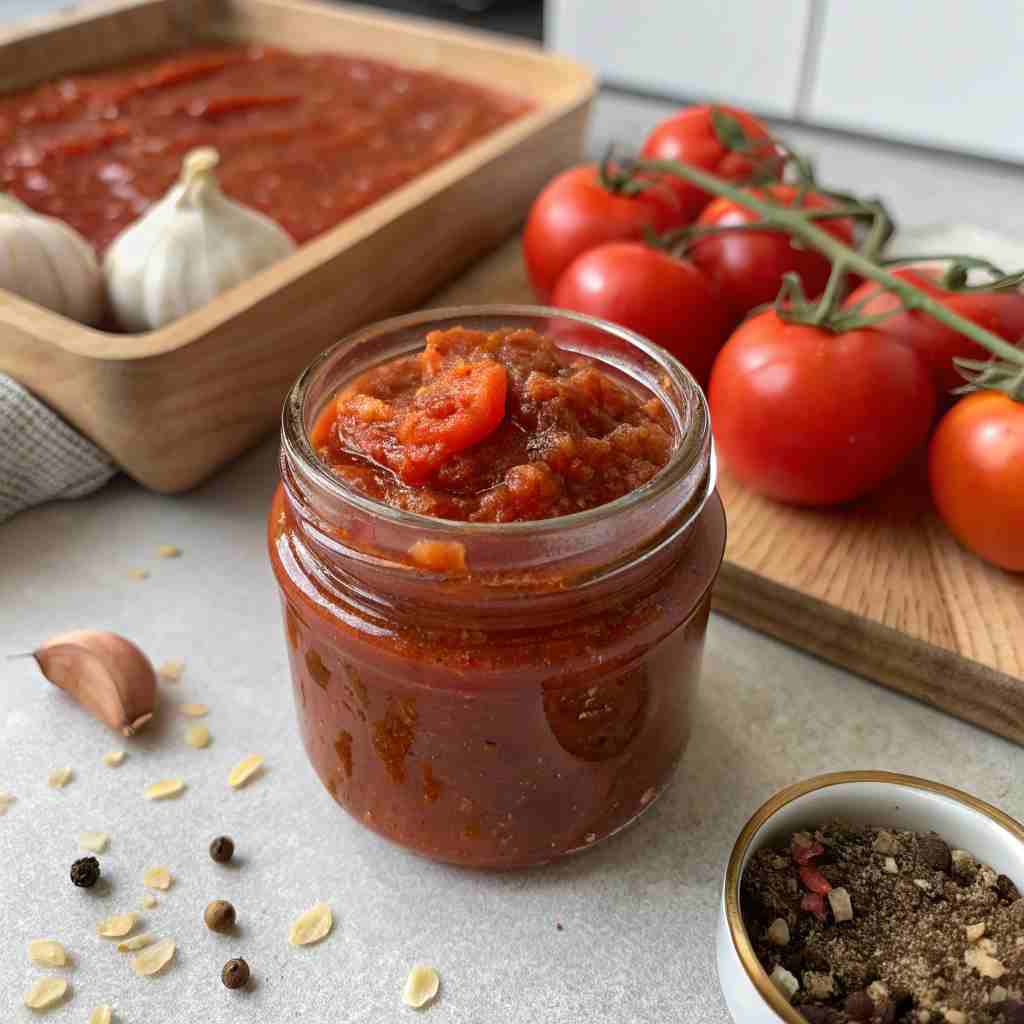
Looking for a delicious and versatile condiment? This Tomato Chutney is a classic British-style garden preserve bursting with flavour, perfect for adding a tangy and sweet kick to countless dishes. Made with ripe tomatoes, onions, spices, and vinegar, this chutney is simple to make at home and far superior to anything you’ll find on a supermarket shelf. Its unique blend of sweet and savoury notes makes it a true culinary staple, adding depth and complexity to everything it touches.
Jump To :
Key Ingredients for Tomato Chutney:
- 2 lbs (900g) Ripe Tomatoes: Use a mix of varieties for complexity. Chopped, with core removed.
- 1 large Onion: Finely chopped. This adds a crucial savoury base.
- 2 cloves Garlic: Minced. Adds depth and aromatic notes.
- 1 cup (200g) Granulated Sugar: Balances the acidity and acts as a preservative.
- 1 cup (240ml) Apple Cider Vinegar: Essential for both preservation and the signature tangy flavour.
- 1/2 cup (120ml) Water: Aids in the initial cooking process.
- 1/4 cup (50g) Raisins (optional): Adds a subtle sweetness and chewy texture.
- 1-2 Red Chilies (optional): Finely chopped. Adjust quantity to suit your spice preference.
- 1 teaspoon Ground Ginger: Lends a warm, spicy flavour.
- 1/2 teaspoon Ground Cinnamon: Aromatic and adds a subtle sweetness.
- 1/2 teaspoon Ground Allspice: Provides a complex, warm spice note.
- 1/2 teaspoon Salt: Enhances the flavours and acts as a preservative.
- 1/4 teaspoon Ground Black Pepper: Adds a subtle kick.
- 1/4 teaspoon Mustard Seeds: Adds a little pop taste.
- 1-2 Bay Leaves: Adds aroma whilst cooking. Remove before jarring.
How to Make Tomato Chutney:
This Tomato Chutney recipe is surprisingly easy to whip up, transforming a glut of garden tomatoes into a delectable preserve in around 90 minutes. The combination of sweet ripe tomatoes, tangy vinegar, warm spices, and a touch of sugar creates a symphony of flavors that will awaken your taste buds.
It’s a simple process of simmering ingredients together until they reach the perfect consistency, resulting in a chutney that’s both delicious and satisfying. From start to finish, including prep time, allow approximately 1 hour 45 minutes for this recipe.
Step-by-Step Instructions:
- Prepare the base: In a large, heavy-bottomed pot or Dutch oven, combine the chopped tomatoes, chopped onion, minced garlic, sugar, apple cider vinegar, and water.
- Add the spices: Stir in the raisins (if using), chopped red chilies (if using), ground ginger, ground cinnamon, ground allspice, salt, pepper, mustard seed and bay leaves. This mixture of sweet, sour, and earthy elements gives the chutney it’s depth.
- Simmer and reduce: Bring the mixture to a boil over medium-high heat, then reduce the heat to low and simmer gently, uncovered, for approximately 1 to 1 1/2 hours, or until the chutney has thickened and most of the liquid has evaporated. Stir frequently to prevent sticking and burning, especially towards the end of the cooking time.
- Check for consistency: To test for doneness, place a spoonful of chutney on a chilled plate. Let it sit for a minute, then tilt the plate. If the chutney doesn’t run and holds its shape, it is ready. If it is still too runny, continue to simmer for a further 15-20 minutes, checking frequently.
- Remove bay leaves: Before jarring, remove the bay leaves.
- Sterilize jars: While the chutney is simmering, sterilize your jars and lids. You can do this by boiling them in water for 10 minutes, or by running them through a hot cycle in your dishwasher.
- Fill the jars: Carefully ladle the hot chutney into the sterilized jars, leaving about 1/2 inch (1.2cm) of headspace at the top.
- Seal the jars: Wipe the rims of the jars clean with a damp cloth. Place the lids on top, and screw on the bands until they are fingertip tight.
- Process (optional but recommended for long term storage): For long-term shelf stability, process the filled jars in a boiling water bath for 10 minutes. This step ensures a tight seal and prevents spoilage. If you plan to store the chutney in the refrigerator and use it within a few weeks, processing is not required.
- Cool and check the seals: Carefully remove the jars from the boiling water bath and place them on a towel-lined surface to cool completely. As the jars cool, you should hear a “pop” sound, indicating that the lids have sealed properly. After the jars have cooled completely, check the seals by pressing down on the center of each lid. If the lid doesn’t flex up and down, the jar is properly sealed. If a lid doesn’t seal, refrigerate the jar and use the chutney within a few weeks.
- Label and store: Label each jar with the date and contents. Store sealed jars in a cool, dark place for up to one year.
Why You’ll Love This Tomato Chutney:
This Tomato Chutney is a flavour explosion in every spoonful, the perfect blend of sweet, tangy, and spicy making it incredibly versatile. It adds a delightful depth to countless dishes. Making your own chutney at home is significantly more cost-effective than buying it from the store. You can use fresh, seasonal tomatoes and adjust the ingredients to suit your taste, plus avoid any unwanted preservatives. The inclusion of warm spices like ginger, cinnamon, and allspice elevates this chutney beyond the ordinary, adding a complexity and richness of flavour that’s simply irresistible.
Compared to a simple tomato relish, this chutney offers a richer, deeper flavour profile due to the extended simmering time and the blend of spices. It’s amazing spread on crackers with cheese, served alongside grilled meats, or even stirred into stews for added flavor. Ready to elevate your meals? Try making this delightful Tomato Chutney today!
What to Serve Tomato Chutney With:
- Cheese Boards: A classic pairing! Serve with a selection of cheeses such as cheddar, brie, or goat cheese.
- Grilled Meats: Perfect alongside grilled chicken, pork, or beef. The chutney’s tanginess cuts through the richness of the meat.
- Sandwiches: Add a dollop to sandwiches for extra flavor dimension. It’s great with ham, cheese, or roast beef.
- Curries: Swirl a spoonful into curries for added depth and complexity.
- Sausage Rolls: A delightful addition to sausage rolls.
Top Tips for Perfecting Tomato Chutney:
- Use Ripe Tomatoes: Choose ripe, flavourful tomatoes for the best results. A mix of varieties will add complexity.
- Adjust Spice Levels: If you prefer a milder chutney, reduce the amount of chili or omit it altogether.
- Stir Frequently: To prevent sticking and burning, especially towards the end of cooking, stir the chutney frequently.
- Check Consistency: Use the chilled plate test to determine when the chutney is ready.
- Proper Sterilization: Ensure your jars and lids are properly sterilized to prevent spoilage.
- Try Different Vinegar: Apple cider vinegar works well, but you could experiment with white wine vinegar.
- Add Heat with Jalapenos: For hotter chutney use jalapenos instead of red chillis..
5 Facts about Tomato Chutney:
- British Origin: While chutney has its roots in India, tomato chutney is a distinctly British adaptation.
- Garden Preserve: Traditionally made as a way to preserve a surplus of garden-grown tomatoes.
- Versatile Condiment: Used as a spread, dip, or accompaniment for a variety of dishes.
- Flavorful Combination: A balance of sweet, tangy, and spicy flavors.
- Easy to Make: Simple to prepare at home with readily available ingredients
Storing and Reheating Tips:
Storing: Once the jars are sealed and cooled, store them in a cool, dark place, such as a pantry or cupboard. Properly sealed jars of Tomato Chutney can last for up to one year. If you did not process the jars in a water bath, store the chutney in the refrigerator and use it within a few weeks.
Reheating: Reheating is generally not necessary as Tomato Chutney is typically served at room temperature or slightly chilled. However, if you prefer a warmer chutney, you can gently heat it in a saucepan over low heat, stirring occasionally, until heated through. Be careful not to overheat the chutney, as this can affect its texture and flavour. This chutney shouldn’t be reheated in the microwave.
Final Thoughts:
This Tomato Chutney recipe is more than just a preserve; it’s a taste of the garden, a celebration of flavour, and a testament to the art of homemade goodness. With its simple ingredients and easy-to-follow instructions, you can create a versatile condiment that will elevate your meals and impress your friends and family. So go ahead, gather your tomatoes, embrace the spices, and embark on a chutney-making adventure. You won’t be disappointed!
Read More also:
- Pressure Canning Chicken Broth
- Canning Lemonade Concentrate
- Homemade Apple Sauce Recipe
- Easy Sweet Peach Syrup
- Our Pinterest
Tomato Chutney FAQs:
Q: Can I use different types of tomatoes?
A: Absolutely! A mix of varieties will add complexity to the flavor.
Q: Can I make this recipe without sugar?
A: You can reduce the amount of sugar, but it’s important for both flavour and preservation. Consider using a sugar substitute, but be aware that this may affect the texture and shelf life.
Q: How long does homemade tomato chutney last?
A: Properly sealed and processed jars can last up to one year in a cool, dark place. Opened jars should be stored in the refrigerator and used within a few weeks.
Q: Can I freeze Tomato Chutney?
A: Yes, you can freeze tomato chutney. Allow it to cool completely, then transfer it to freezer-safe containers, leaving some headspace. Freeze for up to 3 months. Thaw in the refrigerator before using.