
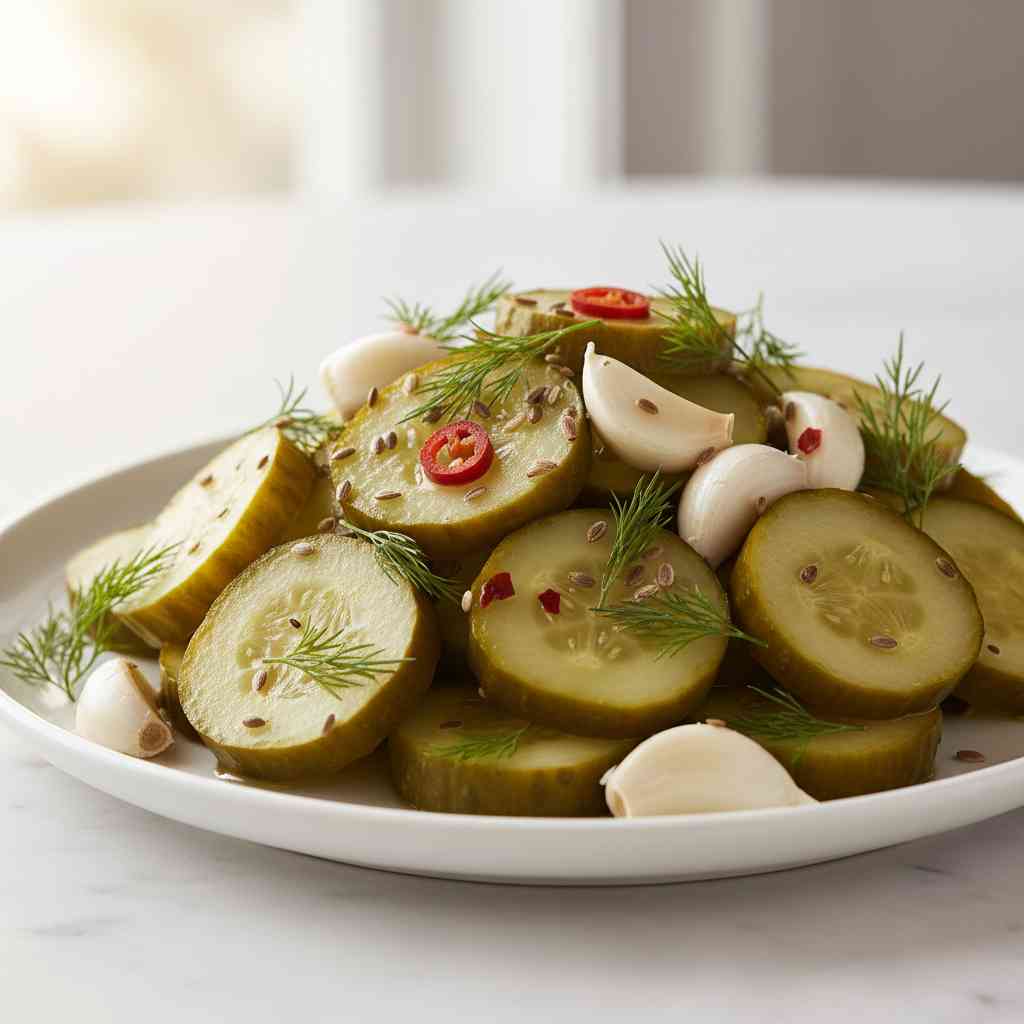
Craving that perfect, crisp, and flavor-packed pickle straight from the jar? Look no further! These homemade Garlic Dill Pickles capture the ideal balance of salty, tangy, and herbaceous notes that make classic refrigerator pickles so addictive. Perfect for snacking or elevating your favorite sandwiches, this recipe requires no canning and delivers incredible results every time.
Why You Will Love This Recipe
These Garlic Dill Pickles are incredibly easy to make, requiring minimal effort for maximum flavor payoff. Since these are refrigerator pickles, they skip the complicated hot water bath canning process, making them accessible even for beginner preservers. The crunch factor is unparalleled—these pickles stay crisp for weeks when stored properly. Finally, the robust flavor profile, dominated by fresh garlic and aromatic dill, is far superior to most store-bought brands.
Ingredients
- 4 lbs Kirby cucumbers (small pickling cucumbers)
- 2 quarts (8 cups) filtered water
- 1/2 cup pickling salt (or canning salt, DO NOT use iodized table salt)
- 1/4 cup white vinegar (5% acidity)
- 1 head fresh garlic, cloves peeled and thinly sliced (about 12-16 cloves)
- 4-6 large sprigs fresh dill (or 3 tablespoons dried dill seed)
- 1 teaspoon black peppercorns
- 1 teaspoon mustard seeds
- Optional: 1/2 teaspoon red pepper flakes for a little heat
Step-by-Step Instructions
- Prepare the Cucumbers: Wash the Kirby cucumbers thoroughly. Trim off the blossom end of each cucumber; this end contains enzymes that can lead to soft pickles. Slice the cucumbers into spears, chips, or leave them whole, depending on your preference.
- Create the Brine: In a large, non-reactive pot (stainless steel or enamel), combine the filtered water, pickling salt, and white vinegar. Bring the mixture to a boil over medium-high heat, stirring until the salt is completely dissolved. Remove from heat and allow the brine to cool completely to room temperature before proceeding. This is crucial for crisp pickles.
- Prepare Jars and Flavorings: While the brine cools, carefully pack your clean quart-sized mason jars. Divide the sliced garlic, fresh dill sprigs (or seed), peppercorns, mustard seeds, and optional red pepper flakes evenly among the jars.
- Pack the Cucumbers: Tightly pack the prepared cucumber pieces into the jars, leaving about 1/2 inch of headspace at the top. Try to nestle them in securely to fit as many as possible without crushing them.
- Pour the Brine: Once the brine is completely cool, slowly pour it over the cucumbers in each jar, ensuring every piece is fully submerged. Make sure to leave adequate headspace (about 1/2 inch) between the liquid level and the rim of the jar.
- Seal and Refrigerate: Wipe the rims clean with a paper towel, secure the lids tightly (if using two-piece lids, just use the band finger-tight). Let the jars sit on the counter for 1 hour, then transfer them immediately to the refrigerator.
- Wait for Perfection: The pickles will start developing flavor right away, but they are best enjoyed after at least 24–48 hours in the refrigerator. For the most developed flavor, allow them to cure for 5 to 7 days before eating.
Expert Tips / Pro Tips
Keep your pickles crispy by ensuring you trim both the stem and blossom ends off every cucumber. The blossom end releases softening enzymes. Always use pickling or canning salt; regular table salt contains anti-caking agents that can make your brine cloudy and potentially softer pickles. Make sure your brine is totally cool before pouring it over the cukes and packing them into the jars; hot brine will cook the cucumbers, resulting in mushy pickles.
Variations & Substitutions
For a spicier kick, increase the amount of red pepper flakes or add a few thin slices of fresh jalapeño directly into the jar. If you prefer bread and butter style, substitute half the salt with 1/2 cup of sugar. For a different aromatic profile, try substituting some of the dill with fresh tarragon or a bay leaf in each jar. If you don’t have fresh garlic cloves, 1 teaspoon of granulated garlic powder per quart jar works in a pinch, though fresh is always recommended for the boldest taste.
Serving Suggestions
These crisp Garlic Dill Pickles are phenomenal straight out of the jar as a snack, especially when you are craving something tart and salty. They are the ultimate accompaniment to rich, fatty foods like gourmet burgers, pulled pork sandwiches, or classic deli Reubens. Chop them finely to create fantastic tartar sauce or mix them into potato salad and macaroni salad for an added layer of crunch and tang.
Storage, Freezing & Reheating
Since these are refrigerator pickles, they must be stored in an airtight container in the refrigerator. When properly stored, Garlic Dill Pickles will maintain peak crispness for up to 6 weeks, although they often last longer. Do not attempt to freeze these pickles; freezing can destroy the texture, resulting in a soft, mushy final product upon thawing.
Nutrition Information
The following approximate nutritional information is based on one serving (one spear/chip, dependent on density).
| Nutrient | Amount |
|---|---|
| Calories | 10-15 kcal |
| Total Fat | 0g |
| Sodium | 300mg |
| Total Carbohydrate | 2g |
| Sugars | 1g |
| Protein | 0g |
FAQ
Why are my pickles soft instead of crunchy?
Softness is usually caused by one of three things: not trimming the blossom end of the cucumber, using iodized salt instead of pickling salt, or pouring warm brine over the cucumbers. Ensure all these steps are followed precisely for a crisp result.
How long do refrigerator pickles last?
When kept consistently refrigerated in a sealed jar, these Garlic Dill Pickles are generally good for about 6 weeks, though they taste best within the first month.
Can I use regular cucumbers instead of Kirby cucumbers?
While you can, Kirby or other small pickling varieties are highly recommended because they have fewer seeds and firmer flesh, which contributes significantly to the classic pickle crunch.
Garlic Dill Pickles
Ingredients
Method
- Prepare canning jars and lids by sterilizing them according to standard canning procedures. Alternatively, ensure jars are very clean for ‘refrigerator pickles’.
- In a large non-reactive saucepan, combine the water, vinegar, pickling salt, and sugar. Bring the mixture to a rolling boil over high heat, stirring until the salt and sugar are completely dissolved. Remove immediately from heat.
- Pack the jars tightly. Divide the garlic cloves, dill heads/fronds, peppercorns, and mustard seeds evenly among the sterilized jars. Pack the cucumbers vertically into the jars, leaving about 1/2 inch of headspace.
- Carefully pour the hot brine over the cucumbers in the jars, ensuring all solids are submerged. Tap the jars gently on the counter to release any trapped air bubbles.
- Wipe the rims clean, affix the lids, and screw on the bands until fingertip tight. For shelf-stable pickles, process the sealed jars in a boiling water bath for 10 minutes. For refrigerator pickles, allow them to cool completely before refrigerating.
- Allow the refrigerator pickles to cure for at least 48 hours before enjoying. Shelf-stable pickles are ready after 2 weeks of cool storage.