
The Ultimate Stone Fruit Clafoutis Recipe for Summer Delight
Discover the magic of baking with fresh summer produce in this beautiful Stone Fruit Clafoutis Recipe. This classic French dessert balances tender, custardy batter with the natural sweetness of ripe peaches, plums, and cherries.
Why You Will Love This Recipe
This Stone Fruit Clafoutis Recipe is incredibly simple yet yields an elegant dessert perfect for any occasion, from a casual brunch to a sophisticated dinner party finale. It requires minimal fuss—just mixing a few pantry staples and arranging the fruit—making it an ideal go-to when fresh stone fruit is in season. The texture is delightfully unique: crisp edges giving way to a soft, creamy interior that melts in your mouth, perfectly complementing the burst of juicy, caramelized fruit.
Ingredients
- 1 ½ cups mixed fresh stone fruit (such as peaches, plums, and cherries), pitted and halved or quartered
- 3 large eggs
- ½ cup granulated sugar, plus extra for dusting
- 1 cup whole milk
- ½ teaspoon pure vanilla extract
- ¼ teaspoon almond extract (optional, but recommended)
- ½ cup all-purpose flour
- 1 pinch of salt
- 2 tablespoons unsalted butter, melted, plus extra for greasing the dish
Step-by-Step Instructions
- Preheat your oven to 375°F (190°C). Generously butter an 8-inch or 9-inch round baking dish or gratin dish. Dust the bottom lightly with a teaspoon of granulated sugar.
- Arrange the prepared stone fruit evenly across the bottom of the buttered dish. If using cherries, leave them whole or halved. If using larger fruit like peaches or plums, ensure they are cut into pieces no larger than one inch thick.
- In a medium bowl, whisk together the eggs and the ½ cup of sugar until smooth and slightly pale.
- Whisk in the whole milk, vanilla extract, and almond extract (if using).
- In a separate small bowl, whisk the flour and salt together. Gradually add the dry ingredients to the wet ingredients, whisking just until combined. Be careful not to overmix; a few small lumps are acceptable.
- Whisk in the 2 tablespoons of melted butter into the batter until fully incorporated.
- Gently pour the batter over the arranged fruit in the baking dish. The fruit may float slightly, which is normal.
- Bake for 40 to 50 minutes, or until the clafoutis is puffed, golden brown around the edges, and a knife inserted near the center comes out mostly clean (it should remain slightly custardy).
- Remove from the oven and let cool on a wire rack for at least 15 minutes before serving. Dust lightly with powdered sugar just before serving, if desired, to complete this Stone Fruit Clafoutis Recipe.
Expert Tips / Pro Tips
- Use Room Temperature Dairy: Ensure your eggs and milk are at room temperature. This helps the batter emulsify properly, leading to a smoother final texture.
- Don’t Overmix the Batter: Overmixing develops the gluten in the flour, resulting in a tougher, more cake-like texture instead of the desired soft custard. Mix only until the streaks of flour disappear.
- Fruit Arrangement Matters: While it’s a rustic dessert, try to arrange the fruit evenly so every serving gets a good distribution of caramelized sweetness.
- Check Oven Accuracy: Ovens vary widely. If your clafoutis begins to brown too quickly before the center is set, loosely tent the top with aluminum foil for the remainder of the baking time.
Variations & Substitutions
- Different Fruits: Although traditional clafoutis uses unsweetened black cherries, this variation handles almost any stone fruit beautifully. Try nectarines, apricots, or even thinly sliced figs when in season.
- Flavor Enhancements: Add a teaspoon of citrus zest (lemon or orange) to the batter for an extra bright flavor profile that cuts through the richness of the custard.
- Dairy-Free Option: Substitute the whole milk with unsweetened almond milk or cashew milk. Note that the texture may be slightly lighter.
- Gluten-Free Alternative: Replace the all-purpose flour with a high-quality 1-to-1 gluten-free baking blend.
Serving Suggestions
This Stone Fruit Clafoutis Recipe is wonderful served warm, slightly cooled, or even at room temperature. Dust generously with confectioners’ sugar just before bringing it to the table. For a truly decadent experience, serve alongside a small scoop of high-quality vanilla bean ice cream or a dollop of freshly whipped cream infused with a touch of crème fraîche for tang.
Storage, Freezing & Reheating
Storage: Leftover clafoutis can be stored tightly covered in the refrigerator for up to 3 days. The texture will soften considerably upon refrigeration but will regain some creaminess as it warms slightly closer to room temperature.
Freezing: While freezing is not ideal as the custard texture can become slightly grainy upon thawing, you can freeze individual slices tightly wrapped in plastic wrap and then foil for up to one month. Thaw overnight in the refrigerator.
Reheating: To revive the texture, gently reheat individual slices in a toaster oven or a conventional oven set to 300°F (150°C) for about 5-8 minutes until just warm through.
Nutrition Information
| Nutrient | Amount (Approximate per serving, based on 8 servings) |
|---|---|
| Calories | 220 kcal |
| Total Fat | 7g |
| Saturated Fat | 3.5g |
| Carbohydrates | 35g |
| Sugar | 20g |
| Protein | 6g |
Please note these values are estimates and can vary based on the specific size and type of stone fruit used.
FAQ
What is the difference between a clafoutis and a flaugnarde?
Traditionally, a clafoutis is made with whole, unpitted black cherries. When any other fruit (like apples, pears, or the stone fruits used here) is substituted in the recipe, the dessert is technically called a flaugnarde. However, in modern baking, “clafoutis” is often used generically for any fruit baked in this style of batter.
Can I use frozen fruit in my Stone Fruit Clafoutis Recipe?
It is strongly recommended to use fresh, ripe fruit for the best texture. If you must use frozen fruit, thaw it completely first and pat it very dry with paper towels to remove excess moisture, which can negatively affect the custard.
Why did my clafoutis sink after baking?
Clafoutis naturally puffs up significantly during baking as the eggs steam and set. It will deflate slightly as it cools—this is normal and indicates a successful custard structure. If it collapses dramatically, it might mean the oven temperature was too low, or it was removed before it was fully set in the center.
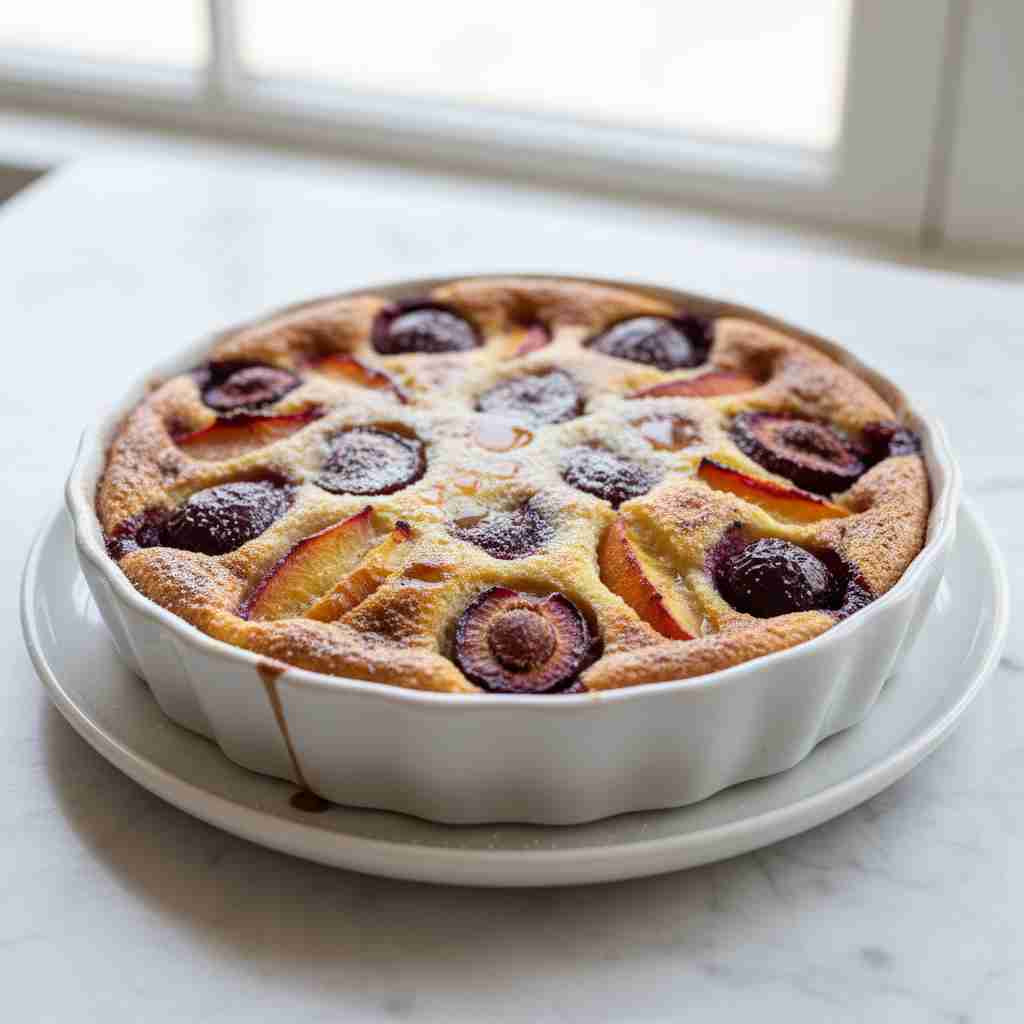
Stone Fruit Clafoutis Recipe
Ingredients
Method
- Preheat your oven to 375°F (190°C). Generously brush a 9-inch pie dish or shallow baking dish with the melted butter, ensuring the sides are coated.
- Arrange the prepared stone fruits evenly across the bottom of the buttered dish. Sprinkle the fruits lightly with 1 tablespoon of the granulated sugar.
- In a large bowl, whisk together the remaining 1/2 cup of granulated sugar, flour, and salt until well combined.
- In a separate bowl, lightly whisk the eggs. Gradually whisk in the milk, heavy cream, and vanilla extract until just combined. Do not overmix.
- Slowly pour the wet mixture over the fruits in the baking dish, starting from the center and working your way out. The fruits should be partially submerged.
- Bake for 40 to 45 minutes, or until the clafoutis is puffed, golden brown around the edges, and a knife inserted near the center comes out mostly clean (it should still be slightly custardy). If the top begins to brown too quickly, loosely tent with foil.
- Let the clafoutis cool on a wire rack for at least 15 minutes before serving. Dust generously with powdered sugar just before serving warm.