
Nectarine Canning Preserve Homegrown Flavor: Your Guide to Summer in a Jar
Capturing the sweet, sun-ripened essence of summer fruit is one of the most rewarding kitchen endeavors. This guide will walk you through how to create the perfect batch of nectarine canning preserves, ensuring you can enjoy that homegrown flavor all year long. Mastering this simple canning technique preserves the vibrant taste and texture of fresh nectarines beautifully.
Why You Will Love This Recipe
This Nectarine Canning Preserve recipe delivers a bright, perfectly balanced sweetness that truly celebrates the natural flavor of ripe nectarines. It is incredibly simple to execute, even for beginner canners, requiring only a few basic ingredients. Furthermore, preserving your own fruit means you control the sugar content, avoiding the overly sweet syrups often found in commercial jams and jellies. Enjoying this preserve offers a tangible taste of summer months later, spread thickly on toast or enjoyed straight from the jar!
Ingredients
- 4 pounds fresh, ripe nectarines, peeled, pitted, and chopped
- 4 cups granulated sugar (adjust based on fruit sweetness)
- 1/2 cup lemon juice (freshly squeezed preferred)
- 1 package (1.75 oz) powdered pectin
- 1 teaspoon unsalted butter or commercial non-stick spray (optional, to reduce foam)
Step-by-Step Instructions
- Prepare your canning equipment: Wash, rinse, and sterilize your canning jars, lids, and rings according to your water bath canner manufacturer’s instructions. Keep the jars hot until ready to fill.
- Prepare the fruit: Chop the peeled and pitted nectarines into small, uniform pieces. Measure out 4 pounds of prepared fruit.
- Combine pectin and juice: In a large, heavy-bottomed pot, mix the powdered pectin thoroughly into the lemon juice until completely dissolved. This prevents clumping later.
- Cook the fruit: Add the chopped nectarines to the pectin-juice mixture. Stir constantly over high heat until the mixture reaches a full, rolling boil that cannot be stirred down.
- Add sugar: Immediately add the granulated sugar all at once, stirring gently but constantly until the sugar is completely dissolved. Return the mixture to a full, rolling boil.
- Boil to setting point: Once boiling hard, boil rapidly, stirring frequently to prevent scorching, until the mixture reaches 220 degrees Fahrenheit (104 degrees Celsius) or passes the sheet/flake test (when a spoonful dripped onto a cold plate wrinkles when pushed with a finger). This usually takes about 5 to 10 minutes after returning to a rolling boil. Remove from heat. Skim off any foam that forms on the surface using the back of a spoon or by stirring in the optional small amount of butter.
- Fill jars: Carefully ladle the hot nectarine preserve mixture into the hot, sterilized jars, leaving 1/4 inch headspace (the space between the top of the preserve and the rim of the jar).
- Seal and process: Wipe the rims clean with a damp cloth, center the lids, and screw on the bands until fingertip tight (do not overtighten). Place the filled jars into the water bath canner, ensuring they are covered by at least 1 inch of water. Bring the water to a rolling boil and process for 10 minutes (adjust time for altitudes above 1,000 feet).
- Cool and check seals: Turn off the heat, carefully remove the jars, and place them on a towel on the counter, leaving space between them. Allow them to cool undisturbed for 12-24 hours. Check the seals; the center of the lid must be recessed and should not flex when pressed. Label and store in a cool, dark place.
Expert Tips / Pro Tips
Use perfectly ripe, but not mushy, nectarines for the best texture and flavor concentration in your preserve. Ensure your pectin is fresh; expired pectin can cause the preserve not to set properly. Always use a thermometer calibrated for candy/jam making for the most accurate setting point, as visual cues can sometimes be misleading, especially with lower-sugar fruit preserves. Do not double the recipe while water bath canning, as this significantly affects processing times and the ability of the mixture to reach the setting point evenly.
Variations & Substitutions
For a spicy kick, add 1/2 teaspoon of ground cinnamon or a pinch of cayenne pepper along with the sugar. To create a nectarine-berry hybrid, substitute one pound of the nectarines with ripe strawberries or raspberries. If you prefer a less acidic preserve, substitute half of the lemon juice with white grape juice, though be aware this might slightly reduce the natural pectin activation.
Serving Suggestions
This homemade Nectarine Canning Preserve is wonderfully versatile. Serve it traditionally on warm scones, buttermilk biscuits, or crusty French bread. It makes an excellent topping for vanilla ice cream or cheesecake. For a savory twist, swirl a spoonful into yogurt parfaits or serve it alongside roasted pork tenderloin or grilled chicken.
Storage, Freezing & Reheating
Properly processed and sealed jars of this Nectarine Canning Preserve are shelf-stable, lasting up to 1 year when stored in a cool, dark, dry location away from heat sources. Once a jar has been opened, it must be refrigerated and consumed within 3 weeks. Freezing is generally unnecessary due to the success of water bath canning, but if you choose to freeze unused open preserves, transfer them to a freezer-safe container, leaving 1/2 inch headspace to prevent breakage.
Nutrition Information
Please note that nutritional values are estimates and can vary significantly based on the exact ripeness of the fruit and the precise amount of sugar absorbed during cooking. This general table is based on a standard serving size of 1 tablespoon (approx. 20g) of the finished preserve.
| Nutrient | Amount per Serving (Approx.) |
|---|---|
| Calories | 50-55 kcal |
| Total Fat | 0 g |
| Sodium | 0 mg |
| Total Carbohydrates | 14 g |
| Sugars | 13 g |
| Protein | 0 g |
FAQ
Why won’t my nectarine preserve set?
The most common reasons for a preserve failing to set are using old or inactive pectin, not boiling long enough to reach the proper temperature (220°F/104°C), or adding too much fruit relative to the pectin required. If a small batch fails to set, you can often remedy it by re-boiling the contents with an extra half packet of pectin dissolved in a little lemon juice.
Do I have to peel the nectarines for canning?
While not strictly mandatory, peeling the nectarines is highly recommended for the best final texture. The skins, while edible, can become tough or separate during the long cooking and storage process, resulting in a less smooth preserve.
Can I use less sugar than the recipe calls for?
Sugar plays a crucial role in canning beyond sweetness; it helps preserve the fruit’s color and aids in the gelling process (working synergistically with the added pectin). Reducing sugar significantly requires using “low-sugar” or “no-sugar” pectin specifically, otherwise, you risk the preserve remaining liquid.
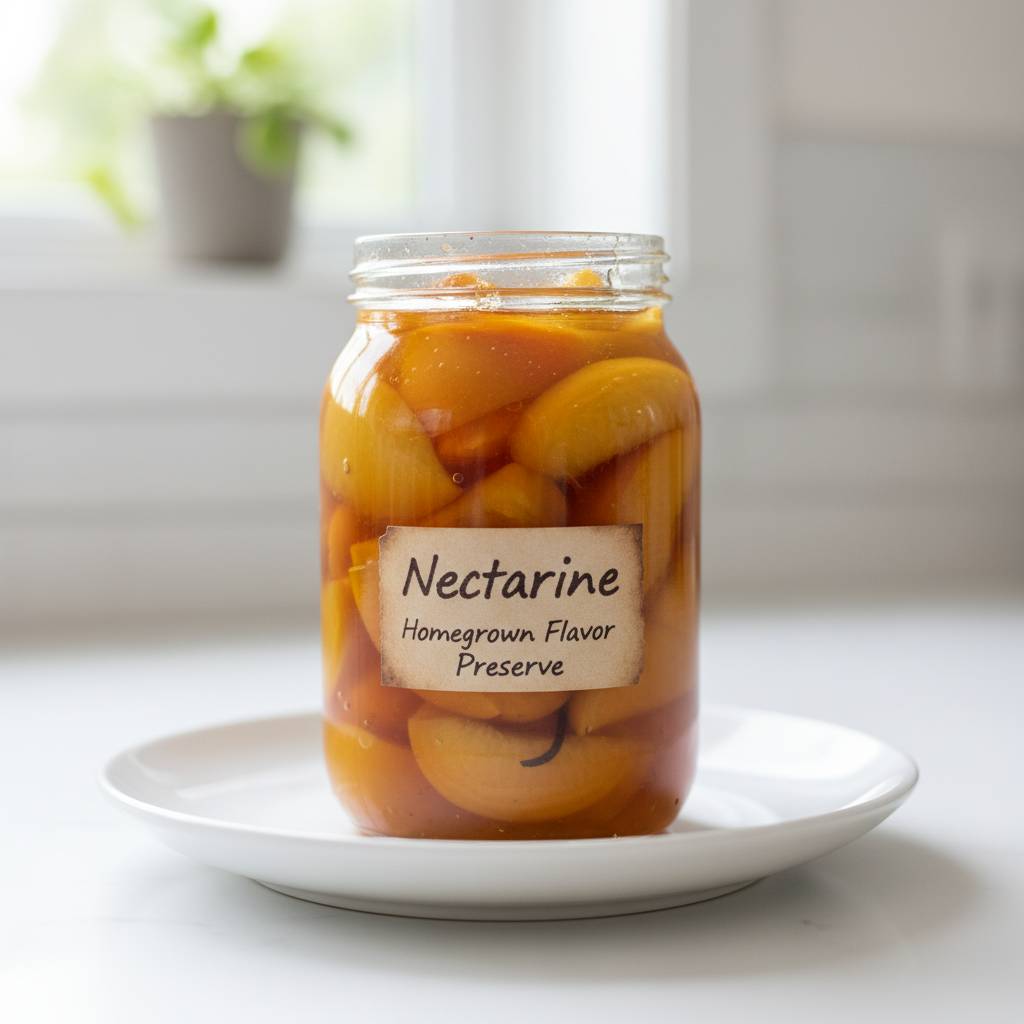
Nectarine Canning Preserve Homegrown Flavor
Ingredients
Method
- Prepare the water bath canner by filling it with water and bringing it to a simmer (180°F). Sterilize canning jars, lids, and rings according to standard water bath canning procedures.
- In a large, heavy-bottomed pot, combine the chopped nectarines and lemon juice. Heat over medium heat, stirring occasionally, until the fruit starts to release its juices and simmers (about 10-15 minutes).
- In a small bowl, whisk the powdered pectin into 1/4 cup of the measured sugar until completely smooth. Add this mixture to the simmering fruit, stirring constantly for one minute.
- Gradually add the remaining sugar to the fruit mixture, stirring until it dissolves. Increase the heat to high and bring the mixture to a rolling boil that cannot be stirred down. Boil hard for exactly 1 minute, continuing to stir constantly.
- Immediately remove the pot from the heat. Skim off any foam that rises to the surface using a metal spoon. Carefully ladle the hot jam into the sterilized jars, leaving 1/4 inch of headspace in each jar.
- Wipe the rims clean with a damp cloth, center the lids, and screw on the bands fingertip tight. Place the filled jars into the simmering water bath canner, ensuring they are covered by at least 1 inch of water. Process for 10 minutes (adjust time for altitude if necessary).
- Carefully remove the jars and place them on a towel-lined counter to cool undisturbed for 12-24 hours. Check seals; any unsealed jars should be refrigerated and consumed within three weeks.