
Homemade Healthy Rhubarb Jam Without Pectin: A Vibrant Spring Treat
Embrace the tart beauty of spring with this wonderfully simple recipe for homemade rhubarb jam. Making your own preserves is incredibly rewarding, and this recipe proves you don’t need commercial pectin to achieve a perfect set. The bright, tangy flavor of rhubarb shines through, sweetened just enough for a truly luxurious spread.
Why You Will Love This Recipe
This recipe for Healthy Rhubarb Jam Without Pectin is a favorite because it maximizes the natural flavor profile of fresh rhubarb. By relying on the long cooking time and the natural pectin found within the fruit itself, you achieve a beautifully textured jam with less added sugar compared to many store-bought varieties. It’s incredibly easy, requires minimal equipment, and results in a vibrant, eye-catching preserve perfect for showcasing spring harvests.
Ingredients
- 2 pounds fresh rhubarb, washed, trimmed, and chopped into 1/2-inch pieces
- 3 cups granulated sugar (adjust slightly based on rhubarb tartness)
- 1/2 cup water
- Juice of 1 fresh lemon (about 2 tablespoons)
Step-by-Step Instructions
- Prepare the Rhubarb: Thoroughly wash and trim the fibrous ends of your rhubarb stalks. Chop the rhubarb into evenly sized, half-inch pieces.
- Combine Ingredients: In a large, heavy-bottomed non-reactive pot (stainless steel or enameled cast iron works best), combine the chopped rhubarb, granulated sugar, and water.
- Initial Cooking Phase: Place the pot over medium heat. Stir gently until the sugar is completely dissolved. Bring the mixture to a gentle simmer, stirring occasionally to prevent scorching at the bottom.
- Softening and Releasing Juices: Once simmering, reduce the heat to medium-low. Let the mixture cook slowly for about 15 to 20 minutes, stirring often, until the rhubarb has completely broken down into a soft pulp.
- Achieving the Set (Natural Pectin Activation): Increase the heat to medium-high. Add the fresh lemon juice. The acidity from the lemon aids in setting the jam. Continue to boil vigorously, stirring constantly to prevent sticking. This stage is crucial for setting the jam without commercial pectin.
- Testing for Doneness: Cook until the jam reaches 220 degrees Fahrenheit (104 degrees Celsius) on a reliable candy or digital thermometer. Alternatively, perform the cold plate test: place a small spoonful of jam onto a chilled plate; if it wrinkles when pushed, it is ready. This usually takes 20 to 30 minutes of hard simmering after the rhubarb has softened.
- Skimming (Optional): If a clearer jam is desired, gently skim off any foam that rises to the surface during the final cooking stage using a large spoon.
- Jarring: Carefully ladle the hot jam into sterilized canning jars, leaving 1/4 inch headspace. Wipe the rims clean, affix the lids and bands fingertip tight.
- Processing: Process the filled jars in a boiling water bath canner for 10 minutes (adjusting for altitude), or allow them to cool completely on the counter until the lids seal.
Expert Tips / Pro Tips
- Use A Heavy Pot: A heavy-bottomed pot is essential to distribute heat evenly and prevent the high-sugar mixture from burning or sticking during the long simmer time.
- Don’t Rush the Cook Time: Natural setting requires patience. The flavors meld, and the natural pectin needs time combined with high heat and acid (lemon juice) to activate fully.
- Check Your Rhubarb: Rhubarb tartness varies widely. Taste a small, cooked piece towards the end. If it is extremely tart, you might add an extra quarter-cup of sugar.
- Sterilization Matters: Ensure your jars are properly sterilized before filling to guarantee a safe and long-lasting preserve.
Variations & Substitutions
- Flavor Pairings: To add depth, consider adding 1 teaspoon of vanilla extract during the last five minutes of cooking, or substitute 1/4 cup of the water with orange juice.
- Spices: A pinch of ground ginger or a small cinnamon stick added at the start of the cooking process gives a warm note. Remove the cinnamon stick before jarring.
- Alternative Sweeteners (Use Caution): While this recipe is optimized for granulated sugar to ensure proper setting, you can use an equal amount of organic cane sugar. Brown sugar can be used, but it will give the jam a darker color and a molasses flavor. Reducing or substituting sugar drastically may prevent the natural pectin from setting correctly.
Serving Suggestions
This vibrant jam is wonderfully versatile. Spread it generously on warm scones or crusty toast for breakfast. It makes an excellent topping for vanilla ice cream or yogurt. For savory applications, use it as a glaze for roasted pork tenderloin or serve it alongside a sharp cheddar cheese board.
Storage, Freezing & Reheating
Unopened, properly processed jars of jam can be stored in a cool, dark pantry for up to one year. Once opened, the jam must be refrigerated and consumed within three weeks. For long-term storage without canning, ladle cooled jam into freezer-safe containers, leaving 1/2 inch headspace, and freeze for up to six months. Thaw overnight in the refrigerator before serving.
Nutrition Information
Note: Nutritional data is an estimate based on the ingredients listed and does not account for variations in portion size or specific ingredient brands. Serving size is estimated at 1 tablespoon serving.
| Nutrient | Amount Per Serving (Approx.) |
|---|---|
| Calories | 55 kcal |
| Total Fat | 0g |
| Sodium | 0mg |
| Total Carbohydrates | 14g |
| Sugars | 13g |
| Protein | 0.1g |
FAQ
Why does my jam not set if I don’t use pectin?
Jam sets relies on a balance of sugar, acid, and heat concentration. Rhubarb naturally contains pectin, but it often requires a long enough cooking time at a high temperature (the setting point, 220°F) along with the acid from the lemon juice to fully activate that natural pectin to create a gel.
Can I use less sugar to make it healthier?
You can reduce the sugar slightly, but for preserving fruit without commercial pectin, sugar is necessary not just for taste but also as a preservative and to help the fruit set the gel. Reducing it significantly (more than 1/4 cup) may result in a syrup rather than a jam.
My rhubarb is stringy, what went wrong?
If your rhubarb is stringy, it likely needed more cooking time to fully break down before you tested for the set. Continue simmering until the fibers dissolve into the liquid completely, or you can carefully use an immersion blender briefly once the fruit is very soft.
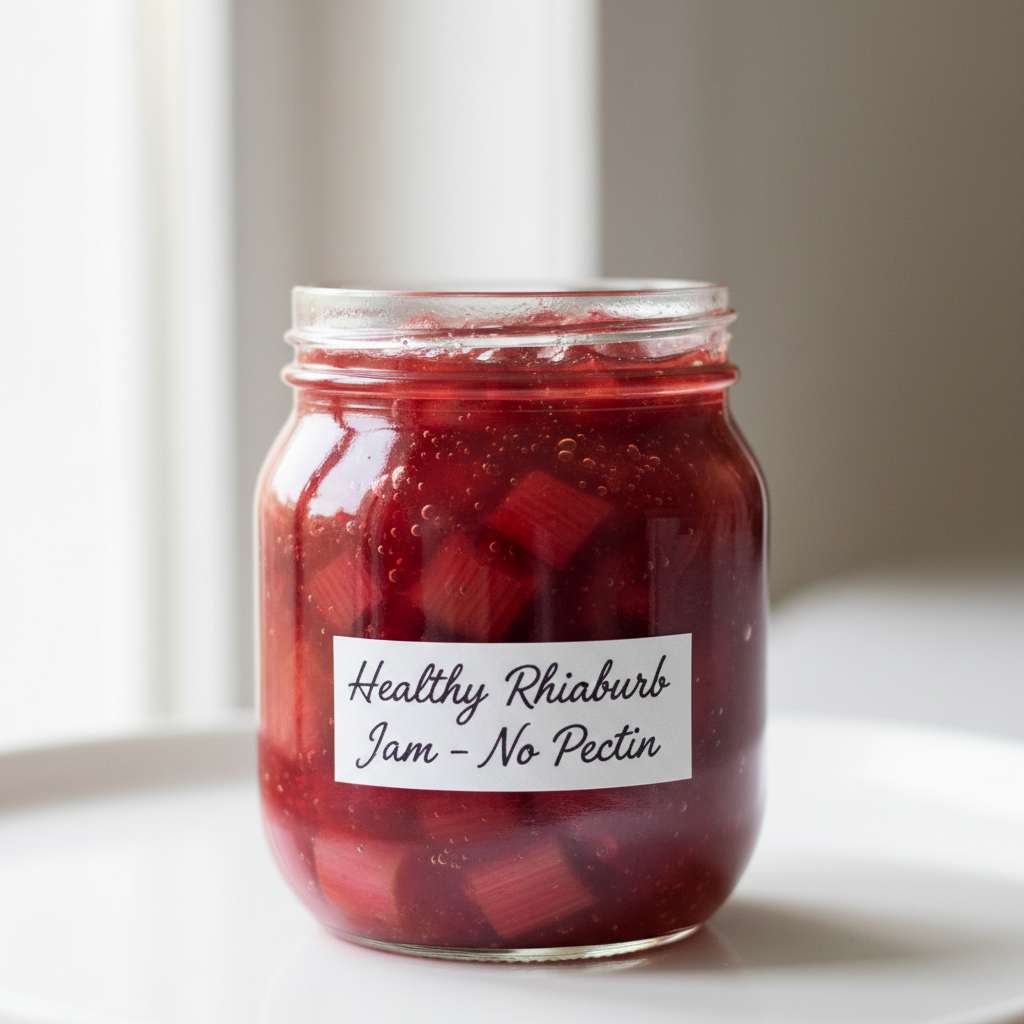
Healthy Rhubarb Jam Without Pectin
Ingredients
Method
- Prepare the Rhubarb: In a large, non-reactive saucepan (like stainless steel or enamel), combine the chopped rhubarb, granulated sugar, and water. Stir gently to coat the rhubarb.
- Macerate and Initial Cook: Let the mixture sit at room temperature for about 15 minutes to allow the sugar to draw out some liquid from the rhubarb. Place the saucepan over medium heat.
- Simmer and Soften: Bring the mixture to a low boil, stirring occasionally. Once boiling, reduce heat to low and simmer, uncovered, for about 20-25 minutes, or until the rhubarb has completely broken down into a sauce consistency.
- Achieve Set Point: Stir in the lemon juice, lemon zest, and vanilla extract (if using). Increase the heat slightly to medium-low and continue to simmer gently, stirring frequently to prevent scorching. Cook for another 15-20 minutes. The jam is ready when it thickens and coats the back of a spoon, or reaches 220°F (104°C) on a candy thermometer.
- Cool and Store: Remove the jam from the heat. Allow it to cool for about 10 minutes, stirring occasionally, as this further aids in the natural setting process. Skim off any surface foam if desired.
- Jarring: Ladle the hot jam into sterilized jars, leaving 1/4-inch headspace. Wipe rims clean, apply lids, and process in a boiling water bath for 10 minutes for shelf-stable storage, or refrigerate immediately for non-processed jam.