
The Ultimate Guide to Homemade Ginger Tea With Lemon
Welcome the soothing warmth of homemade Ginger Tea With Lemon into your daily routine. This simple yet powerful beverage is celebrated for its bright flavor and comforting properties, making it the perfect remedy for a chilly evening or a sluggish morning. Ready in minutes, brewing this tea is an effortless way to elevate your beverage game.
Why You Will Love This Recipe
This Ginger Tea With Lemon recipe is a staple for natural wellness seekers and flavor enthusiasts alike. You will adore how quickly it comes together—requiring minimal ingredients that you likely already have on hand. The combination of pungent fresh ginger and zesty lemon creates a beautifully balanced flavor profile that is both invigorating and deeply soothing. It’s easily customizable to your exact taste preferences, whether you like it spicy, sweet, or tart.
Ingredients
- Fresh ginger root (about a 2-inch piece)
- Water (4 cups)
- Fresh lemon juice (from 1/2 a lemon)
- Honey or maple syrup (to taste, optional)
- Lemon slices, for garnish (optional)
Step-by-Step Instructions
- Prepare the ginger: Wash and thinly slice the fresh ginger root. You do not need to peel it, as the skin contains helpful oils, but brushing it clean is recommended.
- Boil the water: In a small saucepan, bring 4 cups of water to a rolling boil.
- Steep the ginger: Once boiling, carefully add the sliced ginger to the water. Reduce the heat to low, cover the saucepan, and let the ginger simmer gently for 10 to 15 minutes. A longer simmer results in a stronger, spicier tea.
- Strain the tea: Remove the saucepan from the heat. Use a fine-mesh sieve placed over mugs to strain the ginger pieces out of the liquid.
- Add lemon and sweetener: Stir in the fresh lemon juice. Taste the tea and add honey or maple syrup, if desired, until the desired sweetness level is reached.
- Serve immediately: Pour evenly into mugs and garnish each serving with a thin lemon slice, if using.
Expert Tips / Pro Tips
For the best flavor extraction, ensure you slightly bruise or lightly smash the ginger slices before adding them to the boiling water; this helps release more of those beneficial compounds. If you prefer a very strong, almost fiery tea, increase the simmering time up to 20 minutes. Always use fresh lemon juice rather than bottled for the brightest citrus notes. If you plan on making a larger batch, steep the ginger for the full 15 minutes, then allow it to cool before mixing in the lemon juice, as excessive heat can slightly dull the flavor of fresh citrus.
Variations & Substitutions
To add complexity, consider adding a small cinnamon stick or a few whole cloves to the water while the ginger simmers. For an herbal boost, toss in a teaspoon of dried chamomile or peppermint leaves during the last five minutes of steeping. If you are swapping out the sweetener, stevia or agave nectar work wonderfully as direct substitutes for honey. For an added nutritional component, stir in a pinch of cayenne pepper for circulation support.
Serving Suggestions
Ginger Tea With Lemon is traditionally enjoyed warm, especially when you are looking for a comforting beverage. It pairs wonderfully with light breakfast pastries, such as scones or muffins. For an iced version during warmer months, brew a double batch, allow it to cool completely, then refrigerate. Serve over ice with extra lemon slices and a sprig of fresh mint.
Storage, Freezing & Reheating
Leftover brewed tea can be stored in an airtight container in the refrigerator for up to 5 days. It is best to store the brewed tea without the fresh lemon juice added, as the flavor degrades faster. When ready to enjoy, reheat gently on the stovetop or in the microwave. Do not freeze the brewed tea with lemon juice already added, as citrus can sometimes become bitter when thawed. If you must freeze, store the concentrated ginger infusion only, and add fresh lemon juice upon reheating.
Nutrition Information
The nutritional values provided below are approximate and based on one serving (1 cup) made with 1 teaspoon of honey only. Actual values will vary based on ingredient quantities, particularly the amount of added sweetener.
| Nutrient | Amount (Approximate) |
|---|---|
| Calories | 25 kcal |
| Total Fat | 0 g |
| Sodium | 2 mg |
| Total Carbohydrates | 6 g |
| Sugars | 5 g |
| Protein | 0.2 g |
| Vitamin C | 8 mg |
FAQ
Is it better to use fresh or dried ginger?
Fresh ginger root provides a much more vibrant, potent, and complex flavor profile compared to dried or powdered ginger. For this recipe, fresh is highly recommended for the best results.
How much ginger should I use for a stronger tea?
To make the tea significantly stronger, double the amount of ginger used, increasing it to a 4-inch piece, or simmer the original amount for a longer duration (up to 25 minutes).
Can I make this recipe without using any sweetener?
Absolutely. Many people prefer ginger tea unsweetened to fully appreciate the spicy kick of the ginger and the tartness of the lemon. Taste it first; you might find you don’t need the honey!
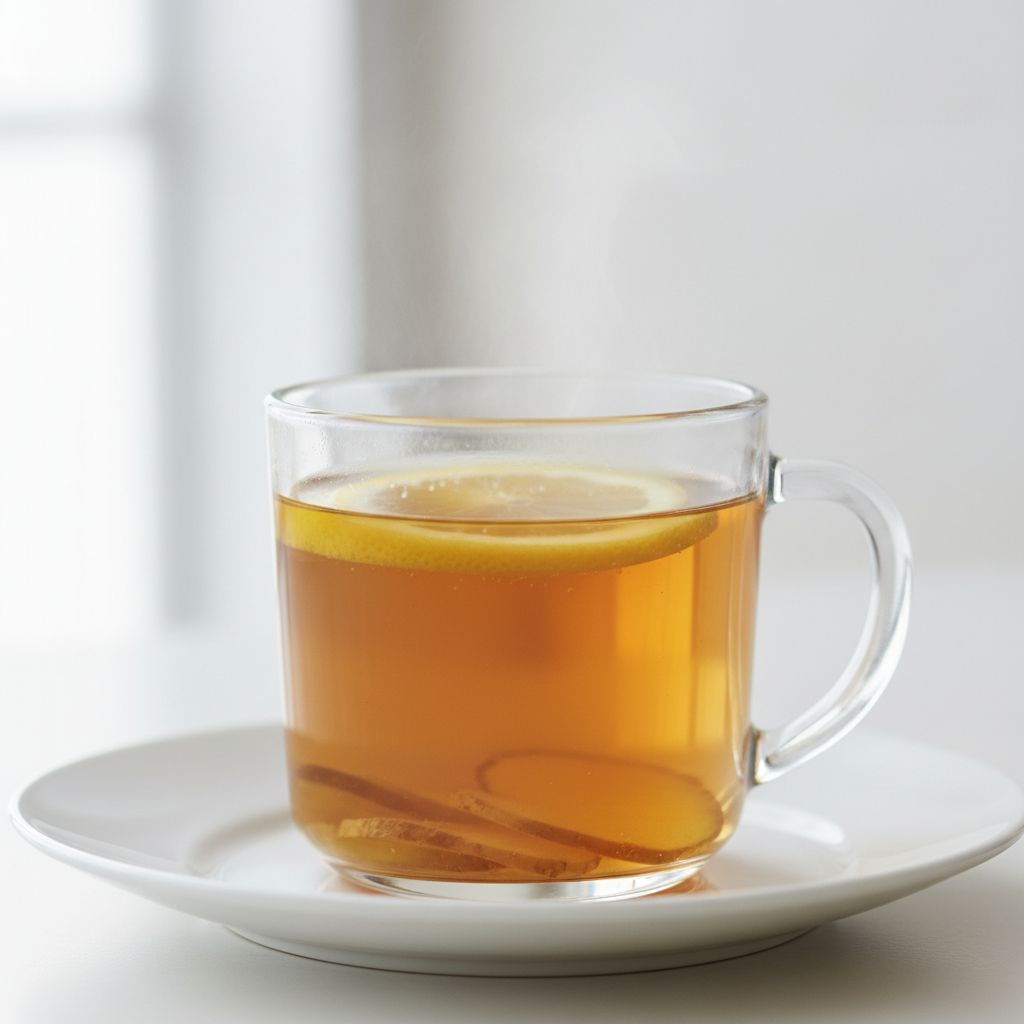
Ginger Tea With Lemon
Ingredients
Method
- Prepare the ginger: Peel the fresh ginger root and slice it thinly or coarsely grate it. The thinner the slices, the stronger the flavor extraction.
- Simmer the ginger: In a small saucepan, combine the 4 cups of water and the prepared ginger. If using cinnamon sticks or turmeric, add them now.
- Boil and steep: Bring the water to a rolling boil over medium-high heat. Once boiling, reduce the heat to low, cover the saucepan, and let it simmer gently for 15 minutes. This allows the ginger’s essential oils to fully infuse the water.
- Strain the tea: Remove the saucepan from the heat. Carefully strain the liquid through a fine-mesh sieve into mugs or a teapot, discarding the ginger solids (and cinnamon sticks, if used).
- Sweeten and serve: Squeeze fresh lemon juice into each mug to taste (about 1/2 lemon per two cups is usually good). Stir in honey or maple syrup if desired. Garnish with a thin wheel of fresh lemon and serve immediately while hot.