
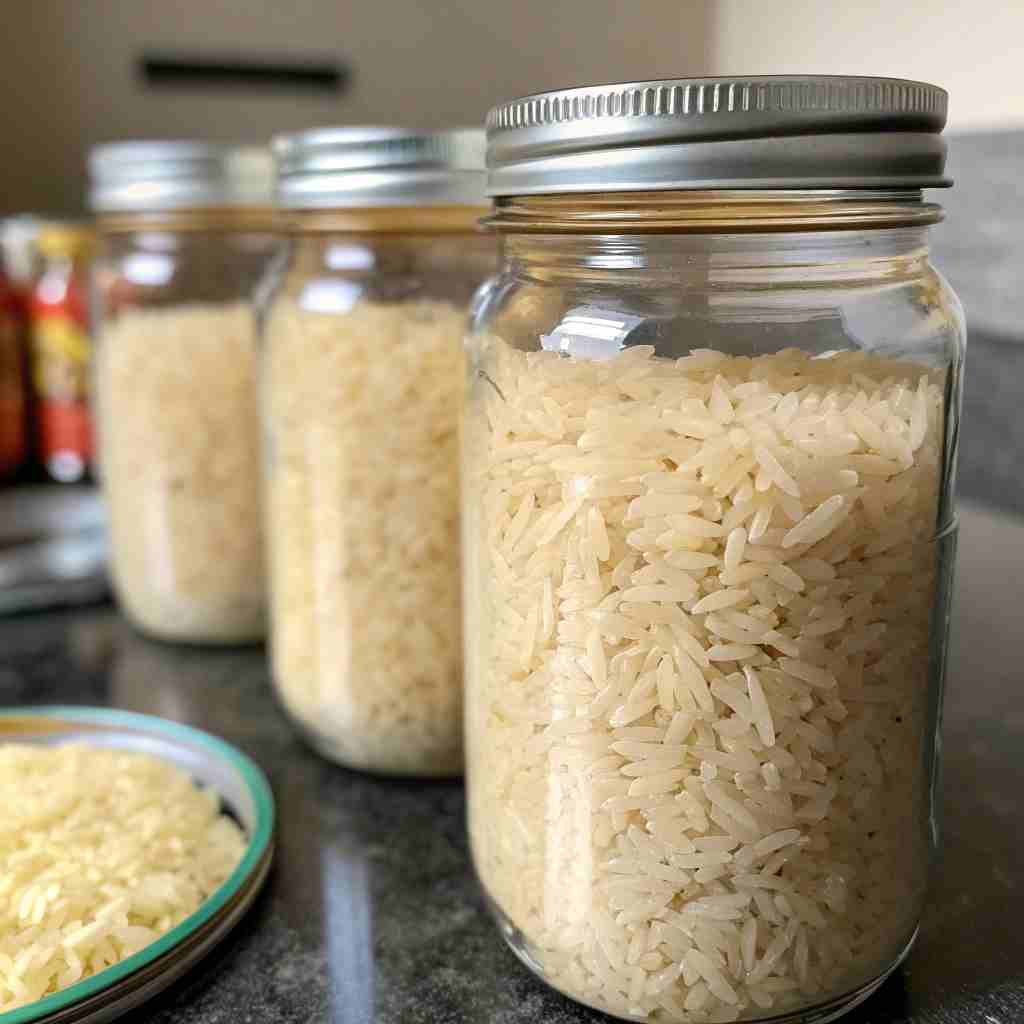
Yes, you absolutely can dry can rice for long-term storage and emergency preparedness! This method effectively removes oxygen, inhibiting spoilage and protecting your rice for years, making it an invaluable technique for building a reliable food supply.
Jump To :
Key Ingredients for Dry Canning Rice:
- Uncooked Rice: Any long-grain, medium-grain, or short-grain rice will work. White rice is typically recommended for long-term storage due to its lower oil content compared to brown rice. Quantity depends on your jar size and how many jars you wish to fill.
- Glass Mason Jars: Use clean, dry, wide-mouth mason jars. Choose pint, quart, or half-gallon jars based on your storage needs and preferences. Check for chips or cracks before using.
- New Canning Lids: Ensure you have new, unused canning lids with rubber seals. These are essential for achieving a proper vacuum seal.
- Canning Rings: Use clean canning rings to secure the lids during the heating and cooling process.
- Oven: A standard oven is used to heat the rice and jars.
How to Make Dry Canning Rice:
This method is surprisingly simple and straightforward. Dry canning rice is a practical way to ensure you have a long-lasting food supply for emergencies or everyday long term prep. You simply heat the rice and jars and seal them tightly while hot, creating a secure vacuum seal as they cool down. This will allow preparation time of about 1-2 hours, including heating and cooling.
- Preparation time: 20 – 30 minutes
- Sterilizing time: 20 minutes
- Cooling time: 1-2 hour
Step-by-Step Instructions:
- Preheat Oven: Preheat your oven to 200°F (93°C). Make sure the oven rack is in the center.
- Prepare Mason Jars: Wash mason jars, lids, and rings with warm, soapy water. Rinse thoroughly. You don’t need to sterilize them in boiling water since they’ll be heated in the oven.
- Dry Jars in Oven: Place the clean, dry jars (without lids or rings) open-side-up on a baking sheet. Place the baking sheet in the preheated oven for 20 minutes. This dries and warms the jars, which ensures a good seal.
- Heat Rice: While the jars are heating, spread the uncooked rice evenly on a separate baking sheet. Place the baking sheet in the oven for 15 minutes. Heating the rice helps to eliminate any potential moisture and pests.
- Prepare Lids: While the jars and rice are in the oven, place the new canning lids in a small saucepan and cover them with water. Heat the water over low heat, but do not boil. This softens the rubber seal.
- Remove Jars and Rice from Oven: Carefully remove the hot jars from the oven using oven mitts or jar lifters. Place them on a heat-resistant surface. Remove the heated rice too
- Fill Jars: Using a funnel, quickly fill each hot jar with the hot rice, leaving about 1 inch of headspace at the top. This headspace allows for proper vacuum formation.
- Wipe Jar Rims: Use a clean, damp cloth to wipe the rims of the jars to remove any rice grains. This ensures a good seal.
- Place Lids on Jars: Remove a lid from the hot water using tongs. Place it on the jar, centering it over the opening.
- Secure with Rings: Place a canning ring over the lid and screw it on fingertip-tight. Do not overtighten, as this can prevent the vacuum seal from forming.
- Cool and Seal: Let the filled jars cool completely on a heat-resistant surface for 12-24 hours. As the jars cool, you should hear a “pop” sound, indicating that the vacuum seal has formed.
- Check Seals: After the jars have cooled, check the seals by pressing down on the center of each lid. If the lid flexes or moves up and down, it is not properly sealed and should be refrigerated or reprocessed with a new lid.
- Label and Store: Label each jar with the date and contents. Store the sealed jars in a cool, dark, and dry place, away from direct sunlight and temperature fluctuations.
Why You’ll Love This Dry Canning Rice:
Dry canning rice is a stellar way to prepare for emergencies, offering long-term food security and peace of mind. The highlight of this method is its ability to significantly extend the shelf life of rice, protecting it from pests and moisture for years. This is especially valuable for preppers and those looking to minimize food waste.
Making this at home is incredibly cost-effective. Buying rice in bulk and dry canning it yourself often costs less per serving than purchasing pre-packaged emergency food kits. You also have control over the quality of the rice you’re storing. Finally, the pure simplicity of having a food stable that one less thing to worry about is worth its weight in gold. It’s a simple thing.
Compared to traditional canning methods, dry canning is significantly easier. There’s no need for boiling water baths or pressure canners, making it less intimidating for beginners. If you’re also interested in other long-term storage solutions, consider learning about dehydrating fruits and vegetables. Try dry canning rice today and experience the benefits of having a well-stocked emergency food supply!
What to Serve Dry Canned Rice With:
When the time comes to eat your dry-canned rice, it’s incredibly versatile. Here are a few ideas:
- Beans: Rice and beans form a complete protein, making it a nutritious and satisfying meal.
- Canned Vegetables: Add canned vegetables such as corn, peas, or carrots for added nutrients and variety.
- Canned Meat: Canned chicken, tuna, or beef can be mixed with the rice for a hearty and filling dish.
- Powdered Broth or Bouillon: Use powdered broth or bouillon cubes to add flavor to the cooking water while you simmer the rice. Adds flavor and nutrients when resources are limited.
Top Tips for Perfecting Dry Canning Rice:
- Use the Right Rice: While any type of rice can be dry canned, white rice is generally recommended for long-term storage due to its lower oil content. Brown rice has higher oil content, which can cause it to go rancid over time.
- Ensure Everything is Dry: Moisture is the enemy of long-term food storage. Make sure the jars, lids, rings, and rice are all completely dry before you begin the process. Heating them in the oven helps to eliminate moisture.
- Maintain Consistent Temperature: Keep the oven temperature consistent throughout the process to ensure the jars and rice are properly heated.
- Don’t Overtighten Rings: When securing the rings, make sure they are fingertip-tight, but not overtightened. Overtightening can prevent the vacuum seal from forming.
- Store Properly: Store the sealed jars in a cool, dark, and dry place to maximize their shelf life. Avoid direct sunlight and temperature fluctuations.
- Inspect Before Use: Before using the rice, inspect the jar for any signs of spoilage, such as a broken seal, mold growth, or an off odor. If you notice any of these signs, discard the rice.
- Consider Oxygen Absorbers: While not always necessary, adding oxygen absorbers to the jars before sealing can further reduce the oxygen level and extend the shelf life of the rice. Follow the instructions on the oxygen absorber packaging.
5 Facts about Dry Canning Rice:
- Extends Shelf Life: Dry canning can extend the shelf life of white rice to 25 years or more when stored properly.
- Cost-Effective: Dry canning rice is a cost-effective way to build an emergency food supply.
- Simple Process: The dry canning process is relatively simple and doesn’t require special equipment like water bath or pressure canners.
- Prevents Pests: Sealing the rice in jars prevents pests from infesting the food supply.
- Easy to Store: Sealed jars of rice are easy to store and can be stacked to save space.
Storing and Reheating Tips:
- Storage: Store the sealed jars of dry canned rice in a cool, dark, and dry place. Ideal storage conditions include a temperature between 40°F (4°C) and 70°F (21°C) and low humidity. Avoid direct sunlight and temperature fluctuations, as these can affect the quality and longevity of the stored rice.
- Shelf Life: When stored properly, dry canned white rice can last for 25 years or more.
- Freezing: Dry canned rice is not typically frozen. Once you open a jar, it’s best to cook the rice within a reasonable time frame.
- Reheating: Once you open a jar and cook the rice, any leftover cooked rice should be stored in an airtight container in the refrigerator and consumed within 3-4 days. You can reheat cooked rice in the microwave, on the stovetop, or in the oven. Add a little water or broth to prevent it from drying out during reheating.
Final Thoughts:
Dry canning rice is a practical and efficient method to safeguard your food supply, providing you with a reliable source of sustenance for years to come. Whether you’re preparing for emergencies, creating long-term food storage, or simply ensuring you always have rice on hand, this technique offers peace of mind and security.
By following the detailed instructions and tips provided, you can confidently dry can rice at home and enjoy the benefits of a well-stocked pantry. Embrace this simple yet powerful method and take control of your food preparedness today!
Read More also:
- Canning Green Beans
- Canning Whole Potatoes
- Canning Red Potatoes
- Canning Yukon Gold Potatoes
- Our Pinterest
Dry Canning Rice FAQs:
Q: Can I use brown rice for dry canning?
A: While you can dry can brown rice, it is not recommended for long-term storage. Brown rice has a higher oil content, which can cause it to go rancid over time. White rice is the preferred choice for dry canning due to its lower oil content and longer shelf life.
Q: Do I need to sterilize the jars before dry canning?
A: You don’t need to sterilize the jars in boiling water before dry canning, as they will be heated in the oven at 200°F (93°C) for 20 minutes, which effectively dries and sanitizes them. However, it’s essential to wash the jars thoroughly with warm, soapy water and rinse them well before placing them in the oven.
Q: How do I know if the jars are properly sealed?
A: After the jars have cooled completely, check the seals by pressing down on the center of each lid. If the lid flexes or moves up and down, it is not properly sealed and should be refrigerated or reprocessed with a new lid. A properly sealed lid will be slightly concave and won’t move when pressed.
Q: Can I reuse canning lids?
A: Canning lids are designed for single-use only. Once a lid has been used to seal a jar, it should not be reused for canning, as the rubber seal may not create a proper vacuum seal the second time around. Canning rings, however, can be reused as long as they are in good condition (i.e., not rusty or damaged).
Q: What do I do if a jar doesn’t seal properly?
A: If a jar doesn’t seal properly, you have a few options:
- Refrigerate: If you plan to use the rice relatively soon (within a week), you can store the unsealed jar in the refrigerator.
- Reprocess: Replace the lid with a new, unused lid and reprocess the jar using the same dry canning method.
- Use for Another Purpose: If you don’t want to reprocess the jar, you can use the rice for another purpose, such as cooking it immediately or using it in a recipe.
Q: How long will dry canned rice last?
A: When stored properly in a cool, dark, and dry place, dry canned white rice can last for 25 years or more.
Q: Do I need to add oxygen absorbers to the jars?
A: Adding oxygen absorbers is optional but can further extend the shelf life of the rice by reducing the oxygen level in the jar. If you choose to use oxygen absorbers, follow the instructions on the packaging.
Q: Can I dry can other grains besides rice?
A: Yes, you can dry can other grains such as wheat, oats, and barley, using the same method as dry canning rice. However, keep in mind that the shelf life of different grains may vary depending on their oil content and storage conditions.
Q: Is dry canning rice safe?
A: Yes, dry canning rice is a safe and effective method for long-term food storage when done correctly. Follow the instructions and tips provided to ensure that the jars are properly sealed and stored. Always inspect the jars for signs of spoilage before using the rice.