
Valentine’s Day Pasta Carbonara is the quintessential romantic meal, offering a deceptively simple yet incredibly rich and decadent experience that’s perfect for celebrating love. This guide will walk you through creating this classic Italian dish at home, proving that restaurant-quality flavor is achievable with a few key ingredients and straightforward steps.
Key Ingredients for Valentine’s Day Pasta Carbonara
- 1 pound (450g) spaghetti or bucatini
- 6 ounces (170g) guanciale or pancetta, cut into small cubes (about 1/4-inch)
- 4 large egg yolks, at room temperature
- 1 whole large egg, at room temperature
- 1 cup (about 3 ounces or 85g) finely grated Pecorino Romano cheese, plus more for serving
- 1/2 cup (about 1.5 ounces or 45g) finely grated Parmigiano-Reggiano cheese, plus more for serving
- 2-3 cloves garlic, lightly smashed (optional, for infusing flavor)
- Freshly ground black pepper, to taste (at least 1 tablespoon, ideally more)
- Salt, for pasta water
How to Make Valentine’s Day Pasta Carbonara
This Valentine’s Day Pasta Carbonara is a masterpiece of simplicity, delivering an explosion of rich, savory flavors and a luxuriously creamy texture without a drop of cream. It’s a quick yet incredibly satisfying dish, often prepared in under 30 minutes, making it ideal for a romantic evening or a spontaneous weeknight treat. The magic lies in the emulsion of egg yolks, cheese, and starchy pasta water, creating a sauce that clings perfectly to each strand of pasta.
Step-by-Step Instructions
- Prepare the Egg and Cheese Mixture: In a medium bowl, whisk together the 4 egg yolks and 1 whole egg until well combined. Gradually whisk in the grated Pecorino Romano and Parmigiano-Reggiano cheeses until you have a thick, paste-like mixture. Season generously with freshly ground black pepper. Set aside.
- Cook the Guanciale/Pancetta: Place the cubed guanciale or pancetta in a large, cold skillet. Turn the heat to medium-low and slowly render the fat until the meat is crispy and golden brown. This process should take about 8-10 minutes. If using garlic, add the smashed cloves to the rendered fat during the last few minutes of cooking for extra flavor, then remove and discard the garlic. If you find the guanciale is too salty, you can rinse it briefly under cold water before cubing and cooking.
- Cook the Pasta: While the guanciale is rendering, bring a large pot of generously salted water to a rolling boil. Add the spaghetti or bucatini and cook according to package directions until al dente (firm to the bite). Crucially, before draining the pasta, reserve about 1.5 to 2 cups of the starchy pasta water. This liquid gold is essential for creating the creamy sauce.
- Combine Pasta and Fat: Once the guanciale is crispy, remove it from the skillet with a slotted spoon and set aside on a plate lined with paper towels. Leave the rendered fat in the skillet. Drain the pasta, but do not rinse it. Immediately add the hot, drained pasta to the skillet with the rendered guanciale fat. Toss to coat the pasta evenly. Remove the skillet from the heat.
- Emulsify the Sauce: This is the most critical step to achieve a creamy, lump-free carbonara. Working quickly, pour the egg and cheese mixture over the hot pasta. Immediately begin tossing vigorously with tongs. As you toss, gradually add small amounts of the reserved hot pasta water, about 1/4 cup at a time, continuing to toss. The heat from the pasta and water will gently cook the eggs without scrambling them, creating a smooth, glossy sauce that coats the pasta. Continue adding pasta water until the sauce reaches your desired creamy consistency. You may not need all the reserved water.
- Add Guanciale and Serve: Once the sauce has emulsified and is beautifully creamy, stir in about ¾ of the crispy guanciale/pancetta. Toss to distribute evenly. Taste and adjust seasoning with more black pepper if needed. Carbonara is traditionally served without extra salt, as the guanciale and cheese provide plenty, but you can add a pinch if you feel it’s necessary.
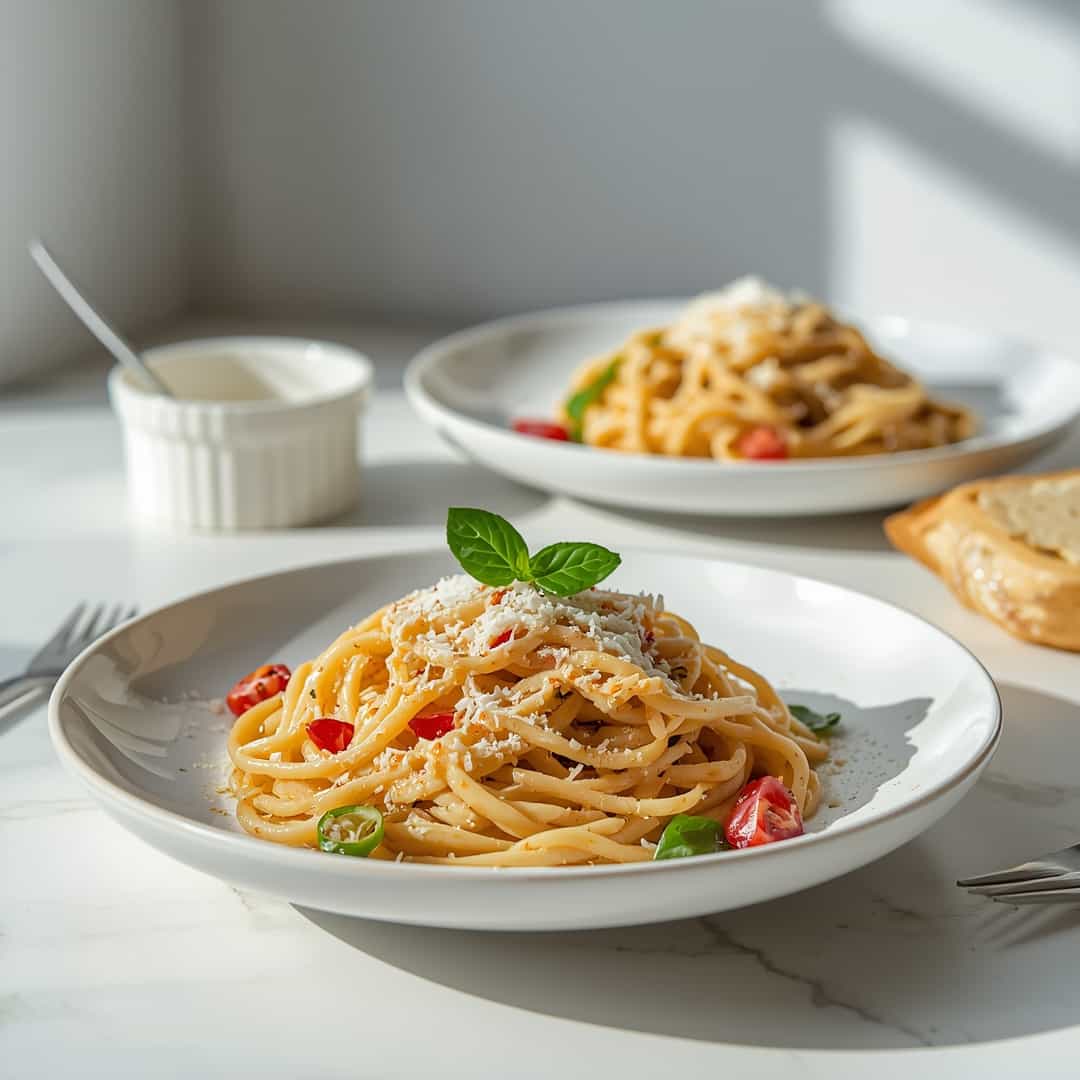
- Plate and Garnish: Divide the pasta among warm serving bowls. Top each serving with the remaining crispy guanciale/pancetta, a generous sprinkle of freshly ground black pepper, and an extra dusting of grated Pecorino Romano and Parmigiano-Reggiano cheese. Serve immediately. The beauty of this dish is its immediate consumption for the best creamy texture.
Why You’ll Love This Valentine’s Day Pasta Carbonara
You will adore this Valentine’s Day Pasta Carbonara because it delivers an unbelievably rich, creamy, and deeply savory flavor profile, all without relying on heavy cream. The magic happens through the perfect emulsion of egg yolks, Pecorino Romano cheese, and starchy pasta water, creating a luxurious sauce that clings to every strand of spaghetti. Unlike a quick weeknight spaghetti with a simple marinara, this dish offers a sophisticated taste that feels truly special occasion-worthy, yet is remarkably budget-friendly to make at home.
The authentic taste, derived from high-quality ingredients like guanciale and Pecorino Romano, elevates this classic Italian staple. Not only does it provide an impressive dining experience for your loved one, but it also saves you significant money compared to enjoying a similar dish at a restaurant. The crunchy bits of guanciale and the sharp, salty cheese create a symphony of textures and flavors that are simply irresistible. Don’t miss out on the chance to impress your Valentine with this deceptively easy yet incredibly rewarding pasta dish – give it a try tonight!
Storing and Reheating Tips
For optimal freshness and texture, it’s best to enjoy Valentine’s Day Pasta Carbonara immediately after preparation, as the emulsion can break down over time. However, if you do have leftovers, they can be stored in an airtight container in the refrigerator for up to 1-2 days. The sauce may thicken considerably upon chilling.
To reheat, the best method is to gently warm the pasta in a non-stick skillet over low heat, adding small splashes of water or milk (about 1 tablespoon at a time) and stirring constantly until the sauce becomes creamy again and the pasta is heated through. Avoid microwaving, as it can easily overcook the eggs and result in a rubbery texture. Freezing carbonara is generally not recommended due to the delicate nature of the egg-based sauce, which can curdle or separate upon thawing. If you must freeze it, do so as a portion for future use, understanding that the texture may be compromised.
Final Thoughts
This Valentine’s Day Pasta Carbonara is a testament to how simple, quality ingredients can create an extraordinary dish. We encourage you to try this recipe for your next romantic meal; it’s a truly rewarding culinary experience that’s sure to delight. Enjoy the process and savor every delicious bite!
Valentine’s Day Pasta Carbonara
Ingredients
Equipment
Method
- In a medium bowl, whisk together the 4 egg yolks and 1 whole egg until well combined. Gradually whisk in the grated Pecorino Romano and Parmigiano-Reggiano cheeses until you have a thick, paste-like mixture. Season generously with freshly ground black pepper. Set aside.4 large egg yolks, 1 large whole egg, 1 cup finely grated Pecorino Romano cheese, 1/2 cup finely grated Parmigiano-Reggiano cheese, 1 tablespoon freshly ground black pepper
- Place the cubed guanciale or pancetta in a large, cold skillet. Turn the heat to medium-low and slowly render the fat until the meat is crispy and golden brown. This process should take about 8-10 minutes. If using garlic, add the smashed cloves to the rendered fat during the last few minutes of cooking for extra flavor, then remove and discard the garlic. If you find the guanciale is too salty, you can rinse it briefly under cold water before cubing and cooking.6 ounces guanciale or pancetta, 2-3 cloves garlic
- While the guanciale is rendering, bring a large pot of generously salted water to a rolling boil. Add the spaghetti or bucatini and cook according to package directions until al dente (firm to the bite). Crucially, before draining the pasta, reserve about 1.5 to 2 cups of the starchy pasta water. This liquid gold is essential for creating the creamy sauce.1 pound spaghetti or bucatini, salt
- Once the guanciale is crispy, remove it from the skillet with a slotted spoon and set aside on a plate lined with paper towels. Leave the rendered fat in the skillet. Drain the pasta, but do not rinse it. Immediately add the hot, drained pasta to the skillet with the rendered guanciale fat. Toss to coat the pasta evenly. Remove the skillet from the heat.6 ounces guanciale or pancetta, 1 pound spaghetti or bucatini
- This is the most critical step to achieve a creamy, lump-free carbonara. Working quickly, pour the egg and cheese mixture over the hot pasta. Immediately begin tossing vigorously with tongs. As you toss, gradually add small amounts of the reserved hot pasta water, about 1/4 cup at a time, continuing to toss. The heat from the pasta and water will gently cook the eggs without scrambling them, creating a smooth, glossy sauce that coats the pasta. Continue adding pasta water until the sauce reaches your desired creamy consistency. You may not need all the reserved water.1 pound spaghetti or bucatini, 4 large egg yolks, 1 large whole egg, 1 cup finely grated Pecorino Romano cheese, 1/2 cup finely grated Parmigiano-Reggiano cheese, 1 tablespoon freshly ground black pepper
- Once the sauce has emulsified and is beautifully creamy, stir in about ¾ of the crispy guanciale/pancetta. Toss to distribute evenly. Taste and adjust seasoning with more black pepper if needed. Carbonara is traditionally served without extra salt, as the guanciale and cheese provide plenty, but you can add a pinch if you feel it’s necessary.6 ounces guanciale or pancetta, 1 tablespoon freshly ground black pepper
- Divide the pasta among warm serving bowls. Top each serving with the remaining crispy guanciale/pancetta, a generous sprinkle of freshly ground black pepper, and an extra dusting of grated Pecorino Romano and Parmigiano-Reggiano cheese. Serve immediately. The beauty of this dish is its immediate consumption for the best creamy texture.6 ounces guanciale or pancetta, 1 tablespoon freshly ground black pepper, 1 cup finely grated Pecorino Romano cheese, 1/2 cup finely grated Parmigiano-Reggiano cheese