
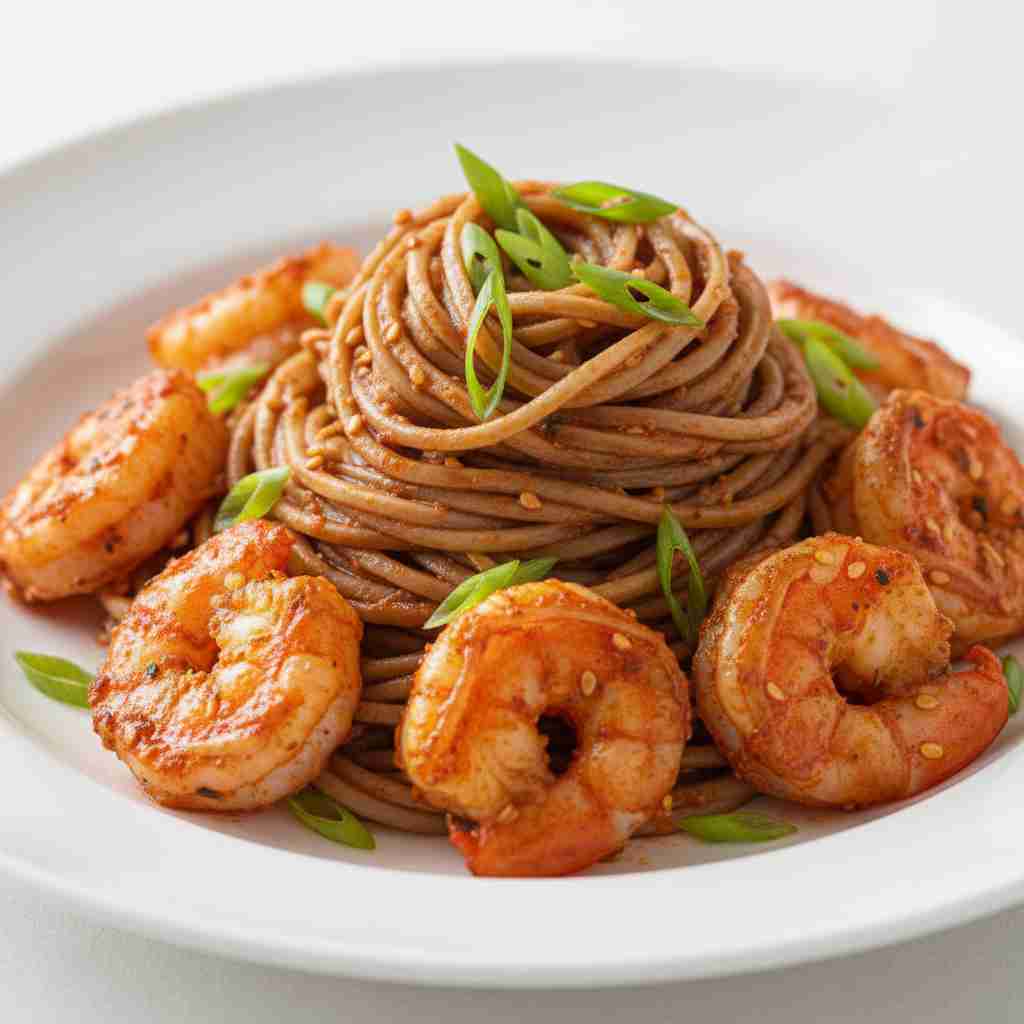
Spicy Soba Noodles with Harissa Shrimp: A Flavor-Packed Weeknight Meal
Tired of the same old weeknight dinners? These spicy soba noodles with harissa shrimp deliver an explosion of North African and Asian flavors that’s ready in under 30 minutes. The tender shrimp are coated in smoky, fiery harissa paste, perfectly complementing the chewy texture of the soba noodles. Get ready to elevate your dinner routine with this incredibly satisfying and easy recipe.
Why You Will Love This Recipe
This dish is the perfect marriage of quick preparation and complex flavor. You will love how quickly the harissa shrimp comes together, infusing every bite with deep, smoky heat. Soba noodles offer a healthier, nuttier alternative to traditional pasta, absorbing the flavorful sauce beautifully. It’s a customizable, vibrant meal that satisfies those cravings for something bold and exciting without requiring hours in the kitchen.
Ingredients
- 8 ounces dried soba noodles
- 1 pound large shrimp, peeled and deveined
- 2 tablespoons olive oil, divided
- 3 tablespoons harissa paste (adjust to spice preference)
- 2 cloves garlic, minced
- 1 teaspoon grated fresh ginger
- 1/4 cup low-sodium soy sauce or tamari
- 2 tablespoons rice vinegar
- 1 tablespoon honey or maple syrup
- 1/2 cup chicken or vegetable broth
- 1 cup chopped broccoli florets (optional)
- 1/4 cup chopped fresh cilantro, for garnish
- 1 scallion, thinly sliced, for garnish
- Sesame seeds, for garnish
Step-by-Step Instructions
- Cook the soba noodles according to package directions. Typically, this involves boiling them in water for 4–6 minutes until tender but still slightly firm (al dente). Drain the noodles immediately and rinse thoroughly under cold water to stop the cooking process and prevent sticking. Set aside.
- In a medium bowl, toss the peeled and deveined shrimp with 1 tablespoon of olive oil and 1 tablespoon of the harissa paste until evenly coated.
- In a large skillet or wok, heat the remaining 1 tablespoon of olive oil over medium-high heat. Add the marinated shrimp and cook for 2–3 minutes per side until pink and cooked through. Remove the shrimp from the skillet and set aside.
- Reduce the heat to medium. Add the minced garlic and grated ginger to the same skillet and sauté for about 30 seconds until fragrant, being careful not to burn the garlic.
- Whisk in the remaining 2 tablespoons of harissa paste, soy sauce, rice vinegar, honey or maple syrup, and broth. Bring the sauce to a gentle simmer, stirring constantly, until it thickens slightly (about 2–3 minutes).
- If using broccoli, add the florets to the simmering sauce and cook for 3–4 minutes, until they are bright green and slightly tender-crisp.
- Return the cooked shrimp to the pan along with the drained soba noodles. Toss everything gently to ensure the noodles and shrimp are thoroughly coated in the spicy harissa sauce. Cook for 1 minute just to heat through.
- Divide the spicy soba noodles with harissa shrimp among serving bowls. Garnish generously with fresh cilantro, sliced scallions, and a sprinkle of sesame seeds before serving hot.
Expert Tips / Pro Tips
To achieve the best texture and flavor for this dish, keep these tips in mind. Be sure to rinse your soba noodles well after cooking; this removes excess starch which prevents them from becoming gummy later on. When purchasing harissa, taste a small amount first; if it is extremely hot, reduce the quantity used slightly and add more broth to balance the sauce intensity. Don’t overcrowd the skillet when searing the shrimp; cooking in batches ensures they sear nicely rather than steam.
Variations & Substitutions
Feel free to customize this recipe based on what you have on hand or your dietary preferences. For a vegetarian option, substitute the shrimp with firm tofu (pressed and cubed) or chickpeas; add the tofu/chickpeas when you would add the shrimp. If you prefer different noodles, udon or even whole wheat spaghetti work well in place of soba. For added freshness, toss in some sliced bell peppers or shredded carrots along with the broccoli. If you lack rice vinegar, fresh lime juice is an excellent, zesty substitute.
Serving Suggestions
These spicy soba noodles with harissa shrimp are hearty enough to stand alone as a complete meal. However, for an enhanced experience, serve them alongside a crisp, cool element to contrast the heat, such as a simple side of quick pickled cucumbers or a fresh Asian slaw dressed lightly with sesame oil. A wedge of lime on the side is always welcome for those who enjoy an extra splash of brightness.
Storage, Freezing & Reheating
Store any leftover spicy soba noodles with harissa shrimp in an airtight container in the refrigerator for up to 3 days. The noodles may absorb more sauce as they sit, so you might need to loosen them up when reheating. To reheat, place the leftovers in a microwave-safe bowl, add a splash of water or broth (about 1 tablespoon per serving) to introduce steam, cover loosely, and microwave until heated through. Freezing is not generally recommended as the texture of the cooked shrimp and noodles can degrade upon thawing.
Nutrition Information
| Nutrient | Amount (Estimated per Serving) |
|---|---|
| Calories | 420 kcal |
| Protein | 32 g |
| Fat | 10 g |
| Carbohydrates | 50 g |
| Fiber | 5 g |
Note: Nutrition figures are estimates and will vary based on exact ingredients and portion sizes used.
FAQ
What exactly is harissa paste?
Harissa is a versatile hot chili pepper paste originating from the Maghreb region of North Africa. It is typically made from roasted red peppers, Baklouti peppers, spices like caraway, coriander, and cumin, and olive oil. It provides a smoky, complex heat that tends to be aromatic rather than just purely hot.
Can I make this dish less spicy?
Yes, you can easily control the heat level. Start by using only 1 tablespoon of the harissa paste called for in the recipe, taste the sauce before adding the shrimp back in, and only add more if it meets your preferred spice level. You can also substitute half of the harissa with a mild red pepper paste if you wish to maintain a red pepper base without the intensity.
Are soba noodles gluten-free?
While traditional soba noodles are made primarily from buckwheat flour (which is naturally gluten-free), many commercial brands blend buckwheat with wheat flour, making them contain gluten. Always check the packaging to ensure you purchase 100% buckwheat soba noodles if you require a gluten-free meal.
Spicy Soba Noodles with Harissa Shrimp
Ingredients
Method
- Prepare the shrimp: In a medium bowl, toss the shrimp with harissa paste, olive oil, smoked paprika, salt, and pepper until evenly coated. Set aside to marinate while preparing the noodles.
- Cook the soba noodles according to package directions, usually by boiling them in water for 4-6 minutes until tender but still slightly firm (al dente). Drain well and rinse under cold water immediately to stop cooking and remove excess starch.
- Prepare the sauce: In a small bowl, whisk together the soy sauce, rice vinegar, toasted sesame oil, honey/maple syrup, minced garlic, and grated ginger until emulsified.
- Cook the shrimp: Heat a large skillet or wok over medium-high heat. Add the marinated shrimp in a single layer (work in batches if necessary). Cook for 2-3 minutes per side until pink, opaque, and slightly caramelized from the harissa.
- Combine: Add the cooked soba noodles and edamame (if using) directly into the skillet with the shrimp. Pour the prepared sauce over the noodles and gently toss everything together for about 1 minute until the noodles are heated through and coated evenly with the sauce.
- Serve immediately, garnishing generously with sliced scallions and toasted sesame seeds.