
Transforming tart rhubarb into a sweet, vibrant preserve is one of the joys of early summer cooking. This recipe for the MOST Delicious Rhubarb Jam strikes the perfect balance between tangy and sweet, resulting in a bright, spreadable jam that will impress everyone. Get ready to preserve the season’s best with this straightforward, foolproof method.
Why You Will Love This Recipe
This recipe stands out because it truly honors the unique flavor of rhubarb while achieving a perfect set without artificial pectin. You will love how vibrant the color remains after cooking, and the flavor profile is intensely fruity—bright, tart, and perfectly sweetened. It’s incredibly easy to make, requiring only a few simple ingredients, making it an accessible project even for beginner preservers. Once you taste this homemade jam, you will never want to go back to store-bought.
Ingredients
- 2 pounds fresh rhubarb, washed, trimmed, and cut into 1/2-inch pieces
- 4 cups granulated sugar
- 1 large lemon, juiced (about 1/4 cup juice)
- Zest of 1 lemon (optional, but recommended for extra aroma)
Step-by-Step Instructions
- Prepare the Rhubarb and Sugar: In a large, heavy-bottomed non-reactive pot (stainless steel is ideal), combine the cut rhubarb and the granulated sugar. Gently stir to combine.
- Macerate (Optional but Recommended): Cover the pot and let the mixture sit at room temperature for at least 1 hour, or preferably overnight in the refrigerator. This process draws out the natural juices from the rhubarb, which prevents scorching and aids in the initial cooking process.
- Start Cooking: Place the pot over medium heat. Stir occasionally until the sugar is completely dissolved and the mixture begins to simmer. Be careful not to splash the hot syrup.
- Boil and Soften: Once simmering, increase the heat to medium-high. Bring the mixture to a rolling boil that cannot be stirred down. Cook, stirring frequently to prevent sticking, for about 15 to 20 minutes, until the rhubarb has completely broken down and softened significantly. Skim off any thick foam that rises to the surface using a large spoon.
- Add Lemon: Stir in the fresh lemon juice and lemon zest (if using). The acid in the lemon is crucial for activating the rhubarb’s natural pectin and balancing the sweetness.
- Test for Set: Continue to boil vigorously. To check if the jam has reached the setting point, use one of the following methods:
- Sheet Test: Dip a cold metal spoon into the boiling jam and lift it out. Hold it horizontally and allow the jam to drip off the side. When the jam is ready, the drips will thicken and eventually hang off the edge in a sheet rather than dripping like water.
- Frozen Plate Test: Place a small plate in the freezer before starting the jam. Drop a teaspoon of hot jam onto the cold plate. Return the plate to the freezer for 1 minute. Push the jam with your finger; if the surface wrinkles, it is set.
- Jarring: Once the jam has reached the setting point, remove the pot from the heat. Ladle the hot jam immediately into sterilized jars, leaving 1/4 inch of headspace. Wipe the rims clean, affix the lids and bands finger-tight.
- Processing (For Shelf Stability): Process the sealed jars in a boiling water bath canner for 10 minutes, adjusting for altitude if necessary. Remove the jars and let them cool undisturbed on a rack or towel for 12 to 24 hours until the seals “pop.” Check seals before storing.
Expert Tips / Pro Tips
- Use Non-Reactive Cookware: Always use stainless steel or enamel pots for jam making. Aluminum can react with the fruit acids and discolor the jam.
- Don’t Rush the Boil: The jam needs a hard, rolling boil to activate the pectin and reach the necessary temperature for setting. Reducing the heat too early will result in runny jam.
- Skim Foam Wisely: Skimming the foam during the initial boiling phase results in a clearer, more appealing finished product. Skim just before adding the lemon juice.
- Sterilize Jars Properly: To ensure safety, sterilize your jars by boiling them for at least 10 minutes just before filling. Keep them hot until you are ready to use them.
- High Sugar Content: Do not reduce the sugar quantity significantly. Sugar is essential not just for taste but also for preservation and achieving the correct set (thanks to its interaction with natural pectin).
Variations & Substitutions
- Strawberry Rhubarb: Replace half of the rhubarb (1 pound) with fresh or frozen strawberries. This is a classic pairing!
- Ginger Infusion: Add 1 tablespoon of finely grated fresh ginger along with the rhubarb in the initial mixing stage. Strain the mixture slightly before boiling if you prefer a smoother texture.
- Vanilla Bean: Split one vanilla bean lengthwise and simmer it with the jam, removing it before jarring. This lends a subtle, warm complexity.
- Pectin Boost: If you prefer a jam that sets very quickly or if your rhubarb seems less fibrous (meaning it has less natural pectin), you can substitute 1/4 cup of the sugar with commercial low-sugar pectin, following the pectin package instructions carefully.
Serving Suggestions
This MOST Delicious Rhubarb Jam is incredibly versatile! Serve it traditionally on warm toast, scones, or English muffins. It makes a phenomenal filling for layer cakes or thumbprint cookies. For a savory twist, swirl a spoonful into Greek yogurt or cottage cheese, or use it as a glaze for roasted pork tenderloin or grilled chicken. It’s also a decadent accompaniment to a sharp cheddar cheese board.
Storage, Freezing & Reheating
Shelf-Stable Storage: If properly processed in a boiling water bath canner for 10 minutes, sealed jars of this jam will maintain peak quality in a cool, dark pantry for up to 1 year. Once opened, store the jar in the refrigerator and consume within 3 weeks.
Freezing: If you prefer not to process the jam via water bath canning, simply cool the jam completely, transfer it to freezer-safe containers or jars, leaving 1/2 inch headspace, and freeze for up to 6 months. Thaw overnight in the refrigerator before serving.
Reheating: Rhubarb jam never needs reheating unless you are incorporating it into a baked good filling.
Nutrition Information
| Serving Size | 2 Tablespoons |
| Calories | Approx. 100 |
| Total Fat | 0g |
| Sodium | 0mg |
| Total Carbohydrates | 26g |
| Sugars | 26g |
| Protein | 0g |
Note: Nutritional values are estimates and can vary based on the exact ripeness of the rhubarb and the amount of sugar absorbed.
FAQ
Why is my rhubarb jam runny?
The most common reason for runny jam is not reaching the proper setting point. Ensure you are boiling vigorously until the jam passes the frozen plate test or sheeting test. Additionally, if your rhubarb was old or very immature, it might have naturally low pectin content, in which case adding lemon juice or a small amount of commercial pectin can help.
Can I use sugar substitutes in this recipe?
For preserving, especially when relying on natural pectin, traditional granulated sugar is highly recommended as it plays a chemical role in setting the jam structure. Substituting with artificial sweeteners will likely result in a syrup rather than a set jam.
What is the purpose of the lemon?
Lemon juice serves two vital functions: it provides the necessary acid to balance the sweetness, and crucially, the acid reacts with the pectin naturally present in the rhubarb to help the jam set firmly.
Do I have to peel rhubarb before making jam?
No, peeling rhubarb is generally unnecessary. Simply wash the stalks well and trim off any tough ends. The skins actually contribute wonderful color and fiber to the final preserve.
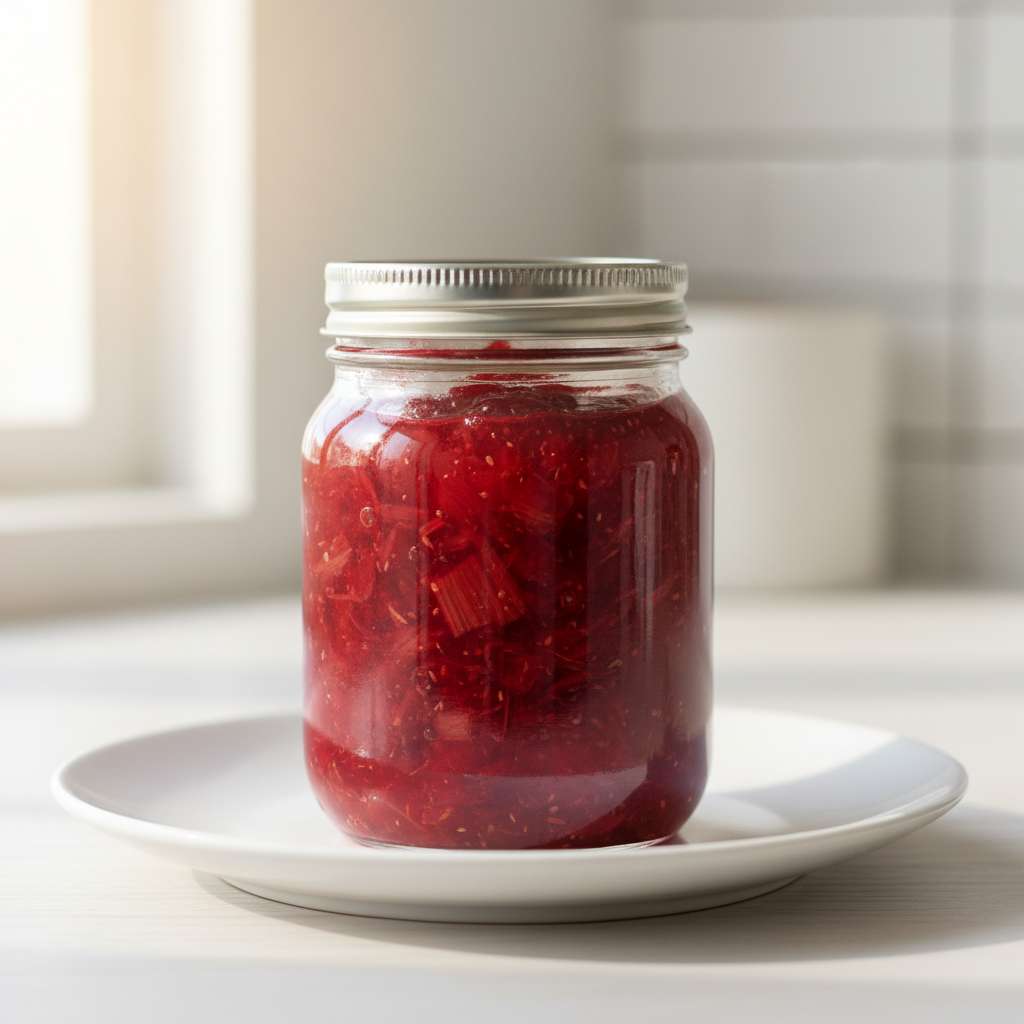
MOST Delicious Rhubarb Jam
Ingredients
Method
- Combine the chopped rhubarb and granulated sugar in a large, heavy-bottomed pot or Dutch oven. Stir gently to combine. Let the mixture sit, uncovered, at room temperature for at least 30 minutes (or up to 2 hours in the refrigerator) to allow the sugar to draw out the juices from the rhubarb.
- Place the pot over medium-high heat. Bring the mixture to a rolling boil, stirring frequently to prevent scorching on the bottom. Adjust the heat as necessary to maintain a vigorous boil.
- Once boiling, add the fresh lemon juice and the tablespoon of butter (if using). The butter helps to break down any surface foam that forms during cooking.
- Continue to cook rapidly, stirring very often, until the jam reaches the setting point. This usually takes 20 to 30 minutes after the rolling boil begins. Test for setting using a chilled plate (see notes).
- Remove the pot from the heat. Skim off any lingering froth from the surface with a spoon. Let the jam rest for 5 minutes before carefully ladling the hot jam into sterilized canning jars, leaving 1/4 inch headspace.
- Seal the jars according to your preferred method (water bath canning for long-term shelf stability, or refrigerate if consuming within 3 weeks). Cool completely on a rack before storing or serving.