
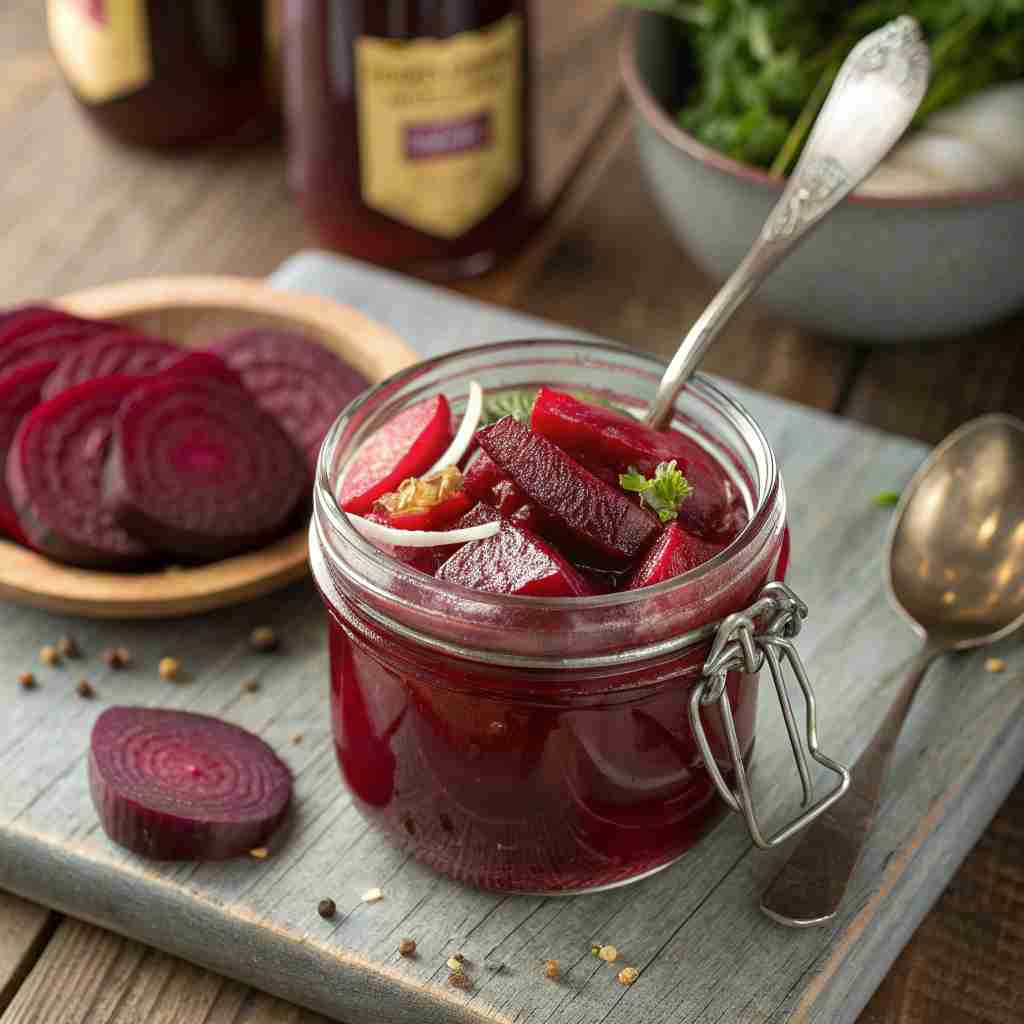
Mennonite Pickled Beets are a classic homemade preserve that combines the natural sweetness of beets with the tang of vinegar and the warmth of spices like cinnamon and cloves. This traditional recipe has been passed down through generations, making it a beloved staple on Mennonite tables.
Perfect as a side dish, salad topping, or even a snack straight from the jar, these pickled beets are easy to prepare and store beautifully for months. Whether you’re new to canning or a seasoned home cook, this recipe will guide you step by step to create a flavorful, long-lasting pantry favorite.
Jump To :
What is Mennonite Pickled Beets?
Mennonite Pickled Beets… the name conjures up images of bonnets, buggies, and bountiful harvests! But what makes them specifically “Mennonite?” Is it a secret beet-growing technique passed down through generations? Perhaps a special blessing bestowed upon the beet patch by a kindly elder? Well, probably not. More likely, it’s simply a treasured family recipe, perfected over the years and shared amongst the community.
They say the way to a man’s heart is through his stomach, and these beets certainly win hearts with their delicious, tangy flavor. So, are you ready to discover the secret behind this sweet and sour culinary treasure? Gather your ingredients, and let’s get pickling! You might just find yourself making a new family favorite.
Key Ingredients for Mennonite Pickled Beets:
Here’s what you’ll need to create this vibrant and flavorful dish:
- 4 pounds fresh beets, scrubbed well and trimmed (leave about 1 inch of the stems on.)
- 1 large onion, thinly sliced.
- 2 cups white vinegar (5% acidity)
- 1 1/2 cups granulated sugar
- 1 cup water
- 1 teaspoon salt
- 1/2 teaspoon ground cinnamon
- 1/4 teaspoon ground cloves
- Pinch of ground allspice (optional)
How to Make Mennonite Pickled Beets:
This recipe is surprisingly easy, even for novice cooks! Combining the sweetness of sugar with the tang of vinegar, the spice adds warmth that make them an undeniable treat. The whole process takes only about an hour! Prep only takes 15mins, while cook time is 45mins.
Step-by-Step Instructions:
- Cook the Beets: Place the scrubbed beets in a large pot and cover with water. Bring to a boil over high heat, then reduce the heat to medium and simmer until the beets are tender, about 30-45 minutes. The beets are ready when a fork easily pierces through them.
- Cool and Peel: Once the beets are cooked, drain the hot water and immediately rinse them with cold water to cool them down enough to handle. Once cool, gently rub the skins off the beets. The skins should slip off easily. Trim the stems and root ends.
- Slice the Beets: Cut the peeled beets into ¼-inch thick slices. You can also cut them into wedges or dice them if you prefer.
- Prepare the Pickling Brine: In a large saucepan, combine the white vinegar, granulated sugar, water, salt, cinnamon, cloves, and allspice (if using). Bring the mixture to a boil over medium heat, stirring until the sugar and salt are completely dissolved.
- Add Beets and Onions: Add the sliced beets and sliced onion to the boiling pickling brine. Reduce the heat to low and simmer for 10-15 minutes, allowing the beets to absorb the flavors of the brine. Stir occasionally to ensure even cooking.
- Pack the Beets: While the beets are simmering, prepare your canning jars. Sterilize the jars and lids according to canning guidelines.
- Fill the Jars: Using a slotted spoon, carefully transfer the hot beets and onions into the sterilized jars, leaving about ½-inch headspace at the top.
- Pour the Brine: Carefully pour the hot pickling brine over the beets in each jar, ensuring that the beets are completely covered and maintaining the ½-inch headspace.
- Remove Air Bubbles: Gently tap the jars on a counter top to release any trapped air bubbles. You can also use a non-metallic spatula or bubble remover tool to run along the inside of the jar, releasing any bubbles.
- Wipe the Rims: Use a clean, damp cloth to wipe the rims of the jars to remove any residue.
- Place Lids and Rings: Place the sterilized lids on the jars and screw on the rings fingertip-tight.
- Process in a Water Bath Canner (optional): This step is optional, but it significantly extends the shelf life of the pickled beets. Fill a water bath canner with enough water to cover the jars by at least 1 inch. Bring the water to a boil. Carefully lower the jars into the boiling water using a jar lifter. Process for 10 minutes for pint jars and 15 minutes for quart jars. Adjust processing time according to your altitude. Please refer to USDA guidelines for safe canning practices.
- Cool and Check Seals: After processing, carefully remove the jars from the canner and place them on a towel-lined surface to cool completely. As the jars cool, you should hear a “pop” sound, indicating that the lids have sealed properly. After 12-24 hours, check the seals by pressing down on the center of each lid. If the lid doesn’t flex or pop back up, the jar is properly sealed. If a jar doesn’t seal, refrigerate it immediately and use the beets within a few weeks.
Why You’ll Love This Mennonite Pickled Beets
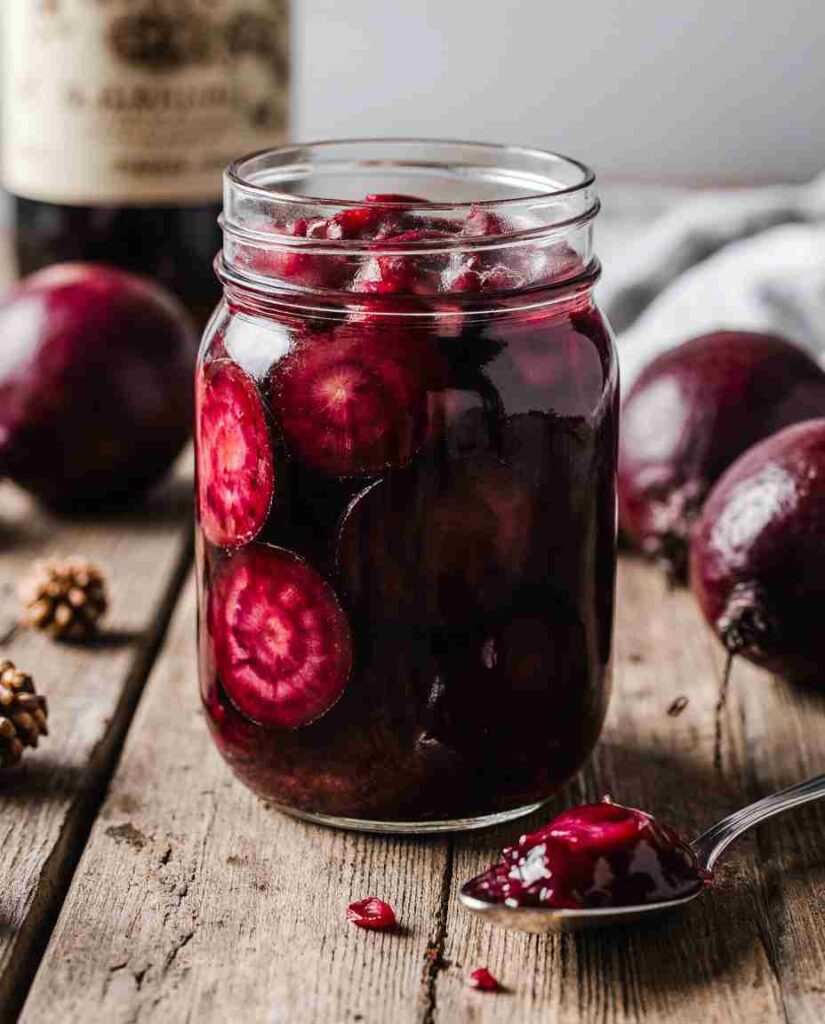
The star of this recipe is undoubtedly the vibrant color and perfectly balanced sweet and sour flavor. Better yet, making these pickled beets at home dramatically cuts down on cost compared to buying them at the store.
The warming spices like cinnamon and cloves elevate this dish to something truly special, perfect for adding a touch of comfort to any meal. If you enjoy pickled vegetables, you might also like Bread & Butter Pickles. Give both a try and discover your pickling prowess! You’ll be surprised at what you can turn from old to gold!
What to Serve Mennonite Pickled Beets With:
Mennonite Pickled Beets are incredibly versatile and complement a wide range of dishes. They are fantastic alongside:
- Roast Meats: These beets pair beautifully with roast beef, pork, or chicken. Their tangy sweetness cuts through the richness of the meat.
- Salads: Add sliced or diced pickled beets to your favorite green salad for a pop of color and flavor.
- Sandwiches: Use them as a condiment on sandwiches, especially those with creamy fillings like egg salad or chicken salad.
- Potato Salad: Incorporate diced pickled beets into potato salad for a unique twist.
- Deviled Eggs: Garnish deviled eggs with a small slice of pickled beet for an elegant touch.
Top Tips for Perfecting Mennonite Pickled Beets:
- Beet Selection: Choose beets that are firm, smooth, and free from blemishes. Smaller beets tend to be more tender and flavorful.
- Cooking Beets: Don’t overcook the beets! Overcooked beets will be mushy. They’re done when a fork pierces them easily.
- Vinegar Type: While this recipe calls for white vinegar, you can experiment with other types of vinegar, such as apple cider vinegar, for a slightly different flavor profile. Adjust the amount of sugar to balance the acidity if you use a more acidic vinegar.
- Spice Adjustment: Adjust the amount and type of spices to your liking. Add a pinch of red pepper flakes for a touch of heat, or use other warming spices like nutmeg or ginger.
- Onion Variety: You can use yellow, white, or red onions in this recipe. Red onions will add a beautiful color to the pickled beets.
- Optional Add-ins: Consider adding other vegetables to the pickle mixture, such as bell peppers, carrots, or celery.
- Headspace: Ensure you leave the correct headspace in the jars when packing the beets to ensure a proper seal during processing.
- Altitude Adjustments: If you are canning at a higher altitude, you will need to adjust the processing time to ensure proper sealing and preservation.
Storing and Reheating Tips:
- Storage: Properly canned Mennonite Pickled Beets can be stored in a cool, dark place for up to 1 year. Once opened, refrigerate the jar and consume the beets within 2-3 weeks.
- Refrigeration: If you choose not to can the beets, store them in an airtight container in the refrigerator. They will last for about 1-2 weeks.
- Freezing: Freezing pickled beets is not recommended as it can alter their texture and flavor.
- Reheating: Mennonite Pickled Beets are typically served cold or at room temperature. Reheating is not necessary.
Final Thoughts:
Mennonite Pickled Beets are a delightful addition to any table, offering a unique blend of sweet, tangy, and subtly spiced flavors. This recipe is not only easy to make but also provides a wonderful way to preserve the flavors of the garden.
Whether you enjoy them as a side dish, a condiment, or a colorful addition to salads and sandwiches, these pickled beets are sure to become a new favorite. So, give this recipe a try and experience the timeless taste of Mennonite hospitality!
And Try also:
- Vareniki Recipe
- Butternut Squash Soup
- Mennonite Roasted Beef Tails
- Mennonite Butterscotch Pie Recipe
- Our Pinterest.
FAQs
Is it necessary to process the jars in a water bath canner?
Processing is highly recommended for long-term storage. It ensures a proper seal and prevents spoilage. If you don’t want to can the beets, you can store them in the refrigerator, but they will only last for a few weeks.
Can I use different spices?
Absolutely! Feel free to experiment with your favorite spices.
Can I use sugar substitutes?
While you can try using sugar substitutes, be aware that they may affect the flavor and texture of the pickled beets. Some sugar substitutes may not dissolve as well as granulated sugar, so you may need to adjust the recipe accordingly.
Mennonite Pickled Beets
- Total Time: 1 hour
- Yield: 6–8 jars 1x
- Diet: Vegetarian
Description
Mennonite Pickled Beets are a sweet, tangy, and warmly spiced treat, made with vinegar, sugar, onions, and a touch of cinnamon and cloves. A cherished family recipe that turns fresh beets into a long-lasting favorite.
Ingredients
- 4 pounds fresh beets, scrubbed well and trimmed (leave about 1 inch of the stems on)
- 1 large onion, thinly sliced
- 2 cups white vinegar (5% acidity)
- 1 1/2 cups granulated sugar
- 1 cup water
- 1 teaspoon salt
- 1/2 teaspoon ground cinnamon
- 1/4 teaspoon ground cloves
- Pinch of ground allspice (optional)
Instructions
- Place beets in a large pot, cover with water, and bring to a boil. Reduce heat and simmer 30–45 minutes until tender.
- Drain and rinse with cold water. Peel skins, trim ends, and slice into 1/4-inch rounds.
- In a saucepan, combine vinegar, sugar, water, salt, cinnamon, cloves, and allspice. Bring to a boil, stirring until dissolved.
- Add sliced beets and onions to the brine. Simmer 10–15 minutes, stirring occasionally.
- Sterilize canning jars and lids. Use a slotted spoon to pack beets and onions into jars, leaving 1/2-inch headspace.
- Pour hot brine over beets, covering completely and maintaining 1/2-inch headspace.
- Remove air bubbles by tapping jars or using a spatula. Wipe rims clean.
- Place lids and rings on jars, fingertip-tight.
- (Optional) Process jars in a boiling water bath: 10 minutes for pints, 15 minutes for quarts. Adjust for altitude per USDA guidelines.
- Cool jars on a towel-lined surface. Check seals after 12–24 hours. Refrigerate unsealed jars and use within a few weeks.
Notes
For best flavor, let pickled beets sit for at least 24 hours before serving. Properly sealed jars can be stored in a cool, dark place for up to a year.
- Prep Time: 15 minutes
- Cook Time: 45 minutes
- Category: Side Dish
- Method: Pickling
- Cuisine: Mennonite
Nutrition
- Serving Size: 1/2 cup
- Calories: 90
- Sugar: 18g
- Sodium: 150mg
- Fat: 0g
- Saturated Fat: 0g
- Unsaturated Fat: 0g
- Trans Fat: 0g
- Carbohydrates: 22g
- Fiber: 3g
- Protein: 2g
- Cholesterol: 0mg
Yummy