
Tired of the same old store-bought pesto? This recipe for Fresh Basil Garlic Scapes Pesto Pasta elevates traditional pesto using tender, flavorful garlic scapes for an exciting seasonal twist. It’s quick enough for a weeknight dinner yet boasts a complex, herbaceous flavor that will impress any guest.
Why You Will Love This Recipe
This Fresh Basil Garlic Scapes Pesto Pasta is a vibrant celebration of early summer flavors. Garlic scapes—the tender flower stalks of hardneck garlic—offer a milder, slightly sweeter garlic essence than raw cloves, perfectly complementing the fragrant fresh basil. The process is incredibly fast, yielding a rich, bright green sauce in minutes. It’s vegetarian, easily made vegan, and naturally gluten-free if you choose the right pasta, making it a versatile favorite for almost any dietary need.
Ingredients
- 1 pound pasta (linguine, spaghetti, or penne work well)
- 1 cup fresh basil leaves, packed
- 1 cup fresh garlic scapes, trimmed and roughly chopped
- 1/2 cup grated Parmesan cheese (or vegetarian alternative)
- 1/4 cup pine nuts (toasted, optional)
- 1/2 cup extra virgin olive oil, plus more for drizzling
- 1 tablespoon fresh lemon juice
- 1/2 teaspoon salt (or to taste)
- 1/4 teaspoon freshly ground black pepper (or to taste)
Step-by-Step Instructions
- Bring a large pot of salted water to a boil. Cook the pasta according to package directions until al dente. Reserve about 1 cup of the starchy pasta water before draining.
- While the pasta cooks, prepare the pesto. In a food processor, combine the fresh basil leaves, chopped garlic scapes, pine nuts, Parmesan cheese, salt, and pepper. Pulse several times until everything is coarsely chopped.
- With the food processor running continuously, slowly drizzle in the 1/2 cup of extra virgin olive oil until the pesto is relatively smooth but still retains some texture.
- Scrape down the sides of the bowl, add the lemon juice, and pulse once or twice to incorporate. Taste and adjust seasoning if necessary.
- In a large bowl, toss the drained pasta with the freshly made pesto. Add a few tablespoons of the reserved pasta water, mixing well until the pesto emulsifies slightly and coats the pasta evenly. Add more pasta water, a splash at a time, until you reach your desired sauce consistency.
- Serve immediately, drizzled with a little extra olive oil and a sprinkle of Parmesan cheese.
Expert Tips / Pro Tips
To ensure the brightest flavor and color for your Fresh Basil Garlic Scapes Pesto Pasta, use only the green, tender parts of the garlic scapes and discard the tough white bulb ends or the very tip of the flowering head if it seems woody.
Always toast your pine nuts lightly before using them in pesto. Toasting in a dry skillet over medium heat for 3-5 minutes until fragrant significantly deepens their nutty flavor, making a noticeable difference in the final sauce.
If your pesto seems too thick after coating the pasta, adding a tablespoon of hot reserved pasta water at a time helps create a luxurious, creamy sauce that clings beautifully to the noodles without needing cream.
To maintain that vibrant green color, process the basil and scapes first, then stream in the oil slowly. Excessive heat from the blade can cause the basil to oxidize and turn dark quickly.
Variations & Substitutions
For a nut-free version, substitute the pine nuts with toasted sunflower seeds or pumpkin seeds (pepitas).
Feel free to swap out the basil; while it defines the classic flavor, try adding 1/4 cup of fresh parsley or spinach for bulk and varying the green notes.
If you cannot find garlic scapes, you can substitute with 2-3 small cloves of very fresh, mild garlic, but note that the flavor profile will be sharper.
For a richer texture, substitute 1/4 cup of the oil with 1/4 cup of avocado oil, which is more neutral in flavor.
Serving Suggestions
This Fresh Basil Garlic Scapes Pesto Pasta pairs wonderfully with simple, fresh sides. Serve alongside grilled chicken breast or shrimp for added protein.
A crisp side salad tossed with a light vinaigrette provides a refreshing contrast to the rich pesto.
For a complete vegetarian meal, mix in some blanched green beans or cherry tomatoes just before serving.
Storage, Freezing & Reheating
Storage: Leftover pesto can be stored in an airtight container in the refrigerator for up to 5 days. Always top the pesto surface with a thin layer of olive oil to prevent browning.
Freezing Pesto: Pesto freezes beautifully. Spoon the sauce into ice cube trays and freeze until solid. Transfer the frozen cubes to a freezer-safe bag. Frozen pesto keeps well for up to 3 months.
Reheating: When ready to use frozen pesto, thaw cubes in the refrigerator overnight or gently warm them in a small saucepan over very low heat. To reheat leftover pasta, toss it gently with a splash of water or broth over low heat; avoid high heat, which can cause the cheese to separate.
Nutrition Information
Nutritional data provided is an estimate based on serving six portions, using the listed ingredients. Actual values may vary based on specific product brands and exact measurements.
| Nutrient | Amount Per Serving (Estimate) |
|---|---|
| Calories | 450 kcal |
| Protein | 15 g |
| Fat | 25 g |
| Saturated Fat | 5 g |
| Carbohydrates | 45 g |
FAQ
What exactly are garlic scapes?
Garlic scapes are the flower stalks that grow from hardneck garlic plants. They are harvested early in the season before they curl too tightly. They have a delicate, mild garlic flavor and are typically eaten cooked or blended into sauces like this pesto.
Can I make this pesto without a food processor?
Yes, you can make this pesto traditionally using a mortar and pestle. Start by crushing the nuts, then the scapes and basil, and slowly work in the oil until you achieve a slightly rough but cohesive paste. It will take significantly longer but results in an especially authentic texture.
How do I know if my garlic scapes are fresh?
Fresh garlic scapes should be firm, bright green, and slightly glossy. Avoid scapes that appear wilted, yellowed, or have overly thick, woody ends.
Can I substitute the pine nuts?
Absolutely. Walnuts, pecans, or slivered almonds make excellent substitutes for pine nuts in pesto, although you should toast them well first for the best flavor profile.
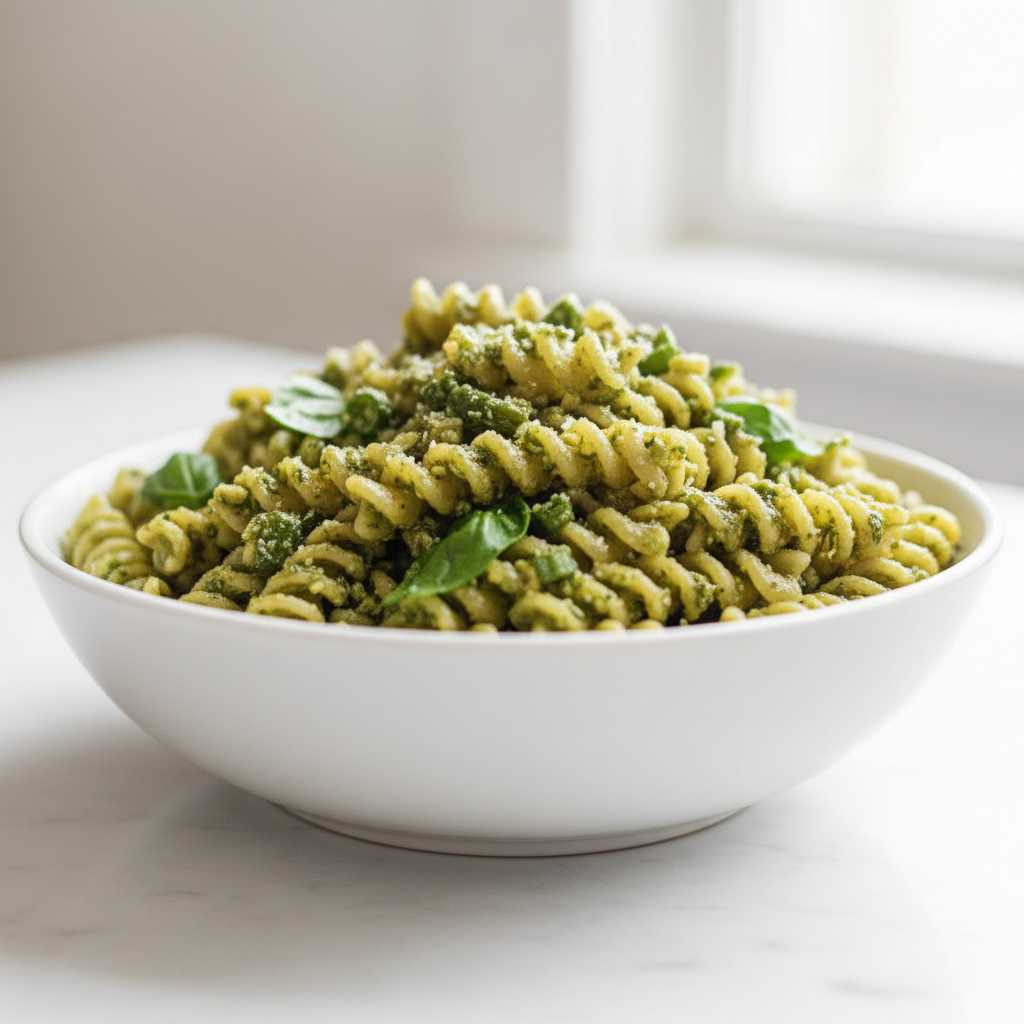
Fresh Basil Garlic Scapes Pesto Pasta
Ingredients
Method
- Prepare the ingredients: Lightly toast the pine nuts in a dry pan over medium heat until fragrant (about 3-5 minutes). Set aside to cool slightly. If using, blanch the garlic scapes in boiling water for 30 seconds, then immediately transfer to an ice bath to stop cooking; drain well.
- Make the pesto: In a food processor, combine the blanched garlic scapes, fresh basil, cooled pine nuts, salt, pepper, and optional fresh garlic clove. Pulse until coarsely chopped.
- Emulsify the pesto: With the food processor running, slowly drizzle in the 1/2 cup of olive oil until a thick, bright green paste forms. Stop processing and transfer the mixture to a medium bowl.
- Finish the pesto: Stir in the grated Parmesan cheese. Taste and adjust seasoning with more salt or pepper if necessary. Set aside while you cook the pasta.
- Cook the pasta: Bring a large pot of salted water to a boil. Add the pasta and cook according to package directions until al dente. Before draining, reserve at least 1/2 cup of the starchy pasta water.
- Combine and serve: Drain the pasta well and immediately transfer it to the bowl containing the pesto. Add 1/4 cup of the reserved pasta water and toss vigorously until the pesto loosens and coats the pasta beautifully. Add more pasta water, a tablespoon at a time, until desired consistency is reached. Serve immediately, perhaps with an extra drizzle of olive oil or cheese on top.