
When the local farmers market floods with vibrant green garlic scapes, it’s time to transform this unique seasonal ingredient into an unforgettable sauce. This Farmer’s Market Garlic Scape Pesto highlights the mild, sweet flavor of the scapes, making it brighter and more delicate than traditional pesto. It’s the perfect way to celebrate peak summer freshness in your kitchen.
Why You Will Love This Recipe
This Farmer’s Market Garlic Scape Pesto is an absolute showstopper that captures the ephemeral taste of summer harvests. Unlike heavy, assertive traditional basil pesto, this version is lighter, slightly sweeter, and carries a subtle garlic essence that isn’t overwhelming. It is incredibly versatile, transforming everything from simple pasta to grilled meats with minimal effort. Furthermore, making pesto at home ensures a fresher taste and allows you to control the quality of every ingredient, supporting local farmers when the scapes are at their peak!
Ingredients
- 1 cup packed fresh garlic scapes (tough ends snapped off), rinsed
- 1 cup fresh basil leaves (optional, but adds depth)
- 1/2 cup grated high-quality Parmesan cheese
- 1/3 cup extra virgin olive oil, plus more if needed
- 1/4 cup toasted pine nuts (or walnuts/almonds)
- 1 small clove of fresh garlic (optional, if you prefer a stronger garlic flavor)
- 1 tablespoon fresh lemon juice
- 1/2 teaspoon sea salt, or to taste
- Freshly ground black pepper, to taste
Step-by-Step Instructions
- Prepare the Scapes and Nuts: Ensure your garlic scapes are clean; trim off the tough, fibrous ends. If using pine nuts, lightly toast them in a dry skillet over medium-low heat for 3-5 minutes until fragrant, watching carefully so they do not burn. Allow them to cool completely.
- Blend Dry Ingredients: In the bowl of a food processor, combine the garlic scapes, basil leaves (if using), toasted nuts, and the optional small garlic clove. Pulse several times until the mixture is coarsely chopped.
- Add Cheese and Seasoning: Add the grated Parmesan cheese, sea salt, and black pepper to the mixture. Pulse again until just combined.
- Emulsify with Oil: With the food processor running continuously on low speed, slowly drizzle in the 1/3 cup of olive oil in a steady stream through the feed tube. This slow addition helps create a smooth emulsion.
- Finish and Adjust: Once all the oil is incorporated, stop the processor. Scrape down the sides. Add the fresh lemon juice. Pulse a few more times. Taste the pesto and adjust the salt, pepper, or add an extra splash of olive oil if the pesto seems too thick for your liking.
- Serve or Store: Use immediately, or transfer to an airtight container for storage.
Expert Tips / Pro Tips
- Toasting is Key: Never skip toasting your nuts! Toasting activates the oils in the pine nuts (or alternative nuts), deepening their flavor significantly and adding crucial texture to the pesto.
- Blanching for Color (Optional): If you are concerned about your pesto turning brown too quickly, quickly blanch the garlic scapes (and basil) in boiling water for 30 seconds, then immediately shock them in ice water. Dry them thoroughly before processing. This step locks in a brilliant green color.
- Processing Order Matters: Always process the tough ingredients (scapes, nuts) first before slowly incorporating the liquids (oil). This prevents the blades from just spinning around without chopping properly.
- Use High-Quality Cheese: Since pesto relies on the cheese for much of its salty, umami flavor, grate your Parmesan fresh from a block rather than using pre-shredded varieties, which often contain anti-caking agents that can make the pesto grainy.
Variations & Substitutions
- Nut Choices: While pine nuts are classic, this recipe adapts beautifully to toasted walnuts, almonds, or even sunflower seeds if you have nut allergies.
- Herb Mix: Feel free to replace up to half of the basil with fresh parsley or even a bit of tender spinach for a different flavor profile.
- Cheese Swaps: Pecorino Romano can be substituted for Parmesan, offering a sharper, saltier bite. You can also use Grana Padano.
- Oil Choice: For a less grassy flavor, you can substitute half of the olive oil with avocado oil, which has a higher smoke point and neutral flavor.
Serving Suggestions
This Farmer’s Market Garlic Scape Pesto is extraordinarily versatile. Toss it with freshly cooked pasta (like linguine or rotini), spread it thickly on crostini for an appetizer, or use it as a bright finishing sauce over grilled chicken, salmon, or shrimp. It also makes an excellent sandwich spread instead of mayonnaise, or serve a dollop alongside roasted root vegetables or green beans.
Storage, Freezing & Reheating
To retain the vibrant color and fresh flavor, store homemade pesto correctly. Transfer the pesto to an airtight container. Cover the surface directly with a thin layer of olive oil (about 1/4 inch) before sealing the lid; this prevents oxidation and browning. Store in the refrigerator for up to one week.
To Freeze: Spoon the pesto into ice cube trays and freeze until solid. Transfer the frozen cubes to a freezer-safe bag. Frozen pesto lasts excellently for up to six months. Thaw cubes overnight in the refrigerator before using. No need to add extra oil when thawing, just stir well.
Nutrition Information
Note: Nutritional values are estimates based on the ingredients listed and standard serving sizes. Exact values will vary based on specific brands and quantities used. This estimate assumes 4 servings of finished pesto.
| Nutrient | Per Serving (Approximate) |
|---|---|
| Calories | 310 kcal |
| Total Fat | 30g |
| Saturated Fat | 5g |
| Carbohydrates | 4g |
| Protein | 8g |
FAQ
How do I know if my garlic scapes are fresh?
Fresh garlic scapes should be firm, crisp, and bright green. Avoid scapes that feel limp, pliable, or have started to yellow or develop excessive blemishes. If they snap cleanly when bent, they are perfect for pesto.
Can I make this pesto without a food processor?
Yes, you absolutely can. Traditionally, pesto was made using a mortar and pestle, which yields a wonderfully rustic and slightly chunkier texture. If you do not have a food processor, finely chop the scapes and nuts first, then alternately pound them with the cheese and finally stream in the oil while stirring vigorously with a wooden spoon.
Why does my pesto turn brown so quickly?
Pesto oxidizes when exposed to air. The key to preventing browning is protection from oxygen. Always store leftover pesto with a protective layer of olive oil directly covering the surface, or store it in a very tightly sealed container, pressing plastic wrap directly onto the pesto surface before sealing.
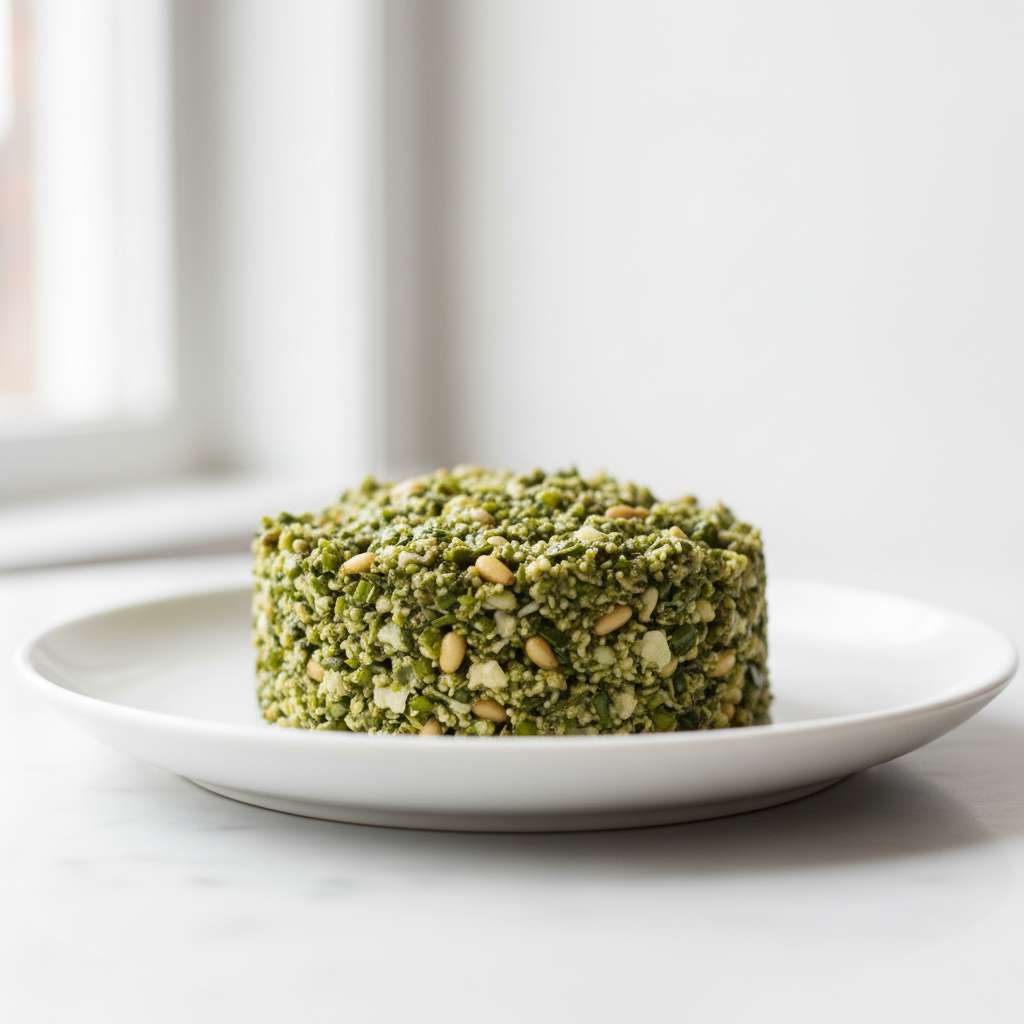
Farmer’s Market Garlic Scape Pesto
Ingredients
Method
- Prepare the garlic scapes by trimming off the very tops and the bottom root ends. Coarsely chop the scapes.
- If your pine nuts are not already toasted, spread them on a dry skillet over medium heat. Toast for 3-5 minutes, stirring frequently, until fragrant and lightly golden. Let cool slightly.
- Combine the chopped garlic scapes, basil leaves, toasted pine nuts, lemon juice, salt, and pepper in the bowl of a food processor. Pulse several times until the ingredients are finely chopped but still have some texture.
- With the food processor running on low speed, slowly stream in the olive oil until the pesto emulsifies and thickens to your desired consistency. You may not need all the oil.
- Add the grated Parmesan cheese during the last few pulses. Stop the machine and scrape down the sides if necessary. Taste the pesto and adjust salt and pepper as needed.
- Use immediately, or transfer to an airtight container. Top with a thin layer of olive oil to prevent browning if storing for more than a day. Pesto keeps well in the refrigerator for up to one week.