
The Ultimate Chimichurri Sauce for Grilled Steak Recipe
Elevate your next BBQ with this vibrant and zesty chimichurri sauce for grilled steak. This fresh, herb-packed condiment is incredibly simple to make and brings an explosion of flavor that perfectly complements rich, smoky meats. Forget the bottled stuff—this homemade version is a game-changer for your summer grilling repertoire.
Why You Will Love This Recipe
What makes this chimichurri sauce for grilled steak a kitchen essential? First, it requires absolutely no cooking; everything comes together in minutes, making it perfect for last-minute meal enhancements. Second, the bright acidity from the red wine vinegar cuts through the richness of the steak beautifully, providing a refreshing counterpoint to the char. Finally, its versatility extends beyond beef; it’s fantastic on chicken, fish, or even roasted vegetables, meaning you get maximum flavor utility from one easy recipe.
Ingredients
- 1 cup fresh flat-leaf parsley, tightly packed
- 1/2 cup fresh oregano leaves, tightly packed (or 2 tablespoons dried oregano)
- 4 to 6 cloves garlic, peeled
- 1/2 cup extra virgin olive oil (good quality recommended)
- 1/4 cup red wine vinegar
- 1 teaspoon kosher salt (or to taste)
- 1/2 teaspoon black pepper (freshly ground preferred)
- 1/2 teaspoon red pepper flakes (adjust for heat preference)
Step-by-Step Instructions
- Prepare the Herbs: Thoroughly wash and dry the parsley and oregano. If using fresh oregano, remove the leaves from the stems.
- Chop the Aromatics: Place the fresh parsley, oregano, and garlic cloves into a food processor. Pulse several times until everything is coarsely chopped. Be careful not to over-process; you want texture, not a paste. If you prefer a looser sauce, finely chop everything by hand with a sharp knife instead.
- Combine Liquids: Transfer the herb and garlic mixture to a medium bowl. Pour in the red wine vinegar and the extra virgin olive oil.
- Season: Add the kosher salt, black pepper, and red pepper flakes to the mixture.
- Mix Thoroughly: Stir vigorously with a fork or small whisk until everything is well combined and the oil and vinegar have emulsified slightly.
- Rest the Sauce: For the best flavor integration, cover the chimichurri sauce for grilled steak and let it sit at room temperature for at least 30 minutes before serving. This allows the garlic and herbs to infuse the oil properly.
- Serve: Spoon generously over your perfectly grilled steak just before serving.
Expert Tips / Pro Tips
- Texture Control is Key: The traditional texture for chimichurri is chopped, not puréed. If using a food processor, use the pulse function sparingly. If you process it too long, the herbs will heat up and turn mushy or dark. A hand chop gives the most authentic texture.
- Taste Before Serving: The flavor of this chimichurri sauce for grilled steak changes as it sits. Always taste it after it has rested for 30 minutes and adjust the salt, pepper, or vinegar if necessary. Herbs release moisture over time, which can dull the sharpness.
- Use Quality Oil: Since olive oil is a primary component and is not cooked, using a high-quality, flavor-forward extra virgin olive oil will significantly impact the final taste profile.
- Allow Resting Time: While you can technically eat it right away, letting the sauce rest for at least 30 minutes (or even up to 2 hours) allows the garlic and herbs to “bloom” in the oil and vinegar, creating a deeper flavor.
Variations & Substitutions
- Cilantro Swap: For a brighter, slightly different profile, substitute half of the parsley with fresh cilantro. This works exceptionally well if serving the steak with Mexican or Latin-inspired sides.
- Spice Level Adjustment: If you prefer it very spicy, add one finely minced jalapeño (seeds removed for less heat) along with the garlic. For less heat, omit the red pepper flakes entirely.
- Citrus Brightness: Add the zest and juice of half a fresh lemon along with the vinegar for an extra layer of zing that pairs wonderfully with leaner cuts of beef.
- Shallots Instead of Garlic: If raw garlic is too pungent for your preference, substitute 1 large finely minced shallot for two of the garlic cloves.
Serving Suggestions
While this undeniably shines as a chimichurri sauce for grilled steak, don’t limit its potential! Serve it alongside:
- Perfectly grilled flank, skirt, or sirloin steak.
- Grilled chicken breasts or thighs.
- Grilled pork tenderloin.
- Any firm white fish like swordfish or halibut, fresh off the grill.
- As a robust topping for roasted potatoes or sweet potato fries.
- Mixed into plain Greek yogurt for a quick, herby dip.
Storage, Freezing & Reheating
Storage: Store leftover chimichurri sauce for grilled steak in an airtight container in the refrigerator. It stays fresh for up to one week. Note that the color may darken slightly over time, but the flavor will remain robust due to the vinegar content.
Freezing: Chimichurri freezes surprisingly well. Spoon the sauce into ice cube trays and freeze completely. Once frozen, transfer the cubes to a freezer-safe bag. Frozen sauce lasts for up to 3 months. Thaw cubes overnight in the refrigerator before using. You may need to stir in a tiny fresh drizzle of olive oil after thawing to refresh the texture.
Reheating: This sauce is intended to be served cold or at room temperature. Do not heat it, as cooking will destroy the fresh flavors of the herbs and garlic.
Nutrition Information
(Note: Nutritional values are approximate and based on ingredients listed, yielding 1 cup of sauce.)
| Nutrient | Amount Per Serving (Approx. 2 Tbsp) |
|---|---|
| Calories | 120 kcal |
| Total Fat | 12 g |
| Saturated Fat | 1.5 g |
| Sodium | 240 mg |
| Total Carbohydrates | 1 g |
| Protein | 0.5 g |
FAQ
Can I make this sauce ahead of time?
Yes, absolutely! In fact, making this chimichurri sauce for grilled steak a few hours ahead or even the day before is recommended. The resting time allows the flavors to fully meld together, resulting in a much more flavorful final product.
What is the difference between chimichurri and pesto?
The key differences are the base and the cooking method. Pesto is traditionally made with basil, pine nuts, Parmesan cheese, and olive oil, and it is often used as a pasta coating. Chimichurri uses parsley and oregano, relies heavily on red wine vinegar for acidity, and is typically served cold as a sauce or marinade for grilled meats.
Why is my chimichurri separating?
Chimichurri is an oil and vinegar suspension, not a true emulsion like mayonnaise. It will naturally separate when left to sit. This is normal! Just give it a good stir right before you drizzle it over your steak.
Can I use dried herbs if I don’t have fresh ones?
While fresh herbs are vastly superior for flavor and color, you can use dried herbs in a pinch. Use much less—about one-third the amount suggested for fresh herbs (e.g., 1/3 cup dried parsley instead of 1 cup fresh). However, for the best chimichurri sauce for grilled steak, fresh herbs are highly recommended.
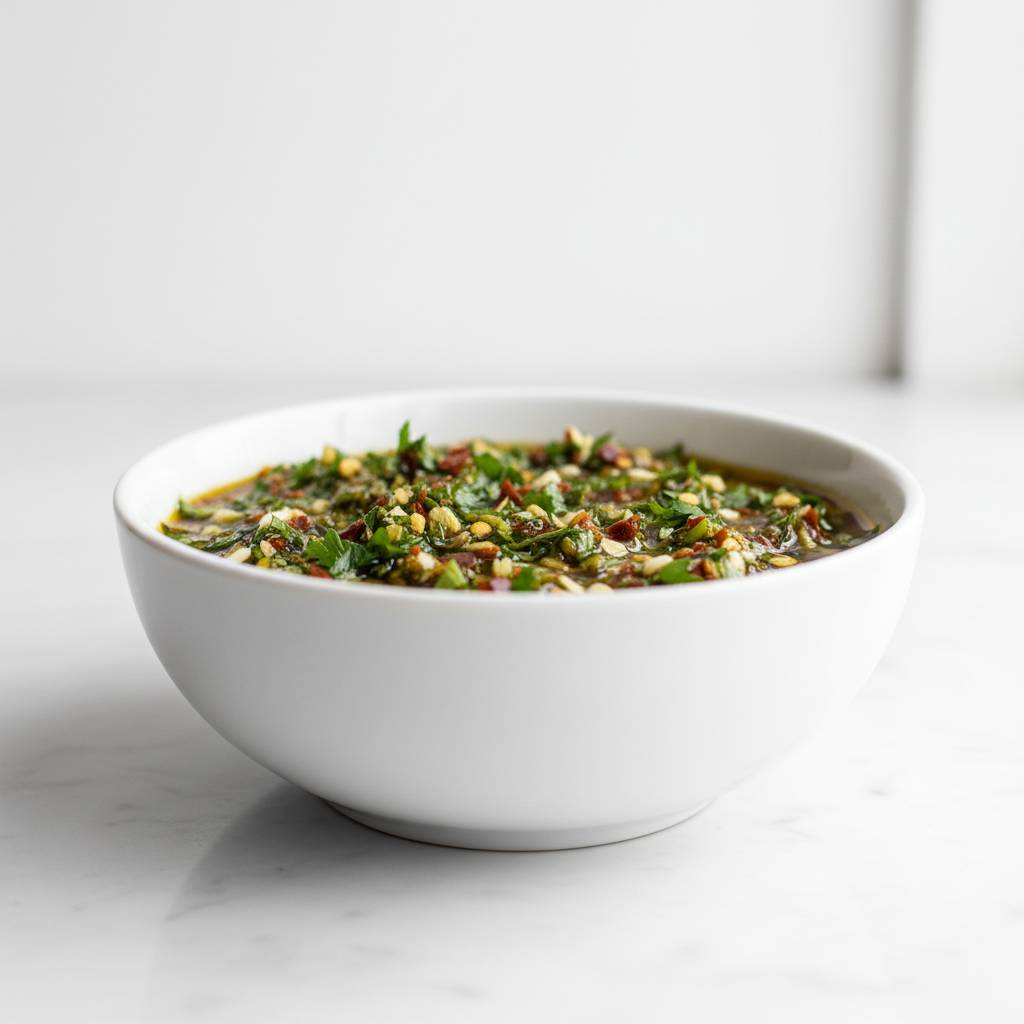
Chimichurri Sauce for Grilled Steak
Ingredients
Method
- If using a food processor: Roughly chop the fresh parsley and oregano leaves. Place them into the bowl of a food processor along with the minced garlic, red pepper flakes, salt, and pepper.
- Pulse the mixture 5-7 times until the herbs and garlic are finely chopped, but still have some texture. Avoid over-processing to maintain freshness.
- Transfer the herb mixture to a small mixing bowl. Slowly whisk in the red wine vinegar until fully combined.
- Gradually drizzle in the extra virgin olive oil while whisking constantly until the sauce emulsifies slightly and achieves a vibrant green color.
- Taste the chimichurri and adjust seasoning if necessary—add more salt, pepper, or red pepper flakes based on preference.
- For best results, cover and let the sauce rest at room temperature for at least 30 minutes before serving to allow the flavors to fully meld. Store leftovers in an airtight container in the refrigerator for up to one week.