
The Best Roasted Potato Salad You Will Ever Make
Forget watery, mayonnaise-laden potato salads of the past—this recipe redefines the classic side dish. We elevate simple potatoes by roasting them until they achieve incredible crispy edges and fluffy centers, providing the perfect foundation for a vibrant, flavorful dressing. This Best Roasted Potato Salad is guaranteed to become your go-to for potlucks, BBQs, and weeknight dinners alike.
Why You Will Love This Recipe
The secret to this amazing potato salad lies in the roasting process. Roasting the potatoes caramelizes their natural sugars, intensifying their flavor far beyond what boiling can achieve. The crispy exteriors contrast beautifully with the creamy, tangy Dijon vinaigrette that coats every bite. It holds up wonderfully at room temperature better than traditional versions and is packed with fresh herbs and texture, making it the Best Roasted Potato Salad you’ve ever tasted.
Ingredients
- 3 lbs Yukon Gold or small red potatoes, scrubbed and quartered
- 1/4 cup olive oil, divided
- 1 teaspoon kosher salt
- 1/2 teaspoon black pepper
- 4 green onions, thinly sliced (white and green parts separated)
- 1/2 cup fresh parsley, chopped
- 1/4 cup fresh dill, chopped (optional, but recommended)
- 3 tablespoons Dijon mustard
- 2 tablespoons red wine vinegar
- 1 tablespoon honey or maple syrup
- 1 clove garlic, minced
- 1/4 cup good quality mayonnaise (or Greek yogurt for a lighter option)
Step-by-Step Instructions
- Preheat your oven to 425°F (220°C). Line one or two large baking sheets with parchment paper for easy cleanup.
- Toss the quartered potatoes with 2 tablespoons of olive oil, salt, and pepper directly on the baking sheets. Ensure they are spread in a single layer for optimal roasting; use two sheets if necessary to avoid overcrowding.
- Roast for 30 to 40 minutes, flipping halfway through, until the potatoes are deeply golden brown, crispy on the edges, and fork-tender inside.
- While the potatoes are roasting, prepare the dressing. In a small bowl, whisk together the remaining 2 tablespoons of olive oil, Dijon mustard, red wine vinegar, honey (or maple syrup), and minced garlic until well emulsified. Season lightly with salt and pepper to taste.
- Remove the hot roasted potatoes from the oven and immediately transfer them to a large mixing bowl.
- Pour about two-thirds of the dressing over the warm potatoes. Gently toss to coat. The warmth of the potatoes will help them absorb the flavors beautifully.
- Let the potatoes cool for about 15 minutes. This allows them to cool slightly before adding the final ingredients and dressing.
- Add the chopped parsley, dill (if using), the white parts of the green onions, and the mayonnaise (or Greek yogurt) to the bowl. Gently fold everything together. Add more of the reserved dressing if you prefer a creamier texture.
- Taste and adjust seasoning—you may need a pinch more salt or vinegar depending on your preference.
- Stir in the green tops of the scallions just before serving for fresh color and crunch. Serve warm or at room temperature.
Expert Tips / Pro Tips
- Do not boil the potatoes first! The entire point of this recipe is the texture achieved through roasting.
- Use Yukon Golds or small red potatoes. These varieties hold their shape well during high-heat roasting. Russets tend to fall apart too much.
- Ensure your baking sheet is not overcrowded. If potatoes are packed too closely, they will steam instead of roast, resulting in mushy exteriors. If your batch is large, use two sheets.
- Dress warm potatoes. Potatoes absorb the vinaigrette dressing much better when they are slightly warm right out of the oven, locking in moisture and flavor.
- Use high-quality Dijon mustard. Since the mustard is a key flavor component in the dressing, better quality makes a noticeable difference.
Variations & Substitutions
- Add Protein/Crunch: Fold in 4 strips of crumbled, cooked bacon or 1/2 cup of toasted pecans or slivered almonds for smoky flavor and extra texture.
- Make it Tangy: Substitute capers or finely chopped cornichons for some of the fresh herbs.
- Garlic Flavor Boost: Instead of mincing one clove of garlic for the dressing, roast an entire head of garlic alongside the potatoes. Squeeze the softened, roasted garlic into the dressing mixture before whisking.
- Cheese Addition: Crumble 1/2 cup of salty feta or sharp aged cheddar over the salad after tossing.
Serving Suggestions
This Best Roasted Potato Salad shines as a side dish for grilled meats. It pairs perfectly with slow-cooked pulled pork, smoky barbecue chicken, or grilled hamburgers and sausages. Because the dressing is vinaigrette-based with minimal mayo, it travels well to picnics and outdoor parties. Serve it alongside fresh coleslaw or grilled corn on the cob for a complete summer feast.
Storage, Freezing & Reheating
Storage: Store leftovers in an airtight container in the refrigerator. Due to the fresh herbs and small amount of mayonnaise, this salad is best consumed within 3 to 4 days. The potatoes may lose some of their initial crispy texture upon refrigeration, but the flavor remains excellent.
Freezing: Freezing is not recommended. The texture of the roasted potatoes and the emulsified dressing do not hold up well after thawing.
Reheating: This salad is traditionally served cold or at room temperature. If you prefer it warm, you can gently warm small portions in the microwave for only 15-20 seconds, though this will certainly soften the potatoes further.
Nutrition Information
The following is an estimated nutritional breakdown per serving (assuming 8 servings). Actual values will vary based on exact ingredients and portion sizes.
| Nutrient | Amount (Approximate) |
|---|---|
| Calories | 320 kcal |
| Total Fat | 18g |
| Saturated Fat | 2.5g |
| Carbohydrates | 35g |
| Fiber | 4g |
| Sugar | 3g |
| Protein | 5g |
FAQ
Can I boil the potatoes instead of roasting?
While you can boil the potatoes, the resulting salad will not be the “Best Roasted Potato Salad.” Boiling yields a softer, less flavorful potato. Roasting is essential for achieving the crispy edges and caramelized flavor that defines this recipe.
How far in advance can I make this?
You can roast the potatoes up to 1 day in advance. Once roasted, let them cool completely, then store them in the refrigerator. Prepare the dressing separately. Assemble and add the herbs no more than 4 hours before serving for the best texture.
What type of mayonnaise should I use?
Use a good quality full-fat mayonnaise for the creamiest texture. If you are trying to keep it lighter, plain Greek yogurt or sour cream can be substituted for the mayo, though the flavor profile will shift slightly.
How do I keep the potatoes from sticking to the pan while roasting?
The key is using enough oil and ensuring the potatoes are spread in a single layer without touching. For guaranteed non-stick performance, line your baking sheet with parchment paper or a silicone baking mat.
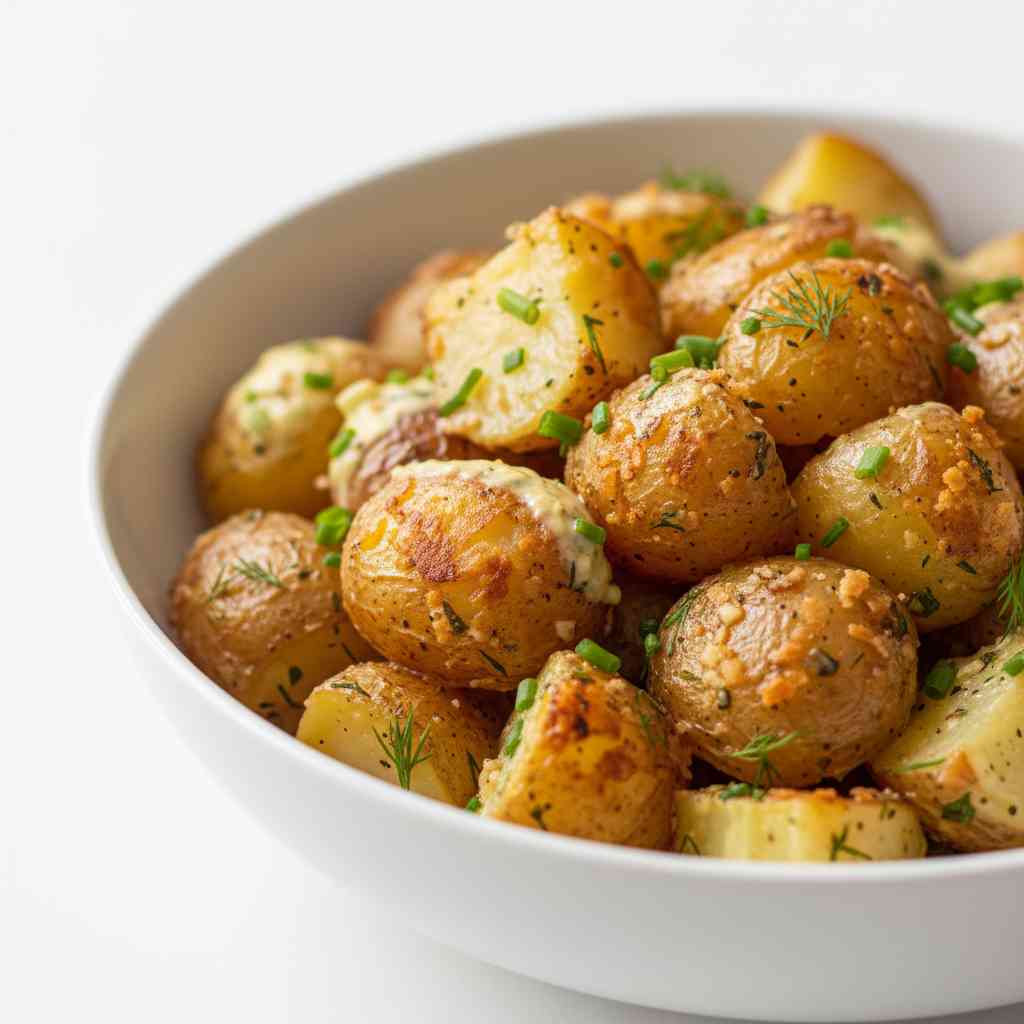
Best Roasted Potato Salad
Ingredients
Method
- Preheat your oven to 425°F (220°C). Line a large baking sheet with parchment paper.
- Toss the quartered potatoes with 3 Tbsp of olive oil, kosher salt, and pepper directly on the baking sheet. Spread them into a single layer to ensure even roasting.
- Roast the potatoes for 35 to 45 minutes, flipping halfway through, until they are deeply golden brown and tender on the inside with crispy edges.
- While the potatoes roast, prepare the vinaigrette: Whisk together the Dijon mustard, apple cider vinegar, 4 Tbsp olive oil, minced shallot, salt, and pepper in a small bowl until emulsified.
- Remove the roasted potatoes from the oven and immediately transfer them to a large mixing bowl while still warm. This helps them absorb the dressing better.
- Pour about half of the vinaigrette over the warm potatoes and gently toss. Let sit for 5 minutes.
- Add the diced celery, chopped parsley, chives, and chopped egg (if using) to the bowl. Pour the remaining vinaigrette over the mixture and gently fold everything together until just combined. Taste and adjust seasoning if necessary.
- Serve immediately while warm, or allow to cool to room temperature before serving.