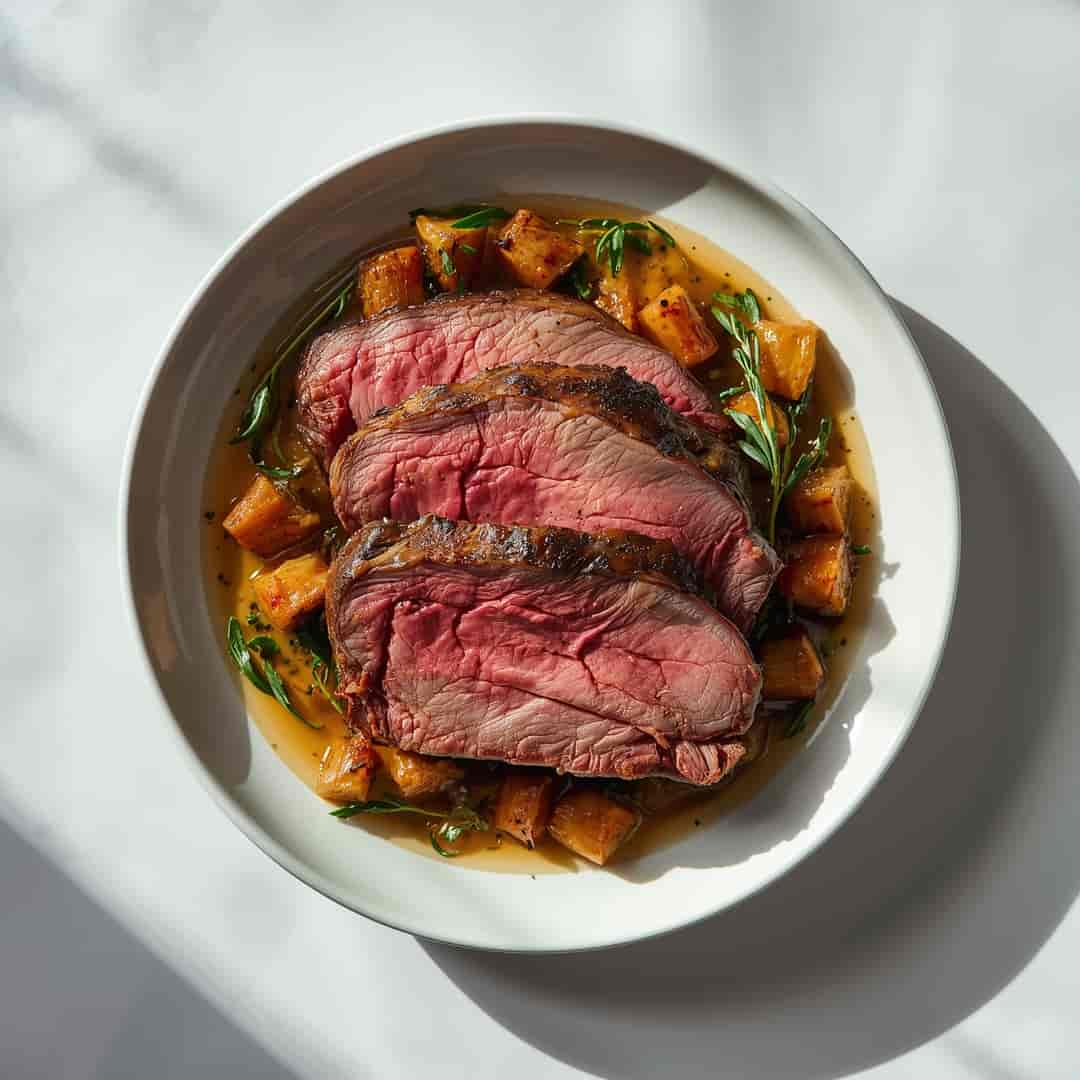
Ingredients
Equipment
Method
- About 2-3 hours before you plan to cook, remove the prime rib roast from its packaging and place it on a clean cutting board or rimmed baking sheet. This crucial step allows the meat to cook more evenly. If the roast has a thick layer of fat, you can trim some of it, leaving about a quarter-inch for flavor and moisture.
- Preheat your oven to 450°F (230°C). A high initial temperature is key to achieving a beautiful, browned crust.
- In a small bowl, combine the 2 tablespoons of kosher salt, 1 tablespoon of black pepper, 1 tablespoon of garlic powder, 1 teaspoon of onion powder, 1 teaspoon of dried thyme, and 1 teaspoon of dried rosemary. Mix these seasonings thoroughly.2 tablespoons Kosher Salt, 1 tablespoon Freshly Ground Black Pepper, 1 tablespoon Garlic Powder, 1 teaspoon Onion Powder, 1 teaspoon Dried Thyme, 1 teaspoon Dried Rosemary
- Pat the entire surface of the prime rib roast dry with paper towels. This helps create a crispier crust. Drizzle the roast with 2 tablespoons of olive oil or melted butter and rub it all over the meat to help the seasonings adhere. Generously sprinkle the prepared spice rub all over the roast, ensuring it's well-coated on all sides, including the ends. Don't be shy with the seasoning – a good amount of salt is essential for flavor.Standing Rib Roast (Prime Rib), 2 tablespoons Olive Oil or Melted Butter, 2 tablespoons Kosher Salt, 1 tablespoon Freshly Ground Black Pepper, 1 tablespoon Garlic Powder, 1 teaspoon Onion Powder, 1 teaspoon Dried Thyme, 1 teaspoon Dried Rosemary
- Place the seasoned prime rib on a sturdy roasting rack set inside a sturdy roasting pan. Ensure the bone side is facing down for stability and optimal cooking.
- Place the roasting pan in the preheated 450°F (230°C) oven. Roast for 15 minutes at this high temperature. This initial blast of heat will help to sear the exterior and begin developing that delicious crust.
- After 15 minutes, significantly reduce the oven temperature to 325°F (160°C). Do not open the oven door during this stage if at all possible, as temperature fluctuations can impact the cooking time and final result.
- Continue roasting at 325°F (160°C) until the roast reaches your desired internal temperature. Use a reliable meat thermometer inserted into the thickest part of the roast, avoiding the bone. Here are general guidelines:
- Rare: 120-125°F (49-52°C) – will continue to rise about 5-10 degrees while resting.
- Medium-Rare: 125-130°F (52-54°C) – will continue to rise about 5-10 degrees while resting. (This is often considered ideal for prime rib).
- Medium: 130-135°F (54-57°C) – will continue to rise about 5-10 degrees while resting.
- Once the roast reaches your desired temperature, carefully remove the roasting pan from the oven. Transfer the prime rib to a clean cutting board. Tent it loosely with aluminum foil and let it rest for at least 20-30 minutes. This resting period is critical for allowing the juices to redistribute throughout the meat, resulting in a moister and more tender roast. Trying to slice it too soon will result in all the delicious juices running out onto the board.
- After resting, remove the foil. You can easily slice the prime rib against the grain. For an impressive presentation, you can carefully remove the bones before slicing (this is easiest after resting, and seasoned chefs can do it before resting). Serve immediately with your favorite au jus, horseradish sauce, or pan gravy.
Notes
Leftover prime rib can be stored tightly wrapped in an airtight container in the refrigerator for up to 3-4 days. Gently reheat leftovers to retain moisture.