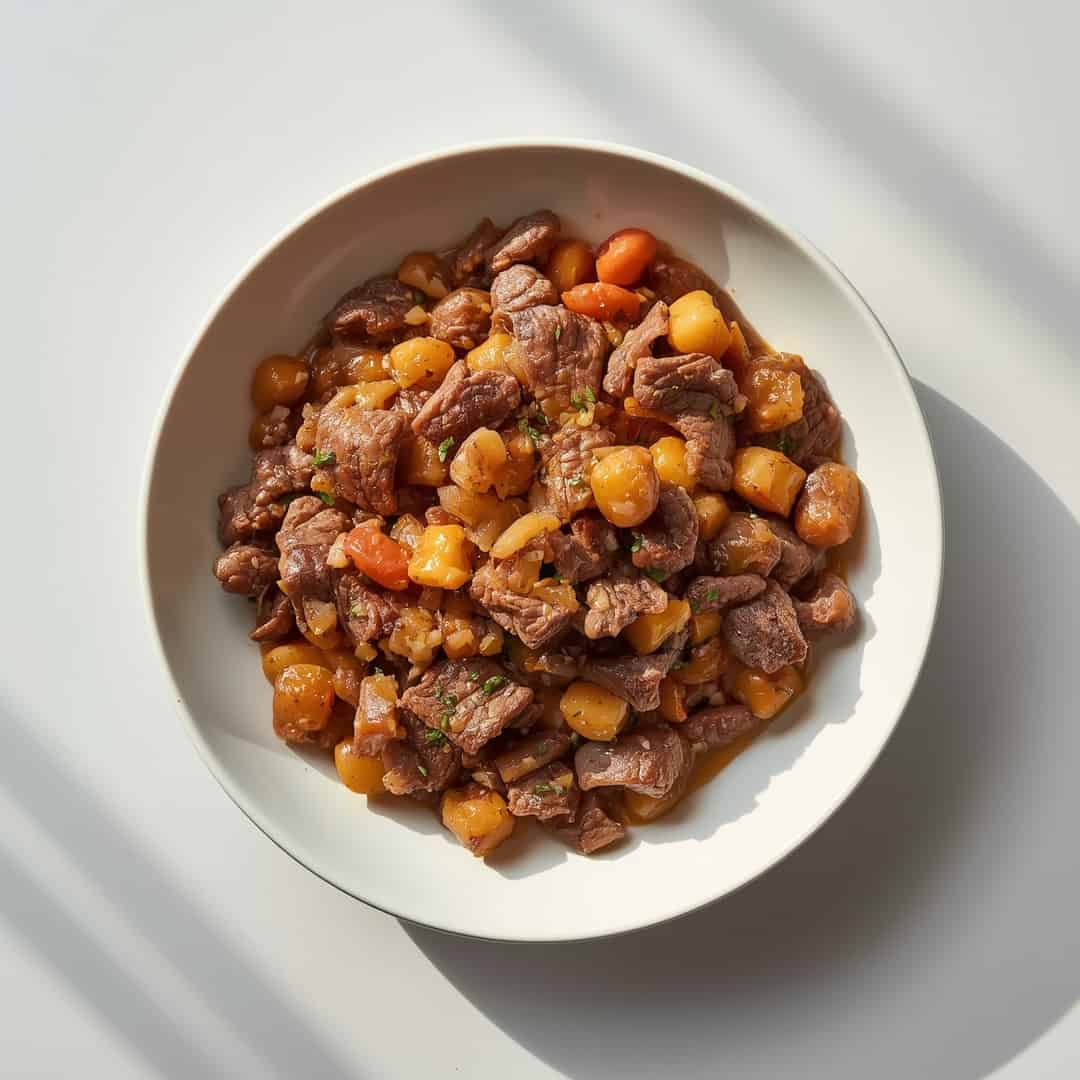
Ingredients
Equipment
Method
- Begin by ensuring your diced potatoes are as uniform as possible. While they don't need to be perfectly identical, consistency in size will help them cook evenly. If you have a little extra time, you can pre-cook the potatoes by boiling them until just tender (about 5-7 minutes), then draining them thoroughly. This step isn't strictly necessary but will reduce the overall cooking time in the pan and help achieve crispier potato pieces.2 medium russet potatoes, peeled and finely diced
- If you have any reserved beef drippings from your roast, heat 1 tablespoon of it in a large, heavy-bottomed skillet (cast iron works wonderfully) over medium-high heat. If you don’t have drippings, use 1 tablespoon of olive oil. The goal is to get the fat hot enough to start crisping the ingredients.1 tablespoon olive oil or beef drippings
- Add the finely chopped yellow onion to the hot skillet. Cook, stirring occasionally, until the onion is softened and translucent, about 5-7 minutes. Avoid browning it too much at this stage; we want it to release its sweet flavor.1 large yellow onion, finely chopped
- Introduce the diced potatoes and chopped red bell pepper to the skillet. Stir to combine them with the onions and fat. Spread the mixture evenly across the bottom of the pan.2 medium russet potatoes, peeled and finely diced, 1 medium red bell pepper, finely chopped
- Let the potato mixture cook undisturbed for about 5-7 minutes. This allows the bottom layer to develop a nice golden-brown crust. Resist the urge to stir too frequently during this initial cooking phase.2 medium russet potatoes, peeled and finely diced
- Stir the mixture, then add the minced garlic, dried thyme, and smoked paprika (if using). Cook for another 2-3 minutes, stirring constantly, until the garlic is fragrant but not burnt.2 cloves garlic, minced, 1/2 teaspoon dried thyme, 1/4 teaspoon smoked paprika
- Now, add the finely diced, chilled roast beef to the skillet. Stir everything together, ensuring the beef is distributed evenly throughout the potato and vegetable mixture.2 cups cooked roast beef, finely diced
- Continue to cook, stirring occasionally, for another 10-15 minutes. The goal here is to get the potatoes nice and crispy and the beef warmed through and slightly browned. You can press down on the hash with your spatula to encourage browning in certain areas.2 cups cooked roast beef, finely diced, 2 medium russet potatoes, peeled and finely diced
- Once the hash has reached your desired level of crispiness and the beef is heated through, season generously with salt and freshly ground black pepper. Taste and adjust seasoning as needed. Remember that roast beef can sometimes be salty, so taste before adding too much salt.salt and freshly ground black pepper
- Remove the skillet from the heat. Sprinkle the chopped fresh parsley over the top of the hash. Serve immediately, with your favorite optional toppings.2 tablespoons fresh parsley, chopped
Notes
Properly storing and reheating your Delicious Leftover Roast Beef Hash ensures you can enjoy its savory goodness even days later. To store, allow the hash to cool completely to room temperature. Then, transfer it to an airtight container. It will stay fresh in the refrigerator for up to 3-4 days. Avoid leaving it at room temperature for more than two hours to prevent bacterial growth. When you're ready to reheat, the best method for optimal texture and flavor is on the stovetop. Place a portion of the hash in a non-stick skillet over medium heat. Add a teaspoon of oil or butter if desired and cook, stirring occasionally, until heated through and the potatoes are crisped up again. Alternatively, you can reheat it in a preheated oven at 350°F (175°C) on a baking sheet until warmed through, which might take about 10-15 minutes. Microwaving is an option for a quicker reheat, but the potatoes may lose some of their crispiness. If you have a large batch for future meals, the hash can also be frozen. Place cooled portions in freezer-safe containers or bags, separating them with parchment paper if stacking. Frozen hash will maintain its quality for up to 2-3 months. Thaw overnight in the refrigerator before reheating using the stovetop or oven methods.