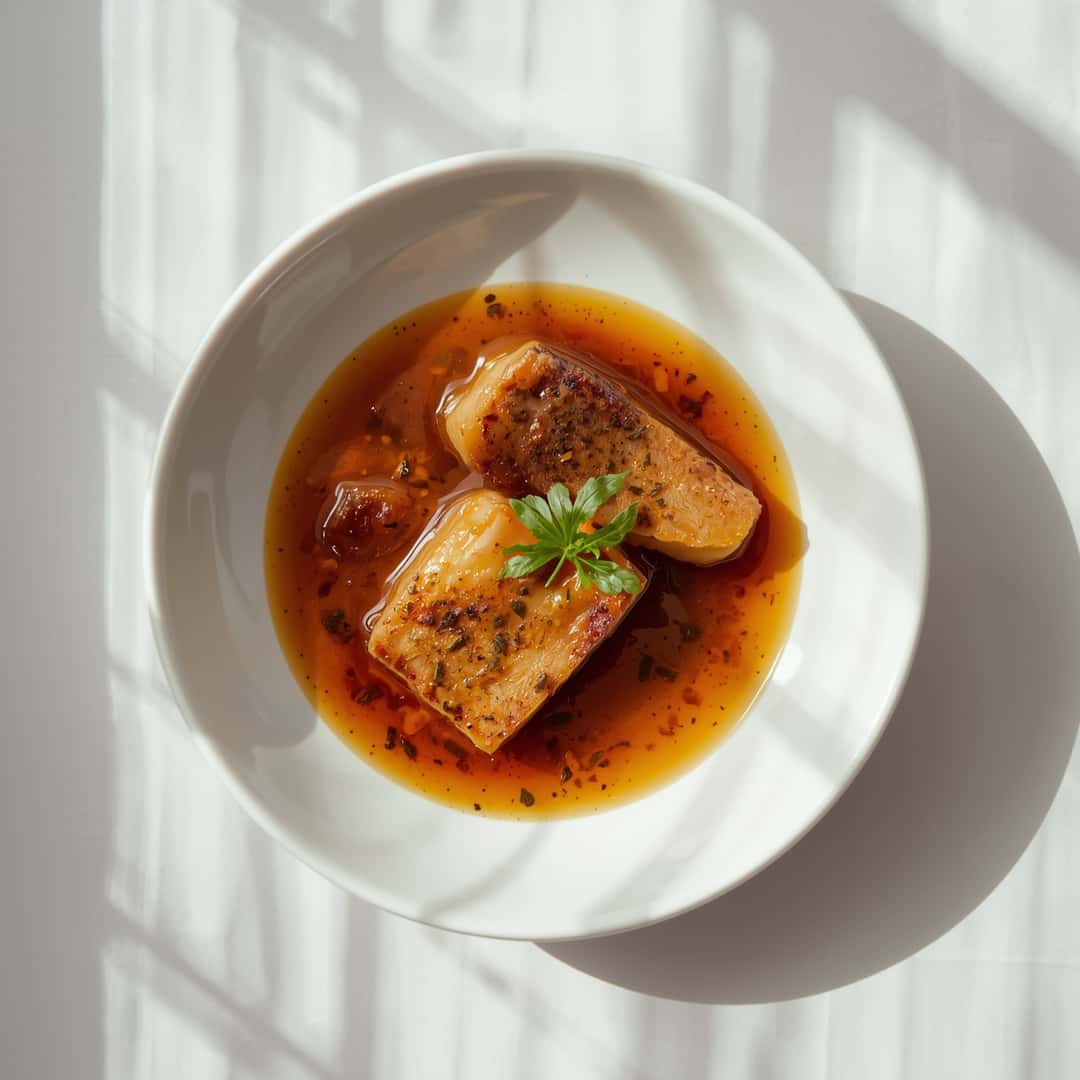
Ingredients
Equipment
Method
- Preheat your oven to 400°F (200°C). Place the beef bones on a baking sheet and roast for 30-45 minutes, or until deeply browned. While the bones are roasting, toss the quartered onion, chopped carrots, and chopped celery with the smashed garlic cloves on another baking sheet. Roast this vegetable mixture for about 20-25 minutes, or until softened and lightly caramelized. This roasting step is crucial for developing the rich, complex flavors of your au jus.1 large yellow onion, 2 carrots, 3 stalks celery, 4 cloves garlic, 2 pounds beef bones
- Once the bones and vegetables are roasted, carefully remove them from the oven. If any bits are stuck to the baking sheet, you can loosen them with a spatula and add them to your stockpot – these little bits are packed with flavor!
- Place a large, heavy-bottomed stockpot or Dutch oven over medium-high heat. Add the tablespoon of olive oil. Once shimmering, add the roasted beef bones and the roasted mirepoix (onion, carrots, celery, and garlic) to the pot. Stir for a minute or two, allowing the bottom of the pot to pick up any browned bits.1 tablespoon olive oil, 2 pounds beef bones, 1 large yellow onion, 2 carrots, 3 stalks celery, 4 cloves garlic
- Pour in the optional cup of dry red wine. Scrape the bottom of the pot with a wooden spoon to deglaze, loosening all those flavorful browned bits. Let the wine simmer and reduce by about half, which usually takes 3-5 minutes. This reduction concentrates the wine's flavor and removes some of its alcohol.1 cup dry red wine
- Add the bay leaf, fresh thyme sprigs, and black peppercorns to the pot. Pour in 8 cups of cold water, ensuring the bones and vegetables are mostly submerged. If they aren't, add a little more cold water until they are. Bring the mixture to a vigorous boil, then immediately reduce the heat to low, so that the liquid is barely at a simmer. You want to see only a few gentle bubbles rising to the surface occasionally.1 bay leaf, 5 sprigs fresh thyme, 1 teaspoon black peppercorns, 8 cups cold water
- Let the au jus simmer, uncovered, for at least 1.5 to 2 hours. During this time, impurities will rise to the surface as foam. Periodically skim off this foam and any excess fat with a fine-mesh sieve or a large spoon. This skimming process is essential for achieving a clear, refined au jus.
- After simmering, carefully strain the liquid through a fine-mesh sieve lined with cheesecloth (if you have it for extra clarity) into a clean bowl or another pot. Discard the solids.
- For a more concentrated flavor and thicker consistency, return the strained liquid to the pot and simmer over medium-low heat until it has reduced to your desired intensity. This could take another 15-30 minutes, or longer, depending on how much you want to reduce it. Be sure to keep an eye on it to prevent it from burning.
- Once reduced (or if you skipped the reduction stage), taste the au jus and season with salt as needed. Remember that bones and aromatics can already contribute some saltiness, so season incrementally. Serve your hot classic au jus recipe immediately alongside your favorite roasted meats, for dipping French dip sandwiches, or as a flavorful base for other dishes.to taste salt
Notes
Properly storing and reheating your classic au jus recipe will ensure you can enjoy its delicious flavor long after the initial cooking. Once cooled completely, pour the au jus into airtight containers. For refrigeration, it will stay fresh for 3 to 4 days. If you plan to keep it for a longer period, freezing is your best option. Transfer the cooled au jus into freezer-safe containers or heavy-duty freezer bags, leaving a little headspace as liquids expand when frozen. Frozen au jus can be safely stored for up to 3 months. To reheat, you can gently warm the refrigerated au jus in a saucepan over low to medium heat, stirring occasionally, until heated through. Avoid boiling, as this can alter the texture. For frozen au jus, thaw it in the refrigerator overnight, then reheat as described above. Alternatively, you can reheat directly from frozen by placing the container in a saucepan with a little water and warming it over low heat, stirring frequently, until it’s fully heated. This method may take a bit longer.