
Brighten your pantry with the vibrant flavors of homemade Rhubarb Jelly! This delightful spread captures the tart essence of spring rhubarb in a beautifully set, shimmering jelly. Perfect for beginner canners and seasoned pros alike, you’ll love how simple and rewarding this recipe is.
Why You Will Love This Recipe
You’ll fall in love with this Rhubarb Jelly recipe for so many reasons. First, it’s incredibly simple to make, requiring just a few basic ingredients and straightforward steps. The vibrant pink hue is absolutely gorgeous and adds a pop of color to any breakfast table or dessert. Furthermore, this jelly perfectly balances sweetness with the signature tang of rhubarb, creating a sophisticated flavor that’s not overly sugary. It’s also a fantastic way to preserve the bounty of spring rhubarb, allowing you to enjoy its unique taste long after the season ends. Plus, homemade jelly always tastes so much better than store-bought – you can truly taste the freshness!
Ingredients
- 4 cups prepared rhubarb juice (from about 3 lbs fresh rhubarb)
- 1 box (1.75 oz) powdered fruit pectin
- 5 cups granulated sugar
- 1/2 teaspoon butter or margarine (optional, to reduce foam)
Step-by-Step Instructions
- First, prepare your rhubarb juice. Wash and chop about 3 pounds of fresh rhubarb into 1-inch pieces. Do not peel. Place the chopped rhubarb in a large pot and add just enough water to barely cover it. Bring to a boil, then reduce heat and simmer until the rhubarb is very soft, about 15-20 minutes.
- Strain the cooked rhubarb through a jelly bag or several layers of cheesecloth set over a large bowl overnight, without squeezing. This will yield clear juice. You should have approximately 4 cups of rhubarb juice. Discard the pulp.
- Sterilize your canning jars and lids by placing them in boiling water for at least 10 minutes. Keep them hot until ready to fill.
- In a large, heavy-bottomed pot, combine the prepared rhubarb juice and the powdered fruit pectin. Stir well.
- Add the butter or margarine, if using, to help reduce foam during boiling.
- Bring the mixture to a full rolling boil over high heat, stirring constantly. A full rolling boil is one that cannot be stirred down.
- Once a full rolling boil is reached, immediately add all the granulated sugar. Stir constantly until the sugar is completely dissolved.
- Return the mixture to a full rolling boil and boil hard for exactly 1 minute, stirring constantly.
- Remove the pot from the heat. Skim off any foam from the surface with a metal spoon.
- Ladle the hot jelly into the sterilized, hot jars, leaving 1/4 inch headspace.
- Wipe the rims of the jars clean with a damp cloth. Place the hot lids and screw on the bands until finger-tight.
- Process the filled jars in a boiling water canner for 10 minutes. Ensure the jars are covered by at least one inch of boiling water.
- Turn off the heat, remove the canner lid, and let the jars stand in the hot water for 5 minutes before carefully removing them.
- Place the hot jars on a wire rack to cool completely for 12-24 hours without disturbing. You should hear popping sounds as the jars seal.
- Check the seals after cooling. If any jar has not sealed (the lid center will spring back when pressed), refrigerate it and use it first. Store sealed jars in a cool, dark place.
Expert Tips / Pro Tips
For the clearest jelly, resist the urge to squeeze the jelly bag or cheesecloth when straining the rhubarb. Squeezing will force small particles through, resulting in a cloudier jelly. Ensure your jars, lids, and bands are absolutely sparkling clean and properly sterilized to prevent spoilage. When measuring the sugar, be precise – too little can prevent the jelly from setting, and too much can make it overly sweet. A deep, wide pot will help reduce the chance of boil-overs and allow for quicker evaporation, which aids in setting. Always bring the mixture to a true rolling boil that cannot be stirred down before counting your boiling time – this is crucial for the pectin to activate correctly. Finally, don’t forget to check the seals after cooling; a proper seal is key for safe long-term storage.
Variations & Substitutions
For a unique twist, consider adding a hint of fresh ginger to your rhubarb during the cooking process for the juice; strain it out along with the rhubarb pulp. A few scraped vanilla bean seeds or a teaspoon of vanilla extract (added after boiling is complete) can also add a lovely aromatic layer. You could also experiment with combining rhubarb with other fruits like strawberries or raspberries for a mixed fruit jelly; just be sure to adjust the pectin amount if using a low-pectin fruit. For a less sweet option, you might explore low-sugar pectin varieties, but always follow the specific instructions on that pectin package as ratios will differ. If fresh rhubarb isn’t available, quality frozen rhubarb can be used; just thaw it first and proceed as usual for making the juice.
Serving Suggestions
Rhubarb Jelly is incredibly versatile and can elevate a multitude of dishes. Spread it generously on warm toast, fluffy scones, or flaky croissants for a delightful breakfast. It makes a fantastic filling for thumbprint cookies, tarts, or layered cakes, adding both sweetness and a pleasant tang. Pair it with savory items like roasted chicken or pork as a unique glaze or accompaniment, much like a fruit chutney. Stir a spoonful into plain Greek yogurt or oatmeal for an instant flavor boost. Don’t forget to try it with a cheese board, complementing creamy brie or sharp cheddar beautifully. A dollop on vanilla ice cream is also an unexpected, yet delicious, treat!
Storage, Freezing & Reheating
Properly sealed jars of Rhubarb Jelly stored in a cool, dark place will maintain their quality for up to 1 year. Once opened, refrigerate the jar and consume within 2-3 weeks. This jelly does not typically freeze well in its set form as freezing and thawing can break down the pectin structure, leading to a watery or granular consistency. Therefore, canning is the preferred method for long-term preservation. Reheating is generally not necessary, as jelly is typically enjoyed at room temperature or chilled. If you wanted to gently warm it slightly for a specific application, use a microwave safe bowl or small saucepan over very low heat being careful not to boil it.
Nutrition Information
| Nutrient | Amount per serving (estimated) |
|---|---|
| Calories | ~80-100 kcal |
| Total Fat | ~0 g |
| Saturated Fat | ~0 g |
| Cholesterol | ~0 mg |
| Sodium | ~0-5 mg |
| Total Carbohydrates | ~20-25 g |
| Dietary Fiber | ~0 g |
| Total Sugars | ~20-25 g |
| Protein | ~0 g |
FAQ
Why didn’t my jelly set?
Jelly not setting is a common issue. It’s often due to incorrect measurements (especially of sugar or pectin), not reaching a full rolling boil, or not boiling for the precise amount of time. Ensure you use the exact quantities specified and boil for a full minute at a hard, rolling boil that cannot be stirred down.
Can I make this with less sugar?
Standard pectin requires a specific sugar amount to set properly. If you wish to reduce the sugar, you’ll need to use a special low-sugar or no-sugar pectin, and follow the instructions on that pectin package explicitly, as the fruit-to-sugar ratio will be different.
How can I tell if my jelly has sealed?
After the jars have cooled completely (12-24 hours), check the seals by pressing down on the center of the lid. If it doesn’t flex or pop, it’s sealed. You can also carefully remove the band and gently lift the jar by the lid; if the lid stays firmly attached, it’s sealed. If not sealed, store in the refrigerator and use promptly.
What if I don’t have a jelly bag?
If you don’t have a jelly bag, you can use several layers of clean cheesecloth (at least 4) placed over a colander or sieve. Line a large bowl underneath to catch the juice. Just remember not to squeeze the cloth to ensure clear jelly.
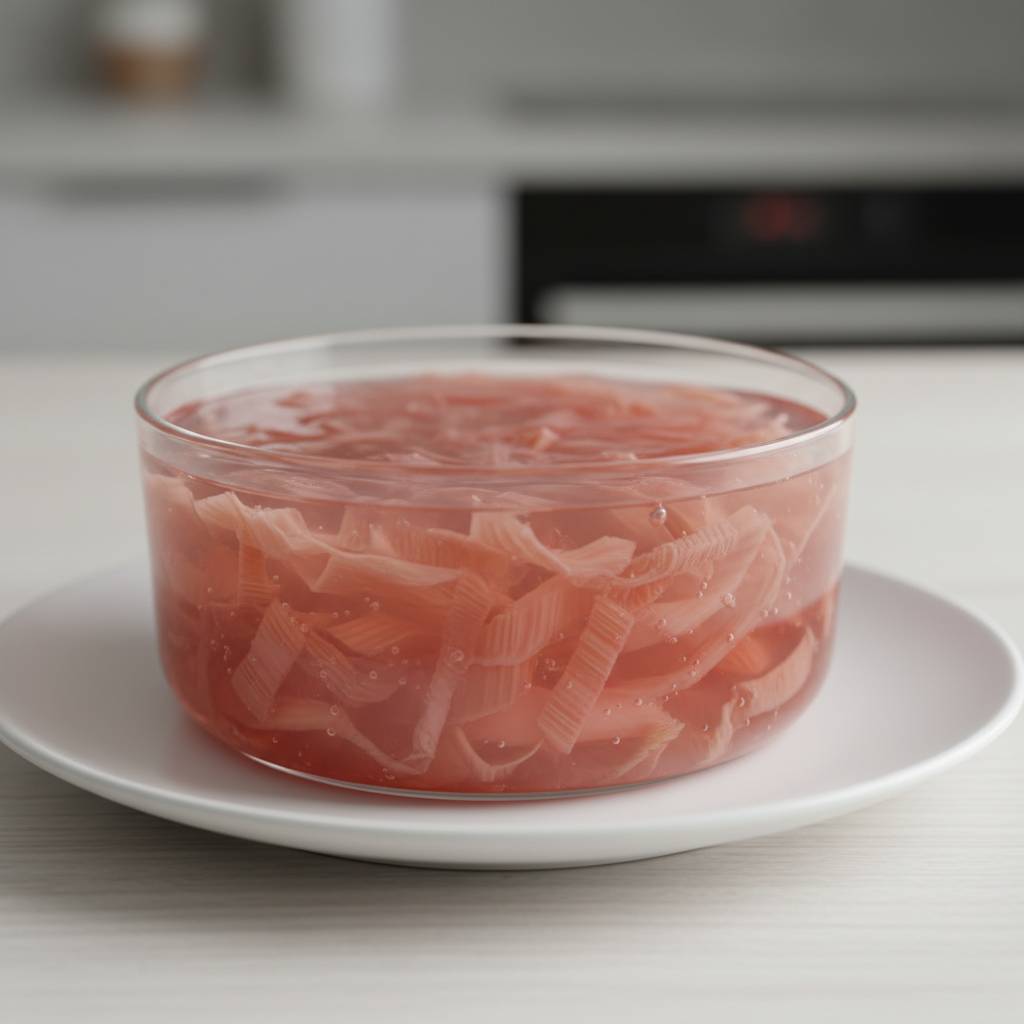
Rhubarb Jelly
Ingredients
Method
- Prepare your canning jars and lids: Wash jars and lids in hot soapy water. Sterilize jars by submerging them in boiling water for at least 10 minutes. Keep jars in hot water until ready to fill. Heat lids in hot (not boiling) water according to manufacturer’s instructions.
- In a large, non-reactive pot (stainless steel or enameled cast iron), combine the cut rhubarb and 1/2 cup of water. Bring to a boil over medium-high heat, then reduce heat, cover, and simmer for 15-20 minutes, or until the rhubarb is very tender and broken down.
- Place a fine-mesh sieve lined with cheesecloth over a large bowl. Carefully pour the cooked rhubarb mixture into the sieve. Allow the liquid to drain through without pressing the solids. This can take several hours, or even overnight, to extract all the juice. You should aim for about 4-5 cups of rhubarb juice.
- Measure exactly 4 cups of rhubarb juice into your large, non-reactive pot. Stir in the powdered fruit pectin until completely dissolved. Place the pot over high heat and bring the mixture to a rolling boil that cannot be stirred down.
- Once a rolling boil is achieved, immediately add the granulated sugar, stirring constantly until the sugar is dissolved. Return to a rolling boil and boil hard for exactly 1 minute, stirring constantly. Remove from heat.
- Carefully skim off any foam from the surface of the jelly using a metal spoon. Ladle the hot jelly into the prepared sterile jars, leaving 1/4 inch headspace. Wipe jar rims clean. Center lids on jars and screw on bands until fingertip tight.
- Process jars in a boiling water canner for 10 minutes (adjusting for altitude if necessary). Carefully remove jars from the canner and place them on a towel-lined counter to cool completely. Check seals after 12-24 hours. Any unsealed jars should be refrigerated and consumed within 3 weeks. Store sealed jars in a cool, dark place for up to 1 year.