
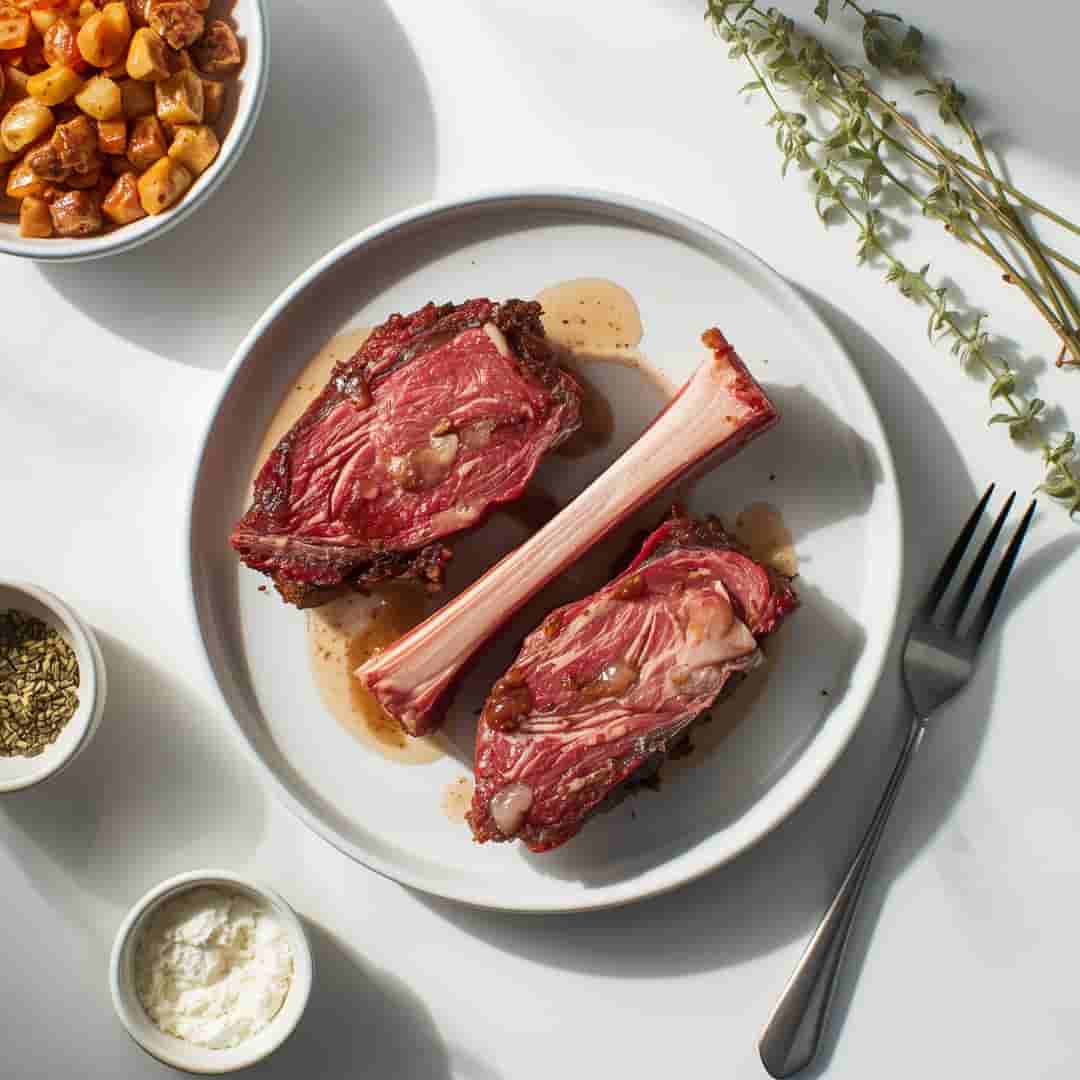
Don’t let those prime rib bones go to waste! This recipe shows you how to Repurposed Prime Rib Bone Stock into a deeply flavorful and incredibly useful rich stock, perfect for gravies, soups, and sauces. It’s a smart and delicious way to maximize every bit of your roast.
Key Ingredients for Repurposed Prime Rib Bone Stock
- 3-5 pounds of roasted prime rib bones (from a leftover prime rib roast)
- 2 large yellow onions, quartered (skin on is fine for color)
- 4 large carrots, roughly chopped (no need to peel if clean)
- 4 celery stalks, roughly chopped
- 6-8 sprigs of fresh thyme
- 3-4 sprigs of fresh rosemary
- 2 bay leaves
- 10-12 whole black peppercorns
- 1 tablespoon olive oil
- 1 gallon cold water (or enough to cover ingredients by about 2 inches)
- Optional: A splash of red wine or a knob of butter for deglazing
How to Make Repurposed Prime Rib Bone Stock
Transforming leftover prime rib bones into this stock is surprisingly straightforward and incredibly rewarding. This method yields a profoundly savory liquid that’s a true game-changer in the kitchen, elevating simple dishes to gourmet status. The entire process, from prep to finished stock, takes approximately 30 minutes of active cooking and at least 4 hours of simmering for maximum flavor extraction, resulting in a deeply satisfying and versatile culinary building block.
Step-by-Step Instructions:
- Prepare the Bones: If your prime rib bones still have significant meat attached, you can try to scrape off any smaller bits of meat and trim away excess fat. However, don’t worry too much about getting every last morsel; some residual meat and fat will add even more flavor to your stock. Place the prime rib bones in a large stockpot or Dutch oven.
- Roast the Bones (Optional but Recommended): For an even richer flavor and deeper color, consider roasting the bones before making the stock. Preheat your oven to 400°F (200°C). Toss the bones with a tablespoon of olive oil and spread them on a baking sheet. Roast for 25-30 minutes, or until they are nicely browned. This caramelization process is key to developing complex flavors.
- Add Aromatics: Once the bones are in the stockpot (whether roasted or not), add the quartered onions, chopped carrots, and chopped celery. These vegetables, often called mirepoix, form the aromatic base for your stock.
- Incorporate Herbs and Spices: Toss in the fresh thyme, rosemary, bay leaves, and whole black peppercorns. These elements contribute subtle but essential layers of flavor and aroma to the stock.
- Deglaze (Optional): If you roasted your bones and want to capture any browned bits from the roasting pan, you can add a splash of red wine or a tablespoon of butter to the hot roasting pan after removing the bones. Scrape up the browned bits from the bottom of the pan and then pour this flavorful liquid into your stockpot. This step adds an extra depth of flavor.
- Add Water: Pour in cold water, ensuring it covers the bones and vegetables by about 2 inches. Using cold water helps to gradually extract impurities as the water heats, resulting in a clearer stock.
- Simmer Gently: Place the stockpot over medium-high heat and bring it to a gentle boil. Once it begins to boil, immediately reduce the heat to low. You want to maintain a very gentle simmer, with only a few small bubbles breaking the surface occasionally, not a rolling boil. A vigorous boil can make your stock cloudy and less refined.
- Skim Impurities: During the first hour of simmering, you’ll notice foam and scum rising to the surface. Use a fine-mesh sieve or large spoon to carefully skim off and discard this material. This is crucial for a clean-tasting and clear stock.
- Simmer for Flavor Extraction: Let the stock simmer gently for at least 4 hours, and ideally up to 8 hours. The longer it simmers, the more flavor will be extracted from the bones and aromatics. You can also add more water if the liquid level drops significantly during simmering, but try to maintain a good concentration of flavor.
- Strain the Stock: Once the simmering time is complete, carefully strain the stock. Place a fine-mesh sieve over a large heatproof bowl or another clean pot. You can line the sieve with cheesecloth for an even clearer stock. Ladle the hot stock through the sieve, discarding the solids (bones, vegetables, herbs).
- Cool and Store: Allow the strained stock to cool completely at room temperature. Once cool, you can transfer it to airtight containers or freezer-safe bags. For easier portioning, consider pouring the cooled stock into ice cube trays and freezing it. Once frozen, pop out the cubes and store them in a larger freezer bag.
Why You’ll Love This Repurposed Prime Rib Bone Stock
You’ll absolutely love this repurposed prime rib bone stock because it’s the absolute secret weapon for incredible homemade gravies and soups. Unlike bland store-bought broths, this stock is overflowing with the deep, savory essence of roasted prime rib, making your favorite dishes sing. Plus, the cost-saving benefit of creating this gourmet ingredient from what would have been discarded is simply astounding – it’s like magic for your wallet and your palate! Imagine the rich, decadent flavor it will add to your holiday gravy, or how it will transform a simple vegetable soup into something truly special compared to a basic chicken broth. Give it a try and taste the delicious difference repurposing can make in your home kitchen!
Storing and Reheating Tips
Properly storing your homemade prime rib bone stock is essential for preserving its flavor and quality. Once the stock has cooled completely, transfer it to airtight containers such as glass jars, plastic containers with tight-fitting lids, or heavy-duty freezer bags. For refrigeration, store the stock in the refrigerator for up to 3 to 4 days. Ensure the containers are well-sealed to prevent spoilage. For longer storage, freezing is the best option. Homemade stock can be kept in the freezer for up to 6 months. If you used ice cube trays to portion your stock, once frozen, transfer the cubes to a freezer bag, removing as much air as possible.
To reheat your prime rib bone stock, you can do so gently on the stovetop. Place the desired amount of stock in a saucepan over medium-low heat and warm it through, stirring occasionally. Avoid bringing it to a rapid boil. If reheating from frozen, you can place the frozen cubes or a larger frozen block directly into a saucepan over low heat and allow it to thaw and warm gradually. For quicker thawing and reheating, you can also place a sealed container of frozen stock in a bowl of warm water.
Final Thoughts
Repurposing prime rib bones into a rich stock is a culinary triumph that’s both economical and incredibly flavorful. This simple process yields a powerhouse ingredient that will elevate your cooking, so don’t hesitate to give it a try!
try also :
- Air Fryer Sweet Potatoes
- Crockpot Beef Fajitas
- Ground Turkey Sweet Potato Bake
- Cheesy Pumpkin Stuffed Pretzel Bites
- Find more in Pinterest
- Medium
Repurposed Prime Rib Bone Stock
Ingredients
Equipment
Method
- If your prime rib bones still have significant meat attached, you can try to scrape off any smaller bits of meat and trim away excess fat. However, don’t worry too much about getting every last morsel; some residual meat and fat will add even more flavor to your stock. Place the prime rib bones in a large stockpot or Dutch oven.3-5 pounds roasted prime rib bones
- For an even richer flavor and deeper color, consider roasting the bones before making the stock. Preheat your oven to 400°F (200°C). Toss the bones with a tablespoon of olive oil and spread them on a baking sheet. Roast for 25-30 minutes, or until they are nicely browned. This caramelization process is key to developing complex flavors.3-5 pounds roasted prime rib bones, 1 tablespoon olive oil
- Once the bones are in the stockpot (whether roasted or not), add the quartered onions, chopped carrots, and chopped celery. These vegetables, often called mirepoix, form the aromatic base for your stock.2 large yellow onions, 4 large carrots, 4 stalks celery
- Toss in the fresh thyme, rosemary, bay leaves, and whole black peppercorns. These elements contribute subtle but essential layers of flavor and aroma to the stock.6-8 sprigs fresh thyme, 3-4 sprigs fresh rosemary, 2 bay leaves, 10-12 whole black peppercorns
- If you roasted your bones and want to capture any browned bits from the roasting pan, you can add a splash of red wine or a tablespoon of butter to the hot roasting pan after removing the bones. Scrape up the browned bits from the bottom of the pan and then pour this flavorful liquid into your stockpot. This step adds an extra depth of flavor.splash red wine, knob butter
- Pour in cold water, ensuring it covers the bones and vegetables by about 2 inches. Using cold water helps to gradually extract impurities as the water heats, resulting in a clearer stock.1 gallon cold water
- Place the stockpot over medium-high heat and bring it to a gentle boil. Once it begins to boil, immediately reduce the heat to low. You want to maintain a very gentle simmer, with only a few small bubbles breaking the surface occasionally, not a rolling boil. A vigorous boil can make your stock cloudy and less refined.
- During the first hour of simmering, you’ll notice foam and scum rising to the surface. Use a fine-mesh sieve or large spoon to carefully skim off and discard this material. This is crucial for a clean-tasting and clear stock.
- Let the stock simmer gently for at least 4 hours, and ideally up to 8 hours. The longer it simmers, the more flavor will be extracted from the bones and aromatics. You can also add more water if the liquid level drops significantly during simmering, but try to maintain a good concentration of flavor.
- Once the simmering time is complete, carefully strain the stock. Place a fine-mesh sieve over a large heatproof bowl or another clean pot. You can line the sieve with cheesecloth for an even clearer stock. Ladle the hot stock through the sieve, discarding the solids (bones, vegetables, herbs).
- Allow the strained stock to cool completely at room temperature. Once cool, you can transfer it to airtight containers or freezer-safe bags. For easier portioning, consider pouring the cooled stock into ice cube trays and freezing it. Once frozen, pop out the cubes and store them in a larger freezer bag.